Yayio Kusama

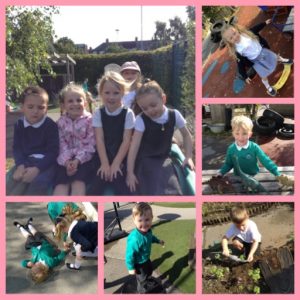
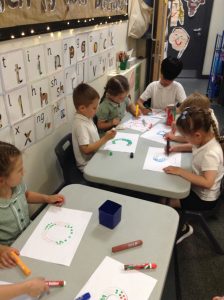
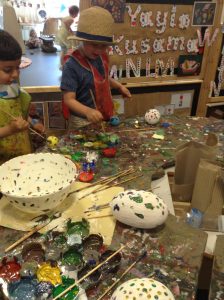
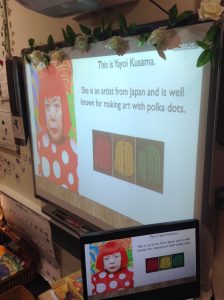
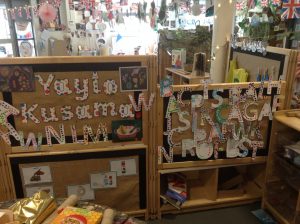
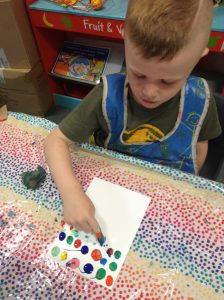
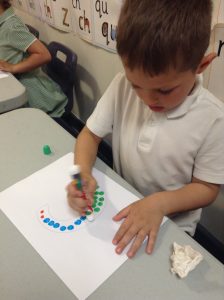
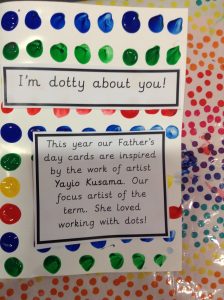
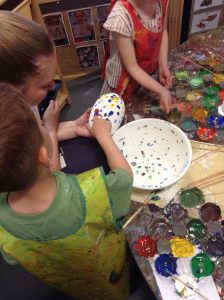
F2 have had a wonderful week exploring the work of this terms artist… Yayio Kusama! We have loved learning all about Kusama and how she became a famous artist. Orginally from Japan, Kusama’s artwork is now all over the world and she is well known for her love of… DOTS! This has inspired us and sent us a bit dotty! We have dotted the letters in our name, our snack fruit bowl and given us inspiration for our Father’s Day cards…’dotty about you!’

The Hub

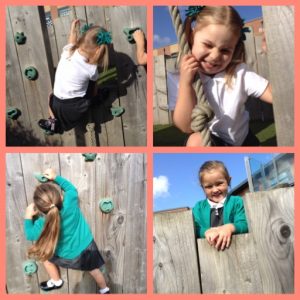
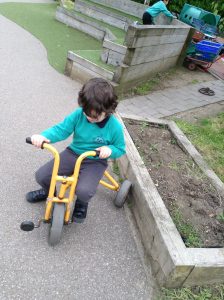
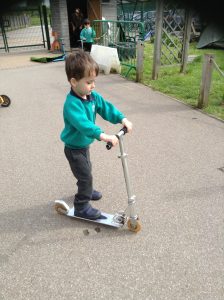
All the children enjoyed playing with all the equipment this week..

They all shared the scooters and helped each other if they needed help on them.

It has been a lovely sunny week this week so the children have been enjoying the outdoor area

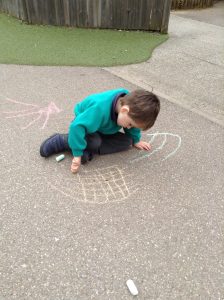
Connor enjoys chalking and likes to make lots of patterns.

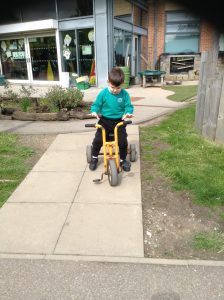
                  Noah also had his turn on the bikes.

It is lovely to see all the children using the resources and enjoying them.  Well done boys.


Year 6 Science Exploring Circuits

Previous learning has taught the children a circuit always starts with a battery (a cell) . A flow of electricity moves from the positive pole to the negative pole of the battery. The flow is pushed by the battery, through the wires to the other components in the circuit. This makes a complete electrical circuit.

The first challenge was to create a simple circuit…

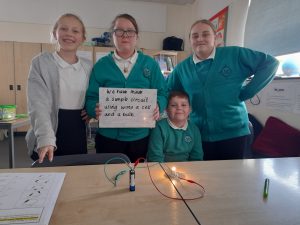
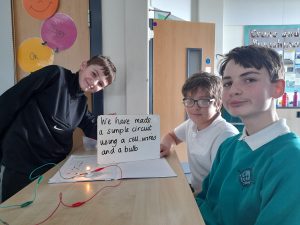
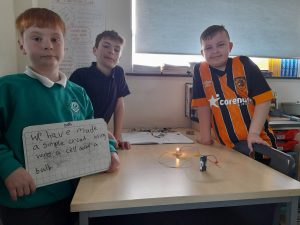
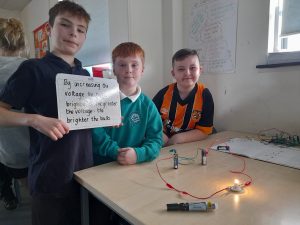
We made a simple circuit using wires, a battery and a bulb…


Then the all important question..

How can we increase the brightness of the bulb ?

Time to put your scientific heads on!!! Lots of discussion; lots of hypothising, ideas and theories began to develop.Obviously, as every scientist knows, these ideas and theories need to be tested .

Then the light bulb moment !!!

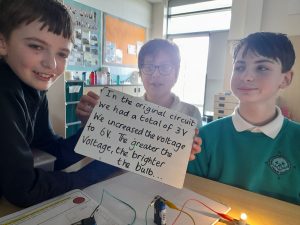
By increasing the voltage we also increased the brightness of the bulb….

In the original circuit we had a total of 3V…we increased the voltage to 6V. We discovered the greater the voltage the brighter the bulb.

The greater the voltage the brighter the bulb

Then an extra challenge.

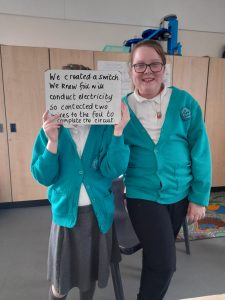
How can we make a switch out of foil and cardboard,  which will open and close so we are able to switch the bulb on and off?

We created a switch , which would open and close. We knew foil would conduct electricity. We connected the wires to each end of the foil to create a complete circuit.

Well done girls!!!


Mental Health Week Y6


Every year , Children’s Mental Health Week takes place during February.  This year the theme is,

‘ Let’s connect’.

Connecting with others helps us to share experiences with people we trust and care about. Positive relationships give us opportunities to share our feelings and get someone else’s views on what we are experiencing. Positive relationships give us a sense of feeling and belonging.

The BIG QUESTIONS:

What is mental health?

How can we look after our own mental health?

How can we look after the mental health

of others ?

What can we do to keep our minds healthy?

After lengthy discussions the children were asked to come up with a Mental Health Action Plan…

And when all the hard work is done – chill time – with a purpose!

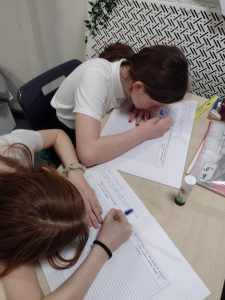
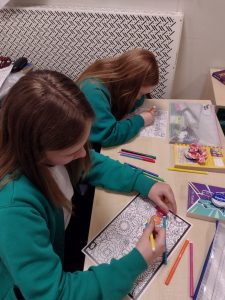
Colouring is a healthy way to relieve stress. It calms the brain and helps your body relax. This can improve sleep and fatigue while decreasing body aches, heart rate, respiration, and feelings of depression and anxiety.

A perfect way to end the day.

sculptors

Year 2 have been sculptors this week.
During our art lesson Year 2 have been using the artist Julian Opie as an inspiration to create our own piece of art.
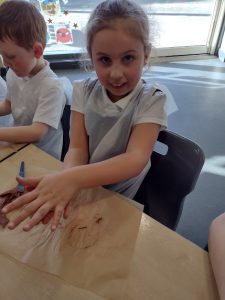
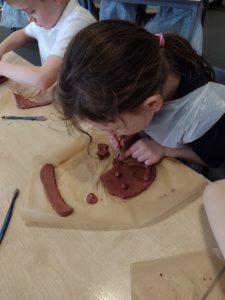
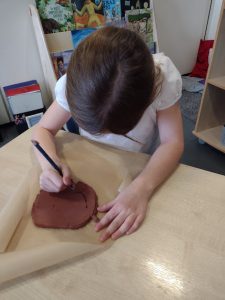
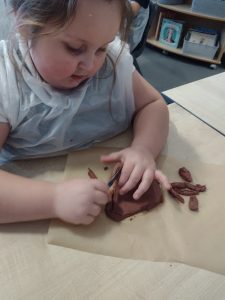
We have used clay to create self-portraits in the style of Julian Opie.
We thought about the lines Opie uses and incorporated these in our sculptures to create our features.
We began by recreating the shape of our faces with our clay. We needed to carve the shape before cutting the excess clay off to leave us with a face to add our features to.
We needed to mould and manipulate the clay to create our features. We rolled clay for our eyes before rolling and cutting pieces of clay to create other features such as eyebrows and lips. Our nose took much more moulding and shaping with our hands to ensure the correct size and look.
We are very proud of our finished self-portraits and are excited for them to dry.

Year 6 Crime and Punishment

Our Year 6 history curriculum provides a platform to enrich children’s awareness of the past and develop their historical consciousness. Our curriculum builds on pupils’ understanding of British, world and local history, looking at the influence that Britain had on the wider world, and how the wider world has influenced Britain.

The latest History topic for Year 6 is ‘Crime and Punishment ‘.

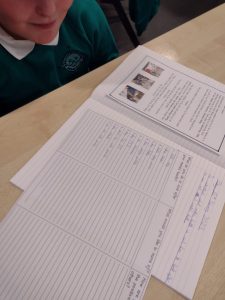
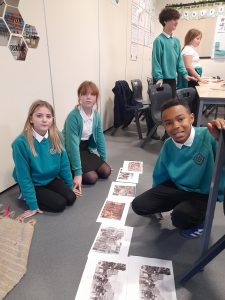
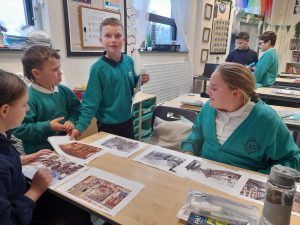
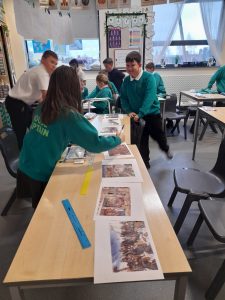
For the first lesson the children were given the task of arranging historical events in chronological order.

Chronology is the science of locating historical events in time. It relies upon chronometry, which is also known as timekeeping, and historiography, which examines the writing of history and the use of historical methods.


Looking for the evidence…


Logical thinking…


Historians heads on…

Searching  for clues…

Making decisions….

Why are timelines important ?

 A timeline is a visual learning aid that helps children organize a series of events in the order they happened. Each event or person should have a date (or time) clearly marked on the timeline. Timelines provide a framework to show potential relationships between historical events.


To understand how behaviour can impact on a group

Year 5 discussed the importance of individual rights and responsibilities, and how these can potentially impact others – answering these questions:

• Why do we need rules in society?
• How do rules keep us safe?
• Why might people break rules?
• What can we do if we think a rule is not fair?
• How can rules in a school help us to learn and grow?

For each right and responsibility, we thought of an appropriate reward if children are seen to be upholding that right. We also thought of an alternative consequence if children were not showing responsible behaviour and the right was being ignored.

Some examples included:

Being kind to other children in your class. The rewards for this were to be given dojo points, table points or to have one day per week on chrome books. If this right was to be ignored, consequences would have to take place. The children came up with sensible consequences such as: have a playtime taken from you, having to clean other children’s’ mess or having to write in pencil all day if you have a pen license.

Finally, as a class, we discussed the rewards and consequences from the lesson the children would like to see in our classroom.

These rights and responsibilities are important to discuss as children gage an understanding of the importance of obeying rules and working together to achieve their goals.

The Story of the First Diwali…

This week Foundation Stage have loved learning, exploring and celebrating all things Diwali! We loved reading the story of the first Diwali… the story of ‘Rama and Sita‘ and had great fun acting out the story with props! In continious provision we have explored Rangoli patterns, Mendhi hands and made some fabulous Diva pots! We have enjoyed learning about Hindu traditions and the festival of light!