Chronology

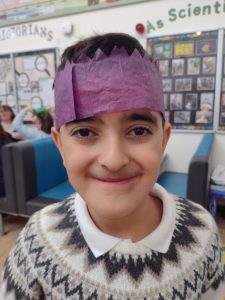
This week Year 3 have been discussing chronology and what this means.

We have discussed how chronology tells us the order things happened in.

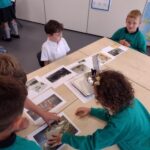
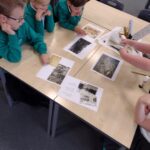
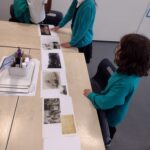
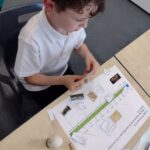
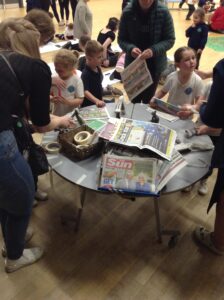
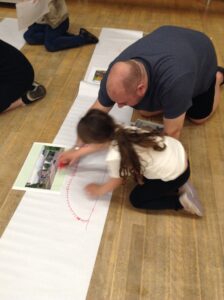
During our history lesson we have begun to look at the history of Hull. We spent some time looking at some sources of evidence and discussing what these sources showed us. We then had a go at putting our sources into the correct chronological order.

We discussed how black and white photographs must be older than coloured ones and how paintings must be even older as these were created before cameras were invented.


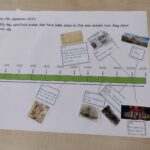
Once we had created our chronological timeline we discussed the correct order of events in Hull.

We then created our own timeline in our books ensuring we thought about the chronological order of the events.


We cannot wait to find out lots of information about these events that shaped the city of Kingston Upon Hull.

Y1 – ICT

Year 1 were excited to start their ICT lessons this week, especially the thought of getting their hands on the laptops… but first we had to find out what exactly ‘Technology’ is.

We found out the word ‘technology’ actually means ‘anything made by people to help us’.

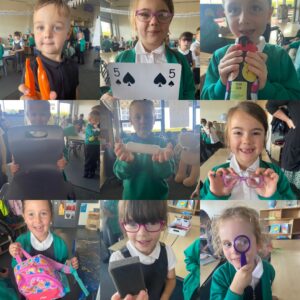
The children then searched our classroom to find items of technology. The children were able to find many things and say how they help us…

Poppy told us that “glasses help us to see better”, while River said “my bottle has my water in it for me to drink and stay healthy” and all the children were surprised when Avie said the chair was technology as it helps us to sit down!

Technology is absolutely everywhere in our classroom, so we had to go outside to find things that aren’t technology… trees and the sky aren’t technology as they are not made by people.

13th September deadline

Phase leaders:

Please can you ensure newsletters are sent to parents by the end of next week.  A copy needs to be forwarded to the office so they can place it on the website.

Context sheets need to be completed by the end of next week and submitted to me.

Can you let me know interventions for your phase and who are in these groups when you have sorted them.

Many thanks x


RE

Where do sacred stories come from?

During this lesson the children learned the meaning of the word ‘sacred’ which is a religious kind of ‘special’.  We learnt that different religions have sacred texts which include great stories in them, that are shared within their community. This is so people learn the importance of being kind, respectful as well as having a sense of belonging.


I reminded the children of our school’s RESPECT values:-

          Resilient, Enthusiastic, Safe, Perseverance, Empathetic, Confident and Tolerant.                We discussed the meaning of each of these values and how these are common themes throughout the stories we read as a class.


Image preview


Image preview

The first story we looked at was the Christian story ‘The Good Samaritan’. The children knew that this story could be found in the bible and enjoyed learning about this.

The next story we looked at was the ‘The crying camel’ which is an Islamic story found in the Quran. Arios said he loved learning about this story because he is Muslim and reads the Quran at home.

The final story we looked can be found in the Torah which was ‘The story of Moses’. This is a Jewish scared story.

The children could easily identify which symbol and story belonged to each sacred book.

F2 Stay and Play!

Bridge Building!

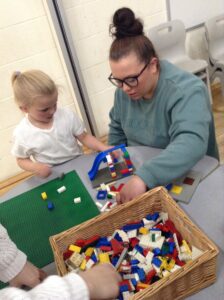
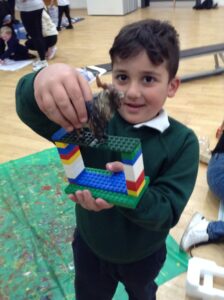
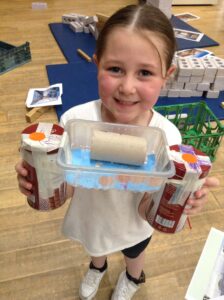
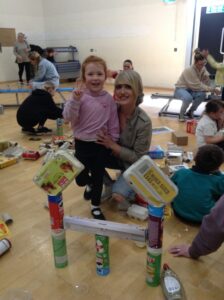
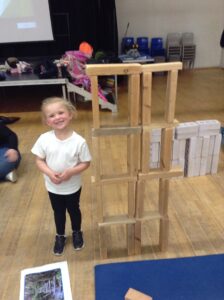
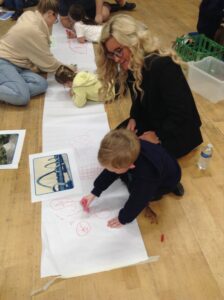
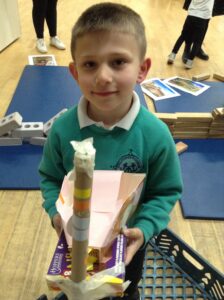
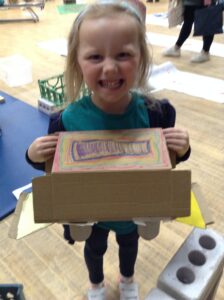
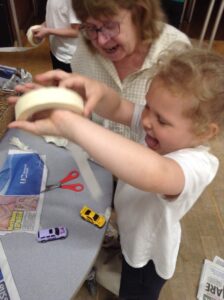
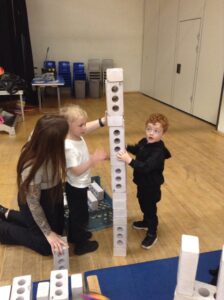
Yesterday afternoon F2 had a wonderful ‘stay and play’ session themed around building bridges!

To finish our story of ‘The Three Billy Goat’s Gruff’ we decided it would be nice to invite our families in to help us make our very own bridge for the Billy Goats to cross! We made and designed some fantastic models and showed great team-work, determination, perseverance and hard work!

Thank you to everyone who came in for our session, we hope you enjoyed it as much as us!

Y2’s Art Workshop

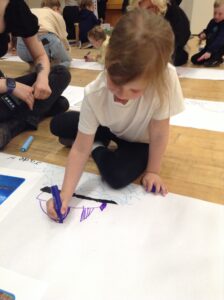
Year 2 had a workshop with local artist Charlotte Eldred last week. In Art this term Year 2 are focusing on portraits. During the workshop with Charlotte they improved their doodling skills and created different portraits using a doodling style.

Here are some of Charlotte’s examples:


Here the children are completing their art work:


Computing- Moving a robot

Lesson 4: Four directions

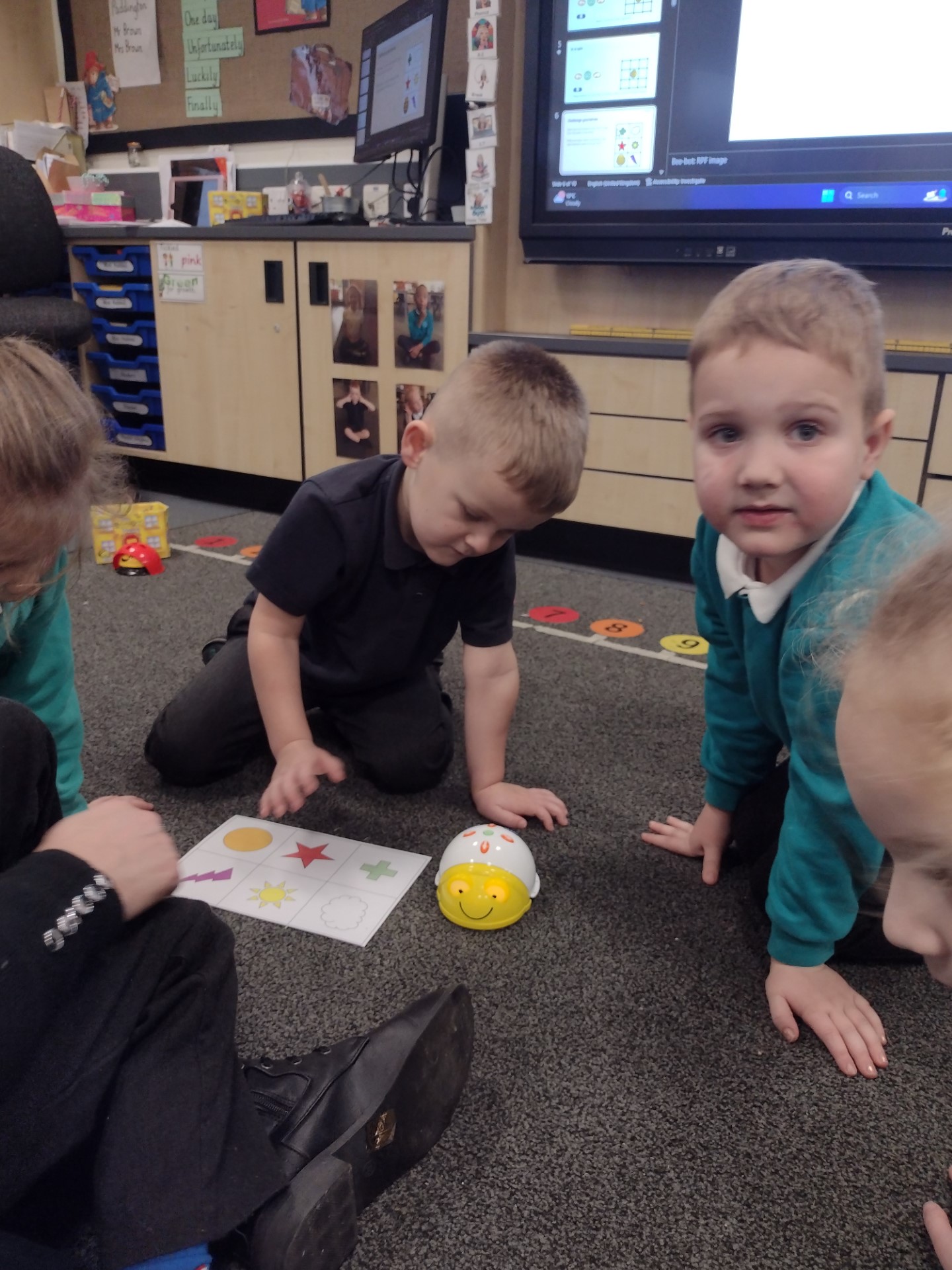
In this lesson, Year 1 have been learning to use left and right turn commands along with forwards and backwards commands. Learning how to use these buttons has allowed the children to develop more complex programs when using a robot.


Lesson 5: Getting there

Throughout this lesson, Year 1 have chosen a starting point and end point which the robot can follow. This has allowed the children to create their program and test it on the robot using a preplanned route. Where needed, they also debugged their programs.


Lesson 6: Routes

In our final lesson of the unit, the children were encouraged to plan their routes before they started to write their programs – which was built on from the lesson previously. However, we also developed the concept of there being more than one way to solve a problem. This concept applies to a lot of programming activities: the same outcome can be achieved through a number of different approaches, and there isn’t necessarily a ‘right’ way. The lesson also introduces the idea of program design, in which learners need to plan what they want their program to achieve before they start programming.
Christmas Dinner

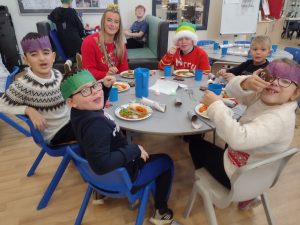
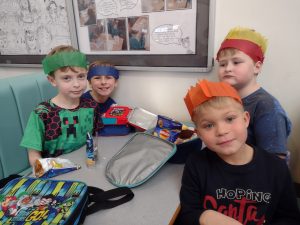
We enjoyed a sociable Christmas Dinner, pulling crackers, telling jokes, dining and chatting with our friends.

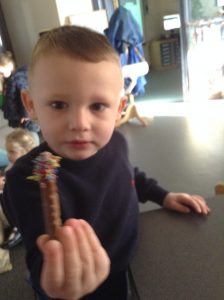
F1 Bonfire Biscuits

We made sparkler biscuits using chocolate fingers inside whilst the other children were building bonfires outside.

.

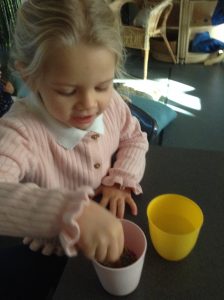
We had to dip it into the water first and then in the sparkles.

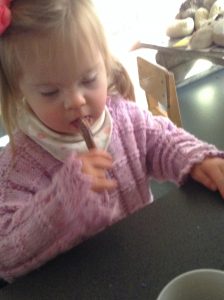
The chocolate melted in the warm water.

They were super yummy.

.

Outdoor in FS2

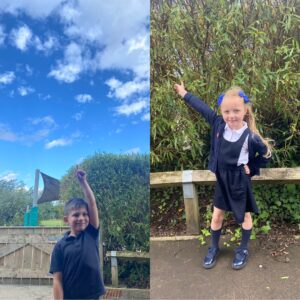
Our new Foundation Stage 2 children have loved getting outside and enjoyed exploring our fabulous outdoor area this week.


Outdoor play has so many developmental benefits.  It helps our children to develop self-confidence, independence and self-esteem. 

They also become aware of limits, boundaries and challenge in their play.

Our children get the opportunity to develop their social skills by listening, paying attention and sharing play experiences – this helps them explore their feelings and develop self-discipline.


Outdoor is a great time for their physical development too… our climbing wall proved a great challenge, it got us problem solving and using our gross motor skills, working out how to pull and push and where to place our hands and feet can be tricky at times! It also showed how determined our children are, as they tried and tried again until they got to the top, never giving up, well done everyone!