sculptors

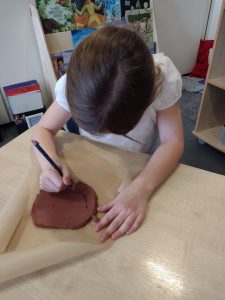
Year 2 have been sculptors this week.
During our art lesson Year 2 have been using the artist Julian Opie as an inspiration to create our own piece of art.
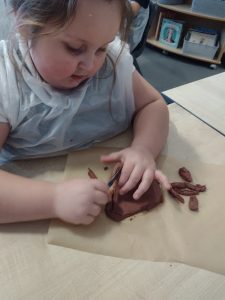
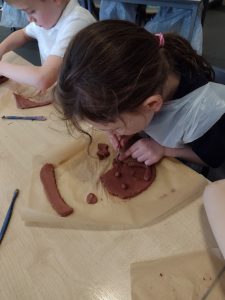
We have used clay to create self-portraits in the style of Julian Opie.
We thought about the lines Opie uses and incorporated these in our sculptures to create our features.
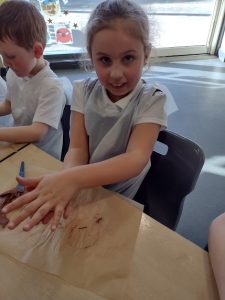
We began by recreating the shape of our faces with our clay. We needed to carve the shape before cutting the excess clay off to leave us with a face to add our features to.
We needed to mould and manipulate the clay to create our features. We rolled clay for our eyes before rolling and cutting pieces of clay to create other features such as eyebrows and lips. Our nose took much more moulding and shaping with our hands to ensure the correct size and look.
We are very proud of our finished self-portraits and are excited for them to dry.
Year 6 Crime and Punishment

Our Year 6 history curriculum provides a platform to enrich children’s awareness of the past and develop their historical consciousness. Our curriculum builds on pupils’ understanding of British, world and local history, looking at the influence that Britain had on the wider world, and how the wider world has influenced Britain.

The latest History topic for Year 6 is ‘Crime and Punishment ‘.

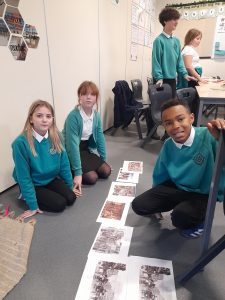
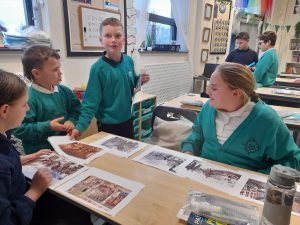
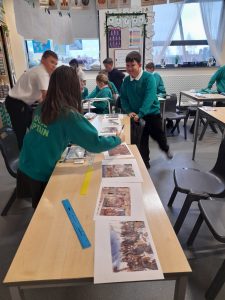
For the first lesson the children were given the task of arranging historical events in chronological order.

Chronology is the science of locating historical events in time. It relies upon chronometry, which is also known as timekeeping, and historiography, which examines the writing of history and the use of historical methods.


Looking for the evidence…


Logical thinking…


Historians heads on…

Searching  for clues…

Making decisions….

Why are timelines important ?

 A timeline is a visual learning aid that helps children organize a series of events in the order they happened. Each event or person should have a date (or time) clearly marked on the timeline. Timelines provide a framework to show potential relationships between historical events.


To understand how behaviour can impact on a group

Year 5 discussed the importance of individual rights and responsibilities, and how these can potentially impact others – answering these questions:

• Why do we need rules in society?
• How do rules keep us safe?
• Why might people break rules?
• What can we do if we think a rule is not fair?
• How can rules in a school help us to learn and grow?

For each right and responsibility, we thought of an appropriate reward if children are seen to be upholding that right. We also thought of an alternative consequence if children were not showing responsible behaviour and the right was being ignored.

Some examples included:

Being kind to other children in your class. The rewards for this were to be given dojo points, table points or to have one day per week on chrome books. If this right was to be ignored, consequences would have to take place. The children came up with sensible consequences such as: have a playtime taken from you, having to clean other children’s’ mess or having to write in pencil all day if you have a pen license.

Finally, as a class, we discussed the rewards and consequences from the lesson the children would like to see in our classroom.

These rights and responsibilities are important to discuss as children gage an understanding of the importance of obeying rules and working together to achieve their goals.

The Story of the First Diwali…

This week Foundation Stage have loved learning, exploring and celebrating all things Diwali! We loved reading the story of the first Diwali… the story of ‘Rama and Sita‘ and had great fun acting out the story with props! In continious provision we have explored Rangoli patterns, Mendhi hands and made some fabulous Diva pots! We have enjoyed learning about Hindu traditions and the festival of light!


Y3 are learning how to play the recorder!

In year 3 we are learning how to play the recorder. We have all been given our own recorder to look after and use!
This lesson we looked at how to hold the recorder and how to blow so that it makes a nice sound – we quickly learned that if you blow too hard it doesn’t sound that great!

We have been looking at the note ‘b’ and have been learning that a note is a particular musical sound. We found out that notes can represent the pitch and duration of a sound in musical notation – today we looked at crotchets which is worth one bear and minims which are worth two.

After learning all of this new knowledge we then applied it to a piece music called ‘Biker Ben’ where we played the note b on the recorder and followed the music using the notations for the correct beats.


Finger fun in Forest School!

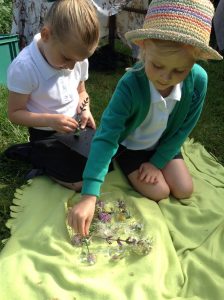
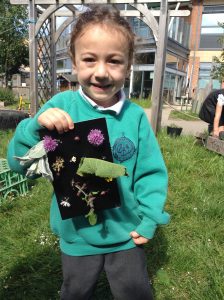
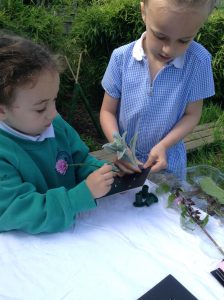
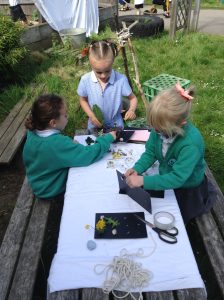
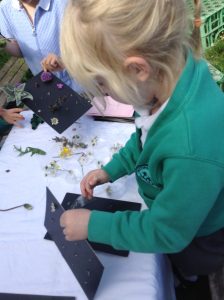
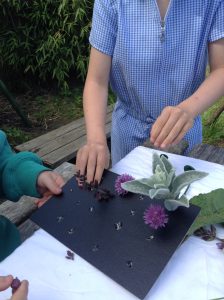
This week in Forest School we worked on our fine motor skills… threading, pushing and pulling natural materials and making our very own nature boards. We went on a nature hunt around the grounds looking for different colours and textures of natural items. We loved discussing the textures, colours and smells of our collections and tried to identify everything we collected…

Victorian fabulous finish day

Year 1 had a fantastic fabulous finish day being immersed into the world of the Victorian era and what it was like for children in the past. 

As soon as the children arrived into the class they were greeted with a new Victorian name (unless they already had one) and a very strict teacher.

The children were shocked to learn that children used to have punishments that were not very nice:

If a child answered a question wrong they used to wear a Dunce cap to embarrass them in front of the class!

Lottie pretending to be in trouble and receiving the cane from her teacher.


The children also practised writing without a pencil and paper. Victorian children would use slate to write with.

We all agreed that we much prefer how schools are today! The children were so excited to go tell their grown ups what they had learnt.

Singing in a round!

In Year 1 we have been appraising nursery rhymes with a focus on where they originated from. Last week we looked at the song ‘Hot Cross Buns’. We discovered the song was more than 300 years old and was used by bakers to help sell their delicious buns. We performed our song in a round. At first we found this extremely tricky as we would sing each other’s parts. As a result, for this week Miss Dale sang one part and the children sang the other. Here was the final outcome.

IMG_0377[1]


This week we were determined to keep practicing singing in a round. We appraised another traditional nursery rhyme ‘Row, row, row your boat’. We then looked at more additions to the song that have been invented over the years. We agreed our favourite was the crocodile one so we decided to perform this in a round and WE DID IT! So proud Year 1, well done!

IMG_0386[1]


Light

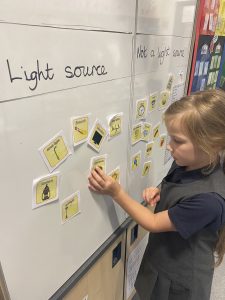
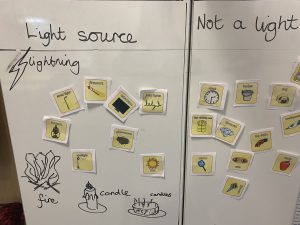
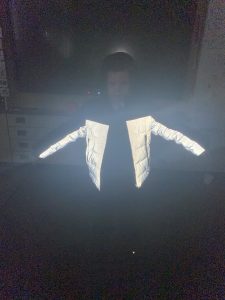
Year 3 began this unit by thinking about the question ‘what is light?’. They looked at a variety of objects/images to determine what a light source is. Some of the objects that we needed to have more in depth discussions about were; the moon, windows, reflective clothing and mirrors.

We decided on the following: a light  source is something that gives out light.

A mirror is not a light source because it does not give out light – it reflects light. A window is not a light source because it does not give out light – it allows light to pass through. The moon is not a light source because it does not give out light  – it reflects the sun’s light.


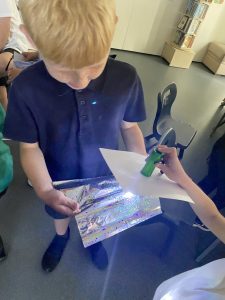
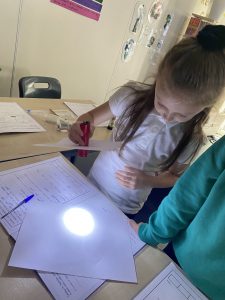
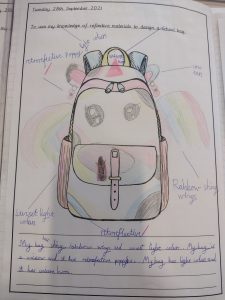
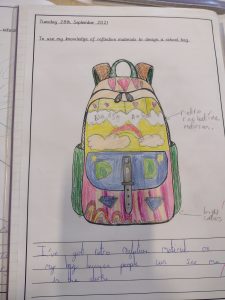
We continued by investigating the reflective properties of different materials in order to design a school rucksack.


Look at these fabulous designs:

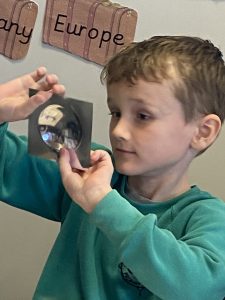
We continued by looking at different types of mirrors. The convex and concave mirrors were very surprising!


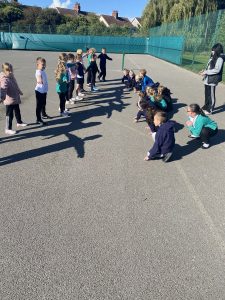
We also studied the way that shadows change in relation to the time of day and distance from the light source.


We found out about a famous scientist from history – Justus Von Liebig who invented the mirror.