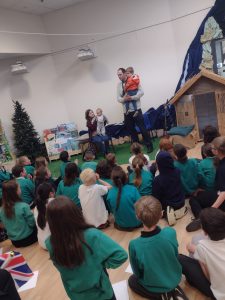
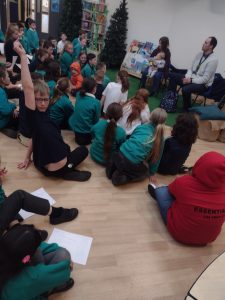
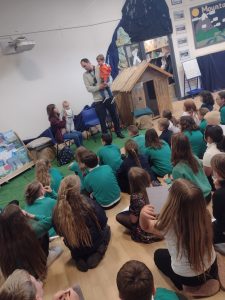
Miss Mead and Mr Sutton’s class have been learning about the human life cycle in our science lessons. Today, we had three very special visitors, Mrs Sutton, Luke and Elliot (Mr Sutton’s wife and children). Our children had the opportunity to ask education questions about Luke and Elliot’s development; they learnt lots of new knowledge about the changes that occur between 0 years and 1 years.
Category : Science
Post Science content here
We’ve had an exciting time making and tasting soup today. It’s created a lot of chat and ideas.
First of all we explored the vegetables. There were some that the children hadn’t seen before.
Isla-Grey thought the swede might be an avocado. However, she knew that the second vegetable was a parsnip. Well done Isla-Grey!
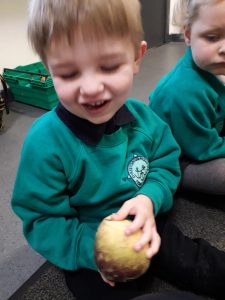
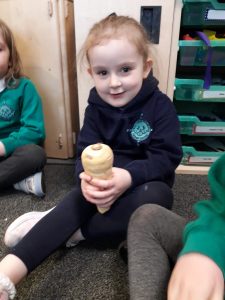
We then worked hard to chop the vegetables up. Some of them were very hard. We had to make sure that they were quite small. The children had to find the big chunks that needed cutting smaller.
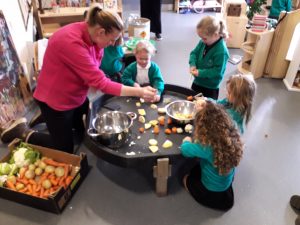
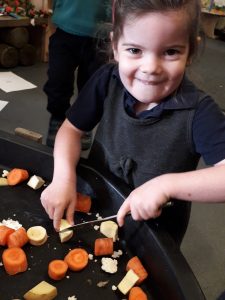
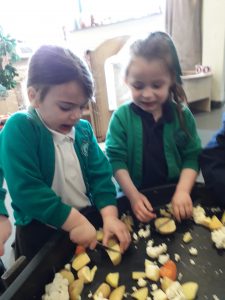
When the vegetables were ready we added some water and a stock cube. Ivy N knew that we had to cook the vegetables to make them soft.
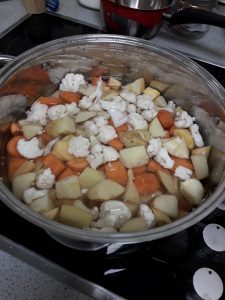
When they were cooked we blended them until the soup was smooth.
Well done to (nearly) all the children for tasting our homemade soup too! Some of them thought it was delicious!
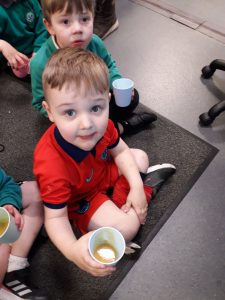
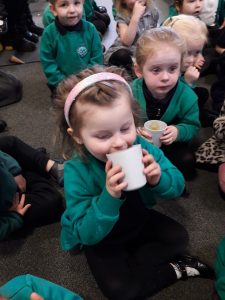
Previous learning has taught the children a circuit always starts with a battery (a cell) . A flow of electricity moves from the positive pole to the negative pole of the battery. The flow is pushed by the battery, through the wires to the other components in the circuit. This makes a complete electrical circuit.
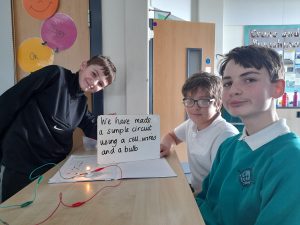
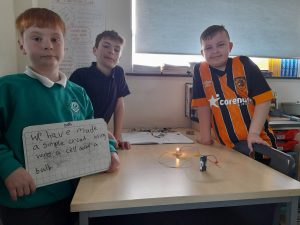
The first challenge was to create a simple circuit…
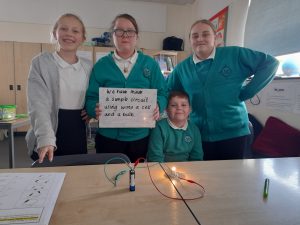
We made a simple circuit using wires, a battery and a bulb…
Then the all important question..
How can we increase the brightness of the bulb ?
Time to put your scientific heads on!!! Lots of discussion; lots of hypothising, ideas and theories began to develop.Obviously, as every scientist knows, these ideas and theories need to be tested .
Then the light bulb moment !!!
By increasing the voltage we also increased the brightness of the bulb….
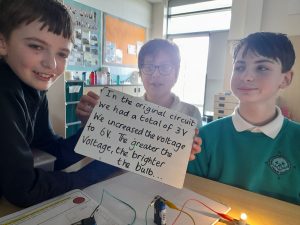
In the original circuit we had a total of 3V…we increased the voltage to 6V. We discovered the greater the voltage the brighter the bulb.
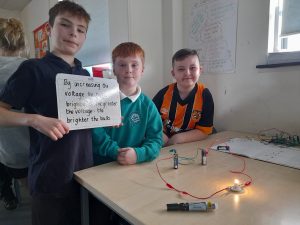
The greater the voltage the brighter the bulb
Then an extra challenge.
How can we make a switch out of foil and cardboard, which will open and close so we are able to switch the bulb on and off?
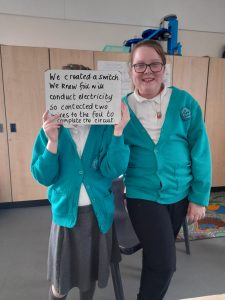
We created a switch , which would open and close. We knew foil would conduct electricity. We connected the wires to each end of the foil to create a complete circuit.
Well done girls!!!
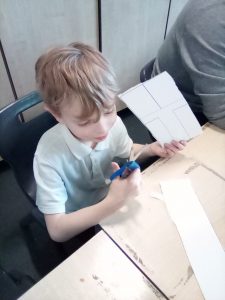
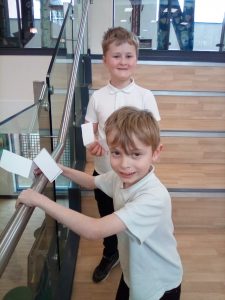
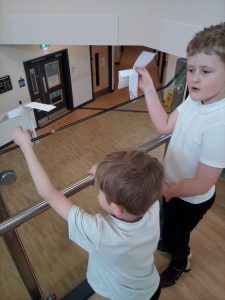
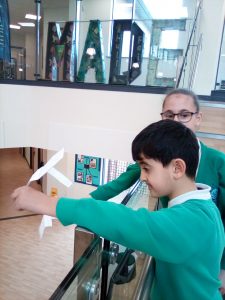
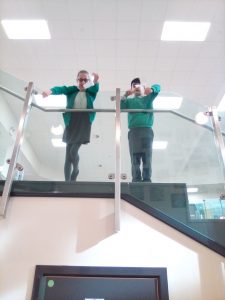
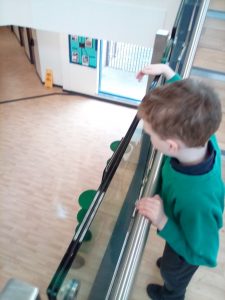
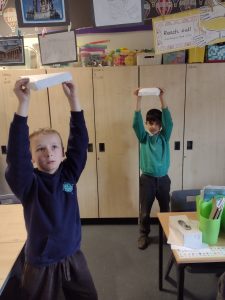
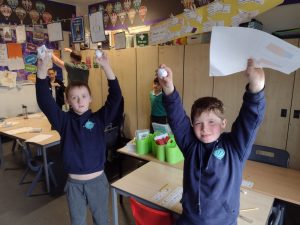
Here we have lots of fabulous phots of us being Super Scientists. What the photos can not show you is the amazing discussions that we had before, during and after these activities, which blew our teacher away. We loved being hands on and we really loved accessing these investigations which were presented in a very SEN friendly way, using symbols that were kindly made for the National Science and Engineering Week (nsew.org.uk)
Super Spinners Investigation
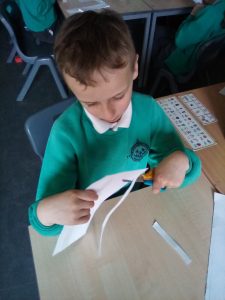
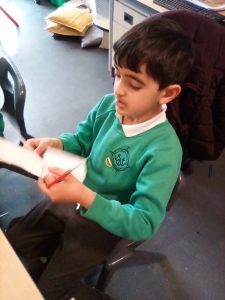
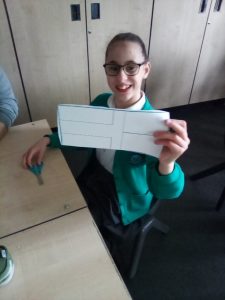
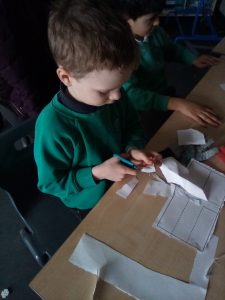
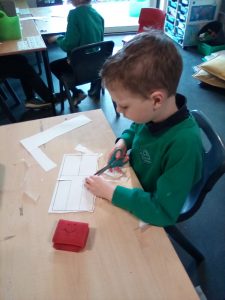
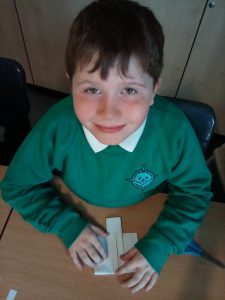
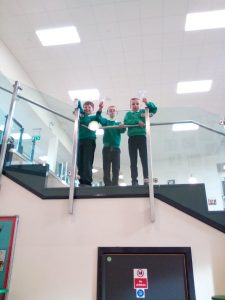
Paper Tray Investigation
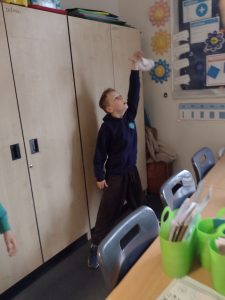
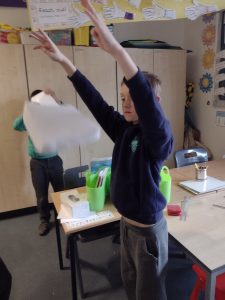
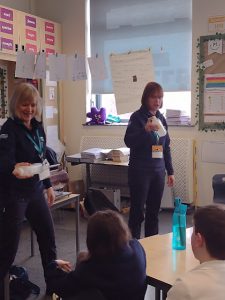
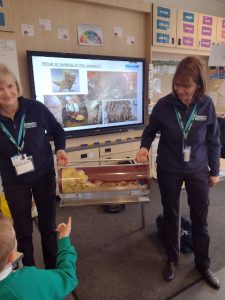
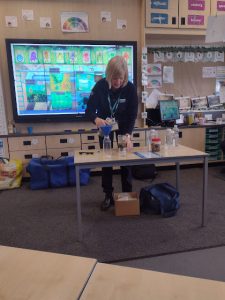
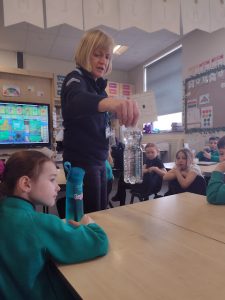
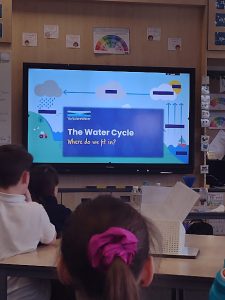
Year 3 were very luck to take part in a Yorkshire water workshop this week.
We got to find out lots about how water reaches our home.
Did you know all the water in the world has been here since the world began, there is no new water!
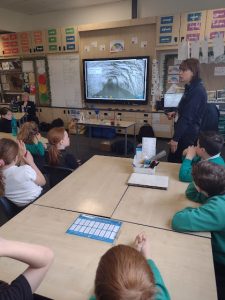
We got to see how water is taken from reservoirs and the process it takes through the water treatment works.
We found out lots of information about what we can put in the toilet and what we shouldn’t put in. We saw how toilet paper breaks down in the water but baby wipes stayed the same. Things like baby wipes can get stuck in pipes and cause them to get blocked. This could then cause a burst pipe because water is very strong.
We also found out lots of ways we can save water as there isn’t always enough. We do things like turn taps off when we are brushing our teeth, taking a shower instead of a bath and water flowers with water we wash our pots with. It is really important to save water because in the summer lots of water gets used and the sun soaks it up too.
Year 2 have had a fabulous afternoon planting trees on the school field this afternoon. We each planted a tree. We planted them alongside a bamboo cane to ensure they keep their shape. On top of the tree, we placed a protective cylinder to ensure they do not get damaged. We can’t wait to watch them grow!
-
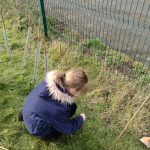
- Planting our trees!
-
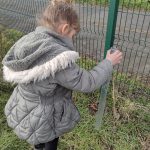
- Adding the protective cylinder!
-
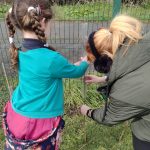
- Working together!
-
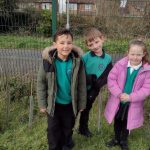
- We were proud of our end outcome!
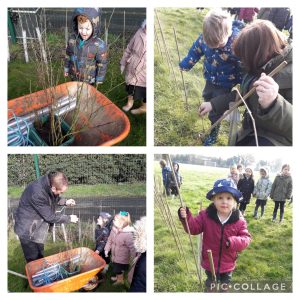
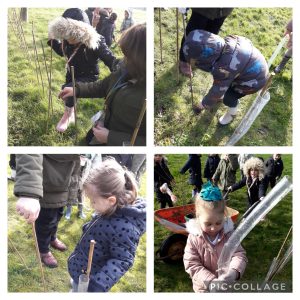
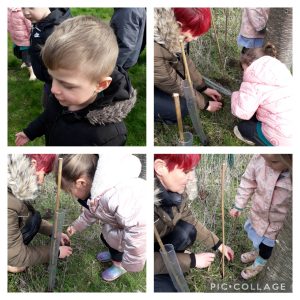
Mr Wileman helped us plant trees today. He told us what we had to do to plant them. Although lots of the F1 children thought that they were just ‘little sticks’, we looked at the roots and talked about what they will need to help them grow. Mr Wileman also gave us special plastic ‘blankets’ to keep them warm whilst they grown. Alex couldn’t believe how small they were. Ivy N thought that when they are all in Year 6 the trees will be as tall as Mrs Silverwood!
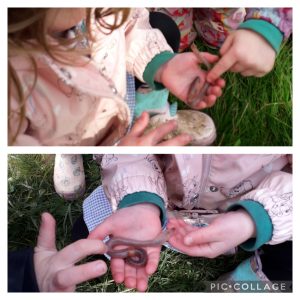
We also saw the biggest worms we had EVER seen!
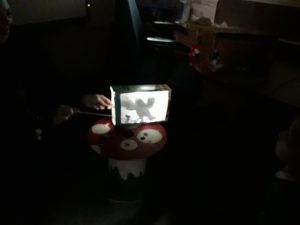
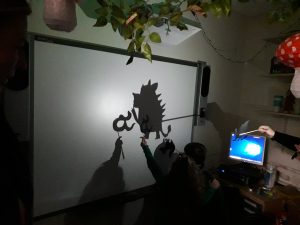
We have joined in Science Week by exploring shadows. Mrs Kenington made some fabulous puppets, from our Gruffalo story, which we have enjoyed exploring, especially during Breakfast Club. The children really enjoyed listening to and joining in with the story.
Year 5 have been learning about changing states and materials in our science lessons. In today’s lesson (as it is science week!), we were learning about reversible and irreversible changes.
We understood that reversible changes are something that you can change back to its original form through: sieving, filtering, evaporating and through magnets.
Irreversible changes are things that cannot be undone or changed back to its original form for example, scrambling eggs, melting a candle, or baking a cake.
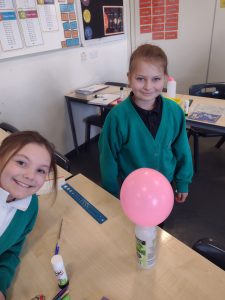
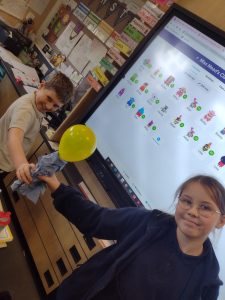
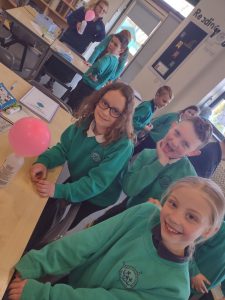
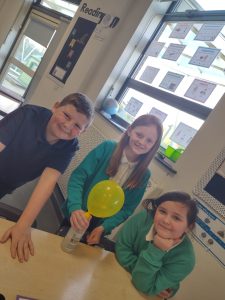
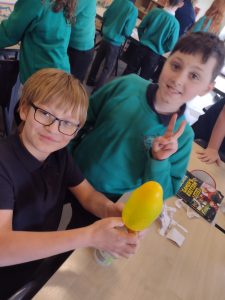
For our experiment today, the children had three ingredients: bicarbonate soda and and vinegar. The children predicted what would happen when the bicarbonate soda is mixed with the vinegar – they came up with the idea that it would fizz. We tested our predictions through the experiment where we put a tablespoon of bicarbonate soda inside a balloon and placed the balloon on top of a bottle that was filled with vinegar.
Our results showed that a chemical reaction occurred with the bicarbonate soda and the vinegar, producing a gas and changing its state. As a result, the balloon blew up! This is an irreversible change.
On Monday, we invited our parents and adults in to work with us whilst we completed our Science investigation!
We are working on Materials and their Properties – and we wanted to test if the shape of a paper bridge affected how much weight it could hold.
First we made a prediction and planned how we would fold and make our paper bridges. Lots of us predicted that the thicker the bridge, the more weight the bridge would hold.
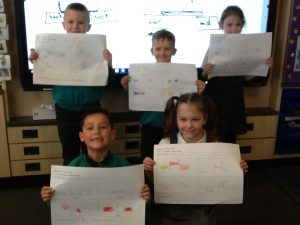
We then tested our bridges with the weight of pennies. If the bridge collapsed when holding only a few pennies, then it wasn’t strong enough.
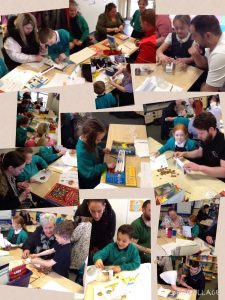
We had such a lovely afternoon working with our adults and discussing our methods and conclusions.