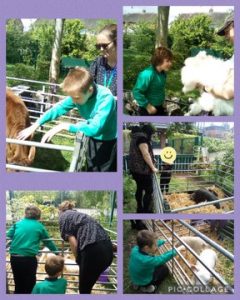
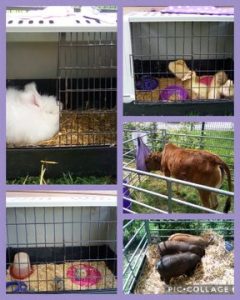
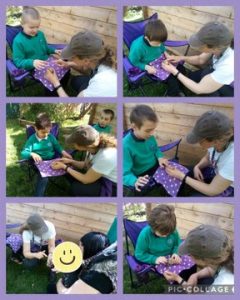
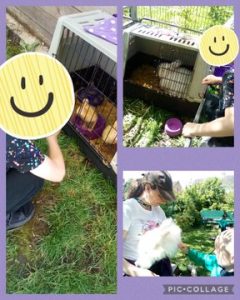
Thank you so much to Purple Pig Farm for teaching us how to handle and care for all the animals today.
This is such a treat for us to look forward to as we all love our animals.
We have such kind caring natures and hands!
Post Science content here
Thank you so much to Purple Pig Farm for teaching us how to handle and care for all the animals today.
This is such a treat for us to look forward to as we all love our animals.
We have such kind caring natures and hands!
We were able to discuss and sequence events of our story of ‘The Very Hungry Caterpillar’ using Tales Toolkit.
Tales Toolkit is a framework for storytelling which is accessible for all our little treasures. The framework using clear symbols displaying character, setting, problem and solution allows us to be fully engaged in storytelling from start to finish. We used extra props and visuals to aide the sequence of events.
Our little treasures were able to identify that the caterpillar came first and the butterfly at the end. With support and help from their classroom environment they were able to count and sequence some of the food that the hungry caterpillar ate.
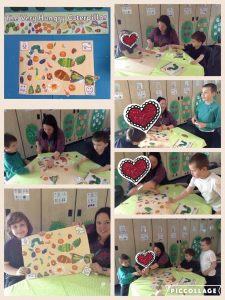
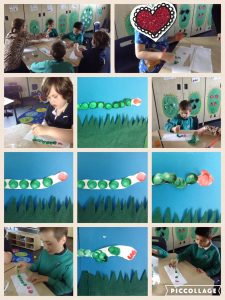
We were able to, with a little support, count and copy the pattern of Mrs Nageri’s caterpillar, using miniature sponge printing. We are so clever!
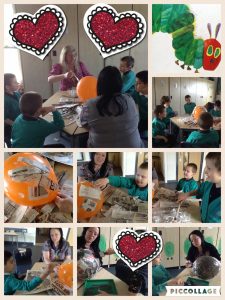
We loved our sensory messy play using paper mache to create a cocoon for our caterpillar. We then painted it using a large grown up paintbrush with Mrs Robinson.
He is now tucked up all nice and cosy. Sshhhhhh!!!!!
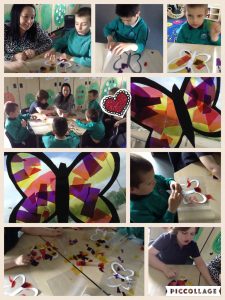
Just like all our little treasures, our caterpillar has grown into a beautiful butterfly.
We love the way the sun catches our stained glass butterflies, shining brightly.
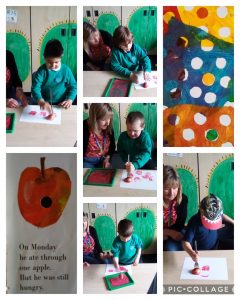
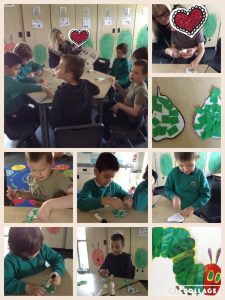
On Monday he ate through one apple, but he was still hungry.
We enjoyed some apple printing to represent the food he ate on Monday.
On Tuesday he ate through two pears, but he was still hungry.
We enjoyed the sensory feel of the felt we used to make our pears, representing the food he ate on Tuesday.
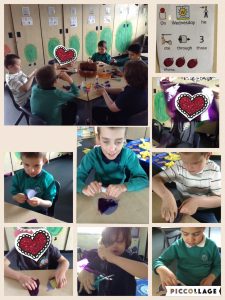
On Wednesday he ate through three plums, but he was still hungry.
We enjoyed exploring our senses looking through the purple coloured cello to make our plums, representing the food he ate on Wednesday.
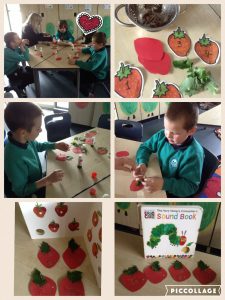
On Thursday he ate through four strawberries, but he was still hungry.
We used our glue to stick on some seeds we found outdoors to represent the seeds on our strawberries. This was the food he ate on Thursday.
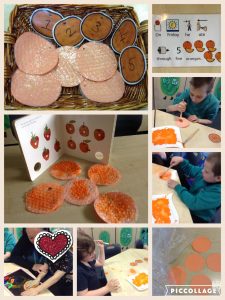
On Friday he ate through five oranges, but he was still hungry.
We loved painting the bubble wrap to represent the texture of the oranges he ate on Friday.
On Saturday he had stomachache after eating through lots of yummy food. Can you see all the food he ate from our ‘Widgit’ visuals?
We used our scissor skills to cut out all the yummy food he ate on Saturday.
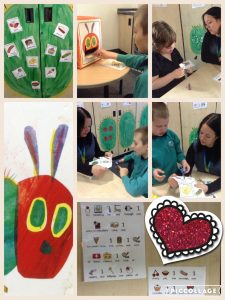
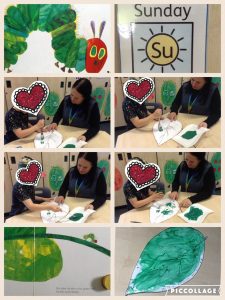
On Sunday the caterpillar ate though one nice green leaf. He felt much better!
We enjoyed fork painting to represent our nice green leaf.
Great excitement in The Hub for our new topic ‘What’s at the bottom of our garden?’
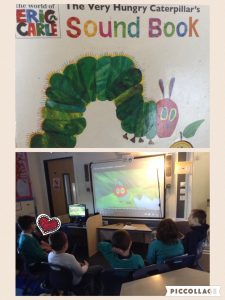
We looked at the life cycle of a butterfly through our story ‘The Very Hungry Caterpillar’ by Eric Carle.
We demonstrated good sitting, looking and listening during our visual representation of the story. Good understanding was displayed, through eye gaze and pointing, to answer all our questions.
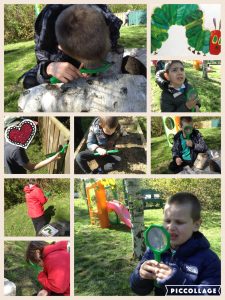
After some inspiration from our story, we explored our outdoor area for some very hungry caterpillars using our magnifying glass.
Can you imagine the excitement when some real live caterpillars arrived in our Hub for us to look after!
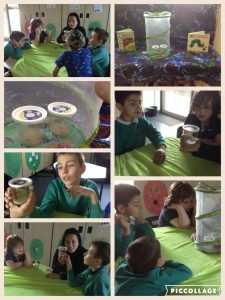
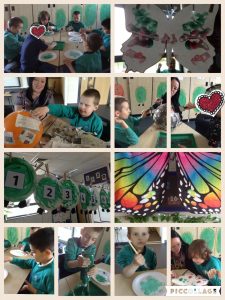
We immersed our classroom to make our caterpillars feel at home. We made a number line caterpillar, paper mache cocoon and symmetrical patterned butterflies.
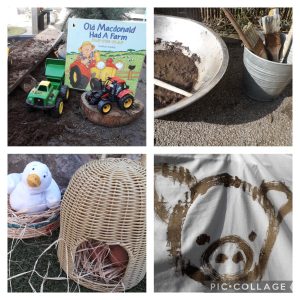
Our Farm Day was a great success. The ‘Farmers’ explored all our activities.
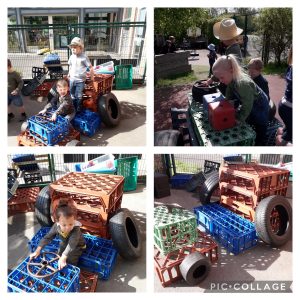
They drove their tractors to the fields.
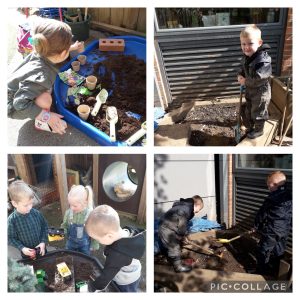
They dug their fields and planted seeds.
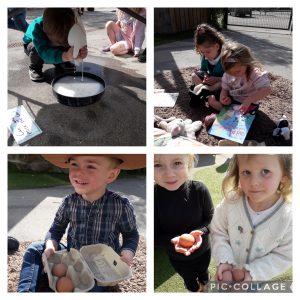
The cows got milked, eggs collected and we learnt more about our animals from our animal books.
A great day!
The children have been enjoying exploring the balance scales and seeing which bucket is heavy and which is light. It’s a tricky concept though as sometimes the bucket with the most in is the lightest!
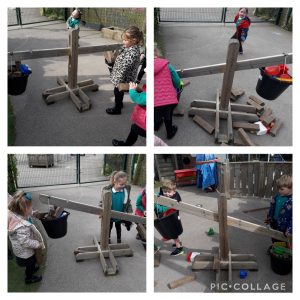
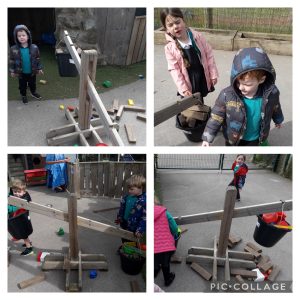
FS are all ready for their Farm Day!
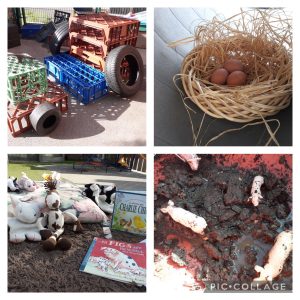
To coincide with Earth Day and making our pledges, we learnt all about bees, why they are crucial to life on earth and that they are sadly dying out.. We couldn’t believe that in the UK alone, around 70 crops depend on bee pollination. While there are other methods of pollination, including by other animals and the wind, wild bees can pollinate on a much bigger and more efficient scale. Estimates suggest it would cost UK farmers an incredible £1.8 billion a year to manually pollinate their crops.
We found out that one of the main reasons for bees dying is because they are losing their habitats due to humans building on woodland and grassland areas and different farming techniques.
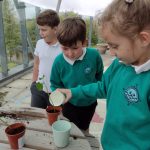
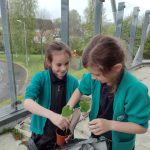
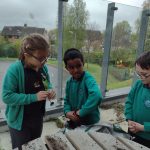
To do our bit for bees, we planted a wildflower bee garden and hope that it will attract bees once it is grown.
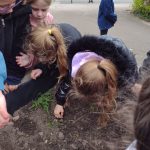
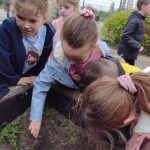
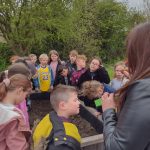
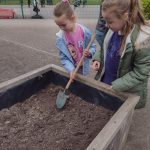
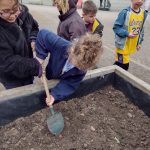
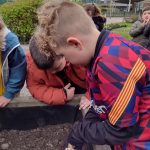
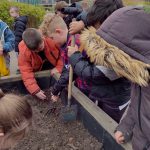
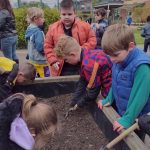
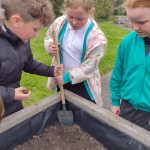
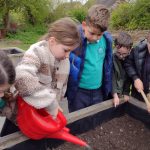
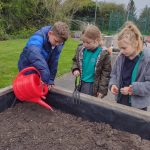
In Year 3 in science, our unit of work at the moment is plants. We have been learning all about features of plants and have been identifying and describing the functions of different parts of flowering plants: roots, stem/trunk, leaves and flowers and conditions they need to grow.
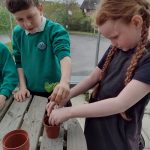
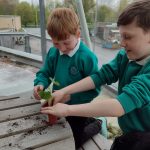
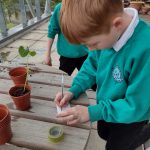
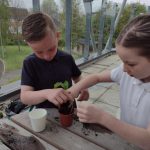
This lesson we have been exploring the requirements of plants for life and growth (air, light, water, nutrients from soil, and room to grow) and what will happen if we take away one of those requirements. To do this, we carried out a comparative and fair test investigation – we worked in groups of 3, identified the requirements and which variable we would be taking away to check and how we would make it a fair test and decided we would have a control plat and one that would have a variable taken away.
We made predictions for what would happen to the plant that has all the requirements needed to grow and then to the plant that had one variable taken away. We explained our methods and drew diagrams.
After that, we planted our plants making sure that if they both had water then they had the same amounts, the ones without light were put in a dark place and if they didn’t have warmth were left outside.
We will keep measuring both plants to conclude the investigations.