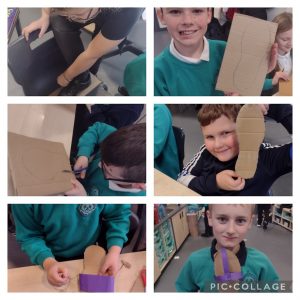
DT – Creating Ancient Greek Sandals

Within our Autumn Design and Technology unit, we have investigated a range of sandals, focusing on the material, purpose, audience, occasion and functionality. Today’s focus was the practical task which required the children to trace around their foot, cutting the template very carefully and precisely to form the sole of their sandal. The children then created their chosen style of sandal by sewing the straps onto the sole.

To understand how behaviour can impact on a group

Year 5 discussed the importance of individual rights and responsibilities, and how these can potentially impact others – answering these questions:

• Why do we need rules in society?
• How do rules keep us safe?
• Why might people break rules?
• What can we do if we think a rule is not fair?
• How can rules in a school help us to learn and grow?

For each right and responsibility, we thought of an appropriate reward if children are seen to be upholding that right. We also thought of an alternative consequence if children were not showing responsible behaviour and the right was being ignored.

Some examples included:

Being kind to other children in your class. The rewards for this were to be given dojo points, table points or to have one day per week on chrome books. If this right was to be ignored, consequences would have to take place. The children came up with sensible consequences such as: have a playtime taken from you, having to clean other children’s’ mess or having to write in pencil all day if you have a pen license.

Finally, as a class, we discussed the rewards and consequences from the lesson the children would like to see in our classroom.

These rights and responsibilities are important to discuss as children gage an understanding of the importance of obeying rules and working together to achieve their goals.

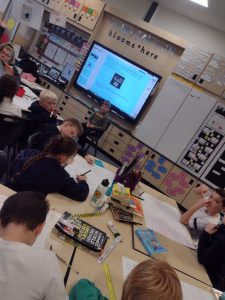
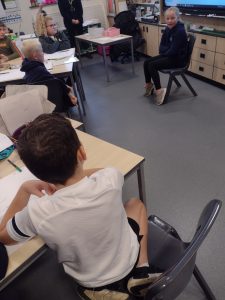
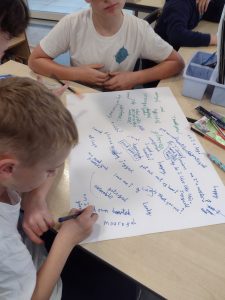
Hot seating and generating vocabulary

Year 5 are enjoying their new English unit, The Little Freak.

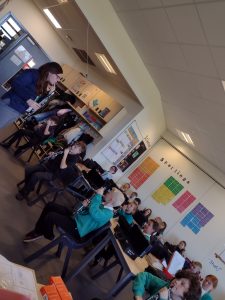
In yesterday’s lesson, we focused on internal monologues to understand why they are a useful tool for the audience. We hot seated children as the boy from The Little Freak film and other children generated questions to ask him.


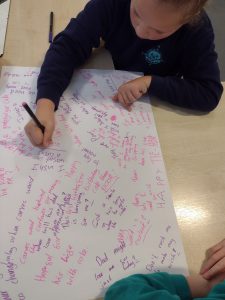
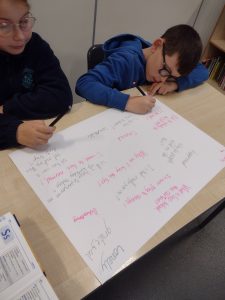
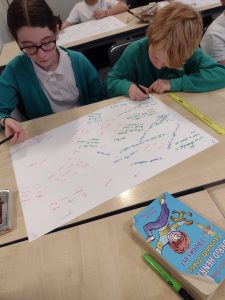
The children then worked in pairs to generate vocabulary that could be useful in a monologue for the little boy. This work will be a useful tool for today’s English lesson when the children write a monologue from The Little Freak.


Clarinet Lessons!

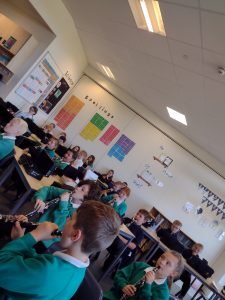
During our music lesson today, children learnt how to put a clarinet together with the reeds. They then learnt that when the reed is fixed to mouthpiece, the air in the instrument vibrates when you blow into it to create sound. We also learnt how to create controlled sounds by positioning our mouths correctly.

The children are loving our music lessons with Mrs Hall!

Mental health awareness week!

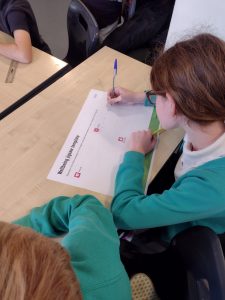
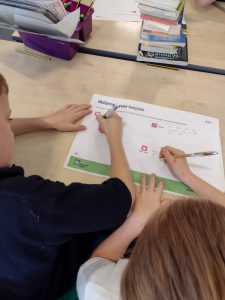
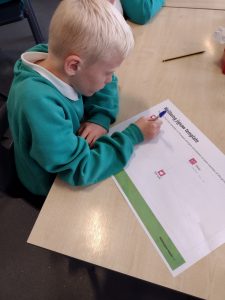
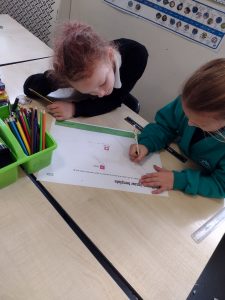
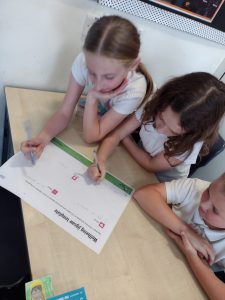
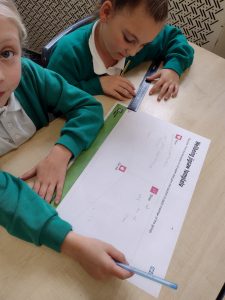
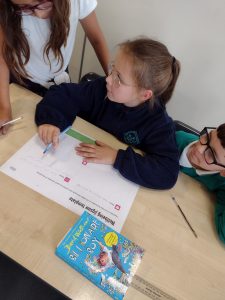
For Mental Health Awareness Week, Year 5 have been learning about mental/physical wellbeing. We spoke about how we can improve our wellbeing by moving, eating and sleeping; we discussed how we can achieve these areas and the children worked together to complete the wellbeing jigsaw template.

Bean bag experiment

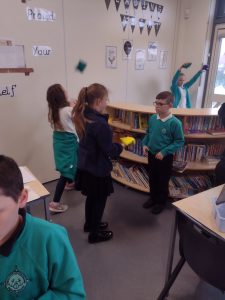
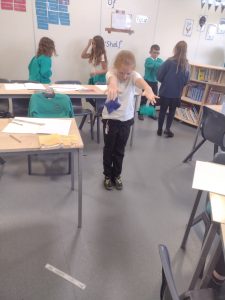
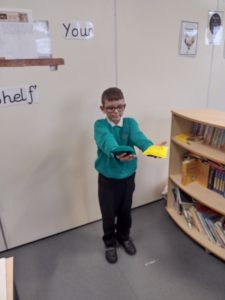
Today, we recapped our knowledge of forces – particularly gravity and air resistance. We then discussed whether heavier objects would hit the ground before lighter objects, or vice versa. We created our own prediction using the key vocabulary ‘gravity’ and ‘air resistance’, and then carried out the experiment.

We came to the conclusion that both objects hit the ground at the same time due to having the same amount of gravitational pull – discussing the impact of air resistance and how this impacts on falling objects. After this, we wrote up our conclusion.

We had a lovely lesson and were super sensible!

Newspaper Report Introduction

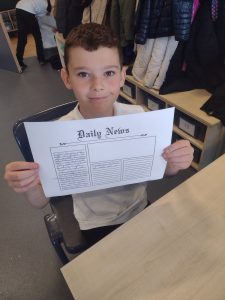
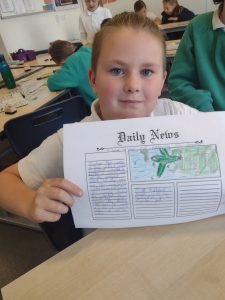
On Friday, Year 5 created a shared (with partners) newspaper report introduction, including the 5Ws – who, what, where, when, why. We are really enjoying our English unit about the ‘Titanium’ music video. Miss Mead is so impressed by all the hard work and determination we put into our writing!

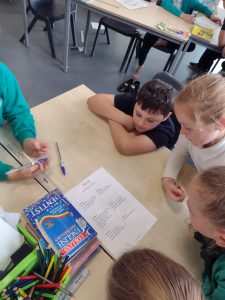
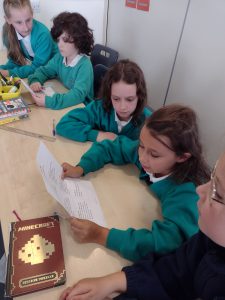
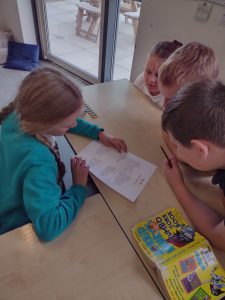
In Miss Mead’s PSHE lesson, we spoke about the definition of a refugee and how/why they flee their country, and whether refugees can be identified by their appearance. We then discussed what rights and responsibilities refugee children could have, comparing and contrasting them to our rights and responsibilities. The UNCRC was then introduced and the children spoke about how rights and responsibilities of the refugee children fit into the UNCRC or whether they do fit at all. The children then worked in groups to identify different Articles within the UNCRC and how we, as children, can meet the policies.

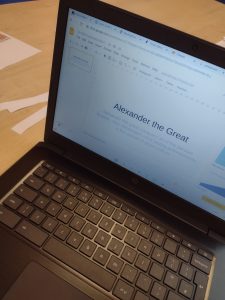
This afternoon, Miss Mead’s class discovered who Alexander the Great is and why he had such importance in the Ancient Greek time period.

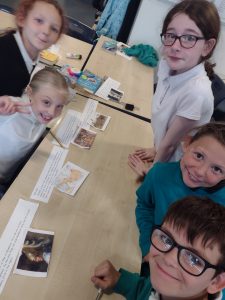
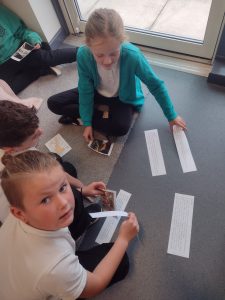
Firstly, we began with a discussion about who Alexander the Great/what he did by using our historian skills to examine sources. We then constructed a timeline of key events in Alexander the Great’s life – the children had to order the events and match them to the correct images.
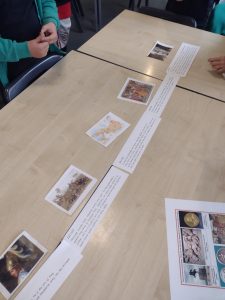


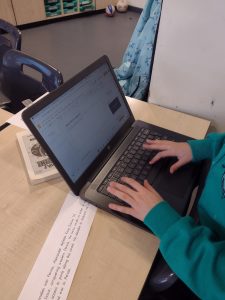
Next, the children worked in small groups to create their own PowerPoint based one one achievement of Alexander the Great. We began to answer these questions:

1. When did this achievement happen?

2. Why and how did Alexander the Great complete his achievement?

3. What were the consequences of this happening?

4. What impact did this have on other countries? Positive or negative?

5. How did it impact on civilisation?

6. Did it have an impact upon Ancient Greece?

Children will continue their PowerPoints during the next history lesson.
Learning our numbers

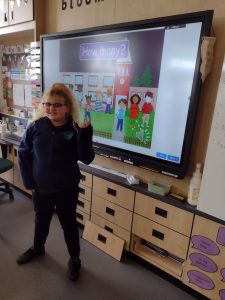
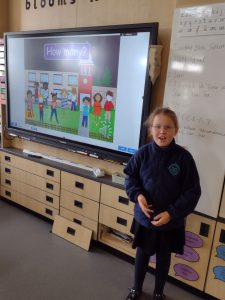
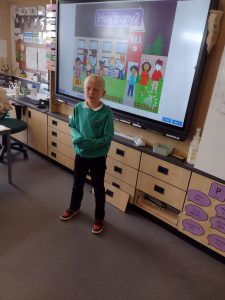
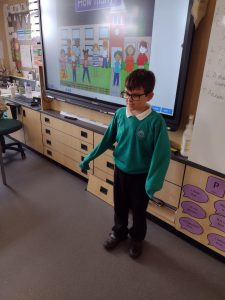
In Miss Mead’s class today, we learnt how to say 1-10 in Spanish. We had so much fun using Language Angels to expand our modern foreign language knowledge!

We even performed our Spanish to the rest of the class.