Chronology

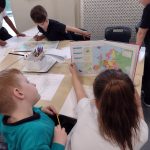
This week Year 3 have been discussing chronology and what this means.

We have discussed how chronology tells us the order things happened in.

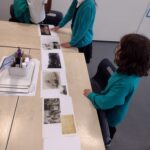
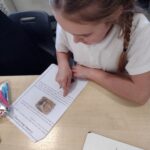
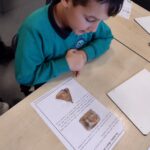
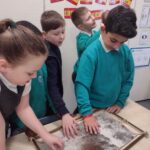
During our history lesson we have begun to look at the history of Hull. We spent some time looking at some sources of evidence and discussing what these sources showed us. We then had a go at putting our sources into the correct chronological order.

We discussed how black and white photographs must be older than coloured ones and how paintings must be even older as these were created before cameras were invented.


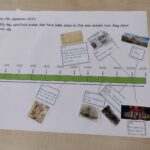
Once we had created our chronological timeline we discussed the correct order of events in Hull.

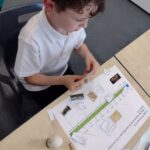
We then created our own timeline in our books ensuring we thought about the chronological order of the events.


We cannot wait to find out lots of information about these events that shaped the city of Kingston Upon Hull.

Geography – fieldwork

Year 3 had the fantastic opportunity this term to complete fieldwork comparing villages and towns.

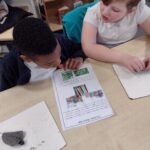
We began our fieldwork by visiting the local town of Hessle.  We were lucky to be able to walk to the town where we discussed the differing types of land use we could see as well as recording the different types of buildings we passed on our walk. We saw lots of different shops in Hessle including food shops, pet shops and a post office. There were many pubs and we walked past 2 churches as well as local park. We discussed the size of populations in towns and if all these facilities were needed.  Before we left Hessle we had the opportunity to carry out a traffic survey. We used a bar method to record all traffic that past us in a 10 minute period. We kept our findings ready to compare with what we discovered on our next fieldwork trip.


Next, we had the opportunity to visit Brantingham. This is a local village, we had to use the school minibus to get here as it was a little further than Hessle. Again, we discussed the types of land use we could see in Brantingham and recorded the building we saw as we walked around. This time there were no shops, no post office and there was only one pub and one church. We discussed the size of populations in villages and we were very surprised that it did not take us long to walk the whole length of Brantingham. Before we left we carried out a traffic survey. Again, we used a bar method to count all vehicles that passed us in a 10 minute period.


When we were back at school we were able to compare Brantingham with Hessle. We were all shocked to compare the findings of our traffic survey. When we were in Hessle we struggled to record all the vehicles but in Brantingham we were waiting for them to come past us. Only 4 vehicles passed us in Brantingham! We compared the shops and facilities of both areas and discussed how a town would need these facilities more than a village due to its bigger population. We also discussed how land use in a town had more commercial and industrial use than a village which had more agricultural and forestry use and the reasons for this.

Year 3 really enjoyed our field work and seeing these types of settlements for ourselves made us realise the huge differences between them both.
cheddar man

This week, Year 3 have been learning all about The Cheddar Man.

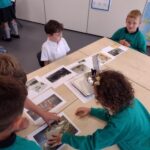
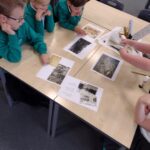
We discovered that this was a skeleton of human remain that were found in Cheddar Gorge, in Somerset. The remains are believed to be those of a Neolithic cave man who lived during the Stone Age.

We discussed the difference between primary and secondary sources and how we trust each of these. we decided that Cheddar Man is a primary source but all the information we know about him is a secondary source.

We found out about Cheddar Man’s diet, where he lived and the types of activities he may have done during the day.

luna new year

As part of our Mandarin music lessons this term. Year 3 were very lucky to learn about the Luna New Year from our Mandarin teachers.

We found out about how important the New Year is and how this special time is spent with families. We discovered the importance of red envelopes and how these are given to younger members of the family with a wish for health for the coming year, as well as containing money.

We also discovered how houses are decorated with lots of red decorations and lanterns and the types of food that are eaten. lots of families spend time making dumplings together before they have their special family feasts.

internet safety day

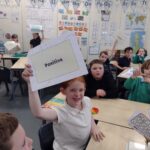
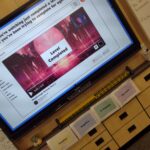
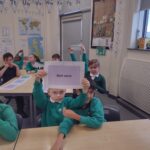
For internet safety day, year 3 have been discussing different things that we may see or hear online and how these make us feel.

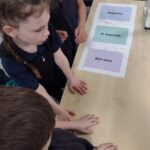
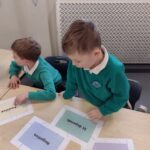
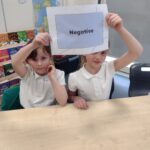
We looked at different scenarios including friends posts, you tuber videos and gamer messages. Some of these scenarios made us feel positive and we liked how they would make us feel if we saw them. Some of them made us feel negative and we did not like these one. We discussed why they made feel us this way and what me do if we saw things like this. We also talked about all the people who can help us and how we can ask for help to deal with things that upset us or make us worried online.

stone age to iron age

Year 3 are starting our new topic this week. It is called Stone Age to Iron Age. Lots of us realised we are going to be learning about a period of history that happened a long time ago. We discussed the word ‘prehistoric’ and its meaning as well as how we use the letters BC/BCE and AD/CE to define what time periods we are discussing.

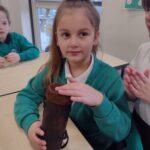
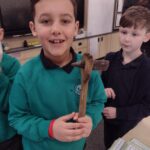
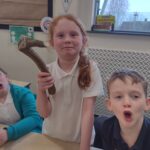
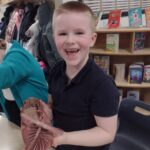
We had the exciting opportunity to start our new topic by looking at artefacts that would have been used during these periods. We looked at things such as animal skins, shoes and tools that would have been used to make life easier during this time period.

Art exhibition

We are so proud to have held our first Christopher Pickering Art Exhibition.

The whole school spent several weeks in preperation practising our art skills using different medias and exploring different artists work in order to create our art work. Some of us used collage, some used oil pastels, colour washing, paint, pencil and marker pens to name just some of the media in our final masterpieces. We drew on all the rt skills we have developed so far to help us create our fantastic art work and combined this with the influence of different artists including Tracey Savage, Van Gough, Paul Klee and Kandinsky.


We were all very proud when had the opportunity to visit the gallery and see our work displayed in frames and named just like true artists.

We hope that everybody who had chance to visit the gallery had a lovely time.

hull’s history

Year 3 absolutely loved our trip to Hull city center to discover all about the fishing industry and how it shaped Hull as a city.

We spent some time at the beginning of the day recalling all the facts we already knew about the fishing industry. We knew lots of facts such as Hull’s first dock was built for whaling ships and was called The Dock.


We found out lots more information from our session with Children’s University. We were all very shocked when we discovered that Hull was once the worlds largest port.

Once we had discovered these facts we had the opportunity to go and ask members of the public the same information. We found out that older people knew lots of facts about the fishing industry in Hull however younger people did not know as much.


We spent some time finding out even more information about the fishing industry by conducting our own research. We got to find out what life was like onboard a trawler and and that fishermen only spent 3 days at home between fishing trips. This helped to give them the name ‘3 day millionaires’. We also discussed how important the Headscarf Revolutionaries were in preventing  many deaths at sea.


After our morning of research we got to see the influence of the fishing industry around the city. We visited many important sites including ‘The Last Trip’ memorial, the fishing gate where fish was taken to the markets from the trawlers and we saw one of the fish shops where lots of fish was sold in Hull.

treble clef stave

This week year 3 have been looking at what a treble clef stave is and how to write musical notes one.

We have learnt the notes B, A and G so far and this week we have looked at where abouts these would be placed on a musical stave.

We found there are mnemonics we can say to help us where these notes go. We have practiced FACE for notes that sit in the spaces and Every Good Boy Deserves Food for the notes that sit on the lines.

We practised writing these notes on a stave before we played them on our recorders.

Where is Hull?

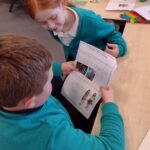
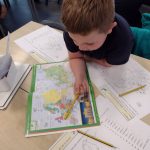
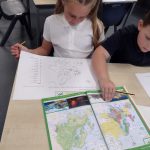
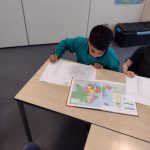
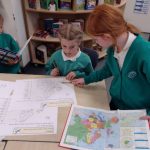
This week in geography, Year 3 have been using atlases.

We have begun to identify countries in Europe with the use of an atlas. We could identify England, Scotland, Wales and Northern Ireland independently. We then began to find France, Belgium and The Netherlands as these are the countries which are closest to Hull.

We can use our atlas and our knowledge of compass points to find European countries which are north, south, east or west in relation to where Hull is.

We enjoyed using the atlases and worked together to identify lots of European countries.