F1 have been learning about our homes. Click on the link below to see how we got on during our House Hunt…

Post geography content here
F1 have been learning about our homes. Click on the link below to see how we got on during our House Hunt…
As part of our topic ‘Houses and Homes’ F2 have been exploring the different types of houses built, exploring vocabulary like ‘detached’, ‘semi-detached’, ‘bungalow’, ‘flat’, ‘caravan’ and ‘terraced’! The children have become very confident at spotting and naming the different types of houses! We also talked about road safety and how to keep safe crossing the roads with our adults. We spoke about stop, look, listen and think and even spotted some local police officer’s on patrol who helped us to cross safely! All the children in Foundation had a brilliant morning on our house hunting walk and worked together to tick off the houses on their scavenger list!


The first thing our children noticed upon arriving at school this morning was the icy white frost that had covered our outdoor area! One child announced as he walked in “Jack Frost is here!”
This inspired us to get our coats on and go on a season walk, seeing if we could spot anymore signs of the arrival of Jack Frost! We got wrapped up and discussed the clothing we needed to wear at this time of year and headed out on our season walk! We loved exploring the frost with our senses, the touch of the cold, the smell of the fresh chilly air… some of us even enjoyed the taste of the cold ice!!! We noticed how the frost had left sparkly patterns on the floor, the leaves and on all our outdoor toys! We headed out around the school grounds and felt how hard the ground was and listened to the crunching of the grass under out feet!
This walk led to lots of discussions about what frost is and what happens to puddles and water outside when the frost comes! We discussed when we have seen frost before, lots of us have seen it on our windows or cars! And how we can get rid of it from cars! We talked about its glittery shiny appearance but how it also can be slippery and we must tread more carefully!
We loved exploring nature in the frost and finding leaves with beautifully sparkly patterns! Mrs Buss played a warm up leaf game with us… this was lots of fun as we got to find as many leaves as we could and warm them up with our hands watching the frost melt!


Year 3 absolutely loved our trip to Hull city center to discover all about the fishing industry and how it shaped Hull as a city.
We spent some time at the beginning of the day recalling all the facts we already knew about the fishing industry. We knew lots of facts such as Hull’s first dock was built for whaling ships and was called The Dock.


We found out lots more information from our session with Children’s University. We were all very shocked when we discovered that Hull was once the worlds largest port.
Once we had discovered these facts we had the opportunity to go and ask members of the public the same information. We found out that older people knew lots of facts about the fishing industry in Hull however younger people did not know as much.


We spent some time finding out even more information about the fishing industry by conducting our own research. We got to find out what life was like onboard a trawler and and that fishermen only spent 3 days at home between fishing trips. This helped to give them the name ‘3 day millionaires’. We also discussed how important the Headscarf Revolutionaries were in preventing many deaths at sea.


After our morning of research we got to see the influence of the fishing industry around the city. We visited many important sites including ‘The Last Trip’ memorial, the fishing gate where fish was taken to the markets from the trawlers and we saw one of the fish shops where lots of fish was sold in Hull.


Y5’s knowledge and understanding of Anient Greece was put to test in our end of unit Kahoot quiz! A huge well done to our top 3 winners: Danielle placing 3rd, Simon placing 2nd and our winner, Dylan (real life historian!).
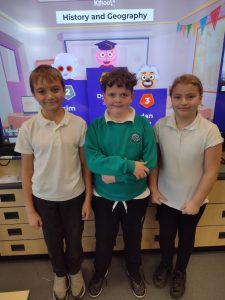
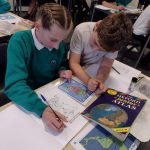
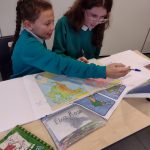
This week in geography, Year 3 have been using atlases.
We have begun to identify countries in Europe with the use of an atlas. We could identify England, Scotland, Wales and Northern Ireland independently. We then began to find France, Belgium and The Netherlands as these are the countries which are closest to Hull.
We can use our atlas and our knowledge of compass points to find European countries which are north, south, east or west in relation to where Hull is.
We enjoyed using the atlases and worked together to identify lots of European countries.
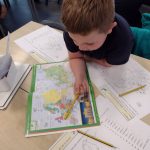
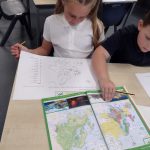
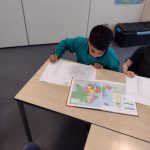
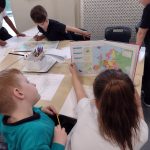
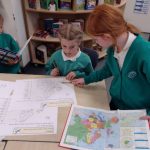
In our Geography lesson this week Year 1 have been developing and applying their knowledge of Human features and Physical features. We started by exploring an ariel view map of Christopher Pickering school and discussing what human and physical features we could identify.
Once we had done this we designed our own symbols to represent each of the human features, such as the MUGA, carpark and play area, and also the physical features such as the trees, and school field.
The children then worked together using the view of our school from Google earth, to plot their symbols onto their own maps. They did a fantastic job and even added a key to show what the symbols represent!
Year 6 have been studying the continents of North and South America and have been locating the countries, using atlases, which form these continents. We were amazed by the sheer size of these continents and how far reaching they are to the north and south of the globe! We then used digimap online to investigate levels of precipitation, average temperature, and population density of different regions within these continents.
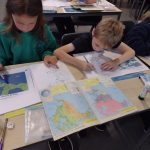
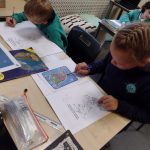
Today Year 1 became geographers and got out and about within the school grounds!
We started our lesson by exploring what the terms human features and physical features mean. We learnt that a human feature is anything that is made by people such as buildings, bridges and roads, and that a physical feature is something that is natural such as mountains, rivers and forests.
We then took the information we had learnt and went outside to explore our school grounds to see what human and physical features we could identify.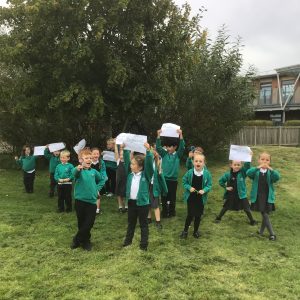
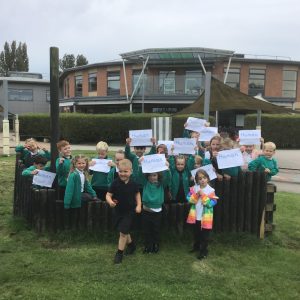
In year 4 Geography, the children have been learning all about the Rainforest Biome. This week, they were investigating what impact humans have on the rainforest and deciding whether the impact is positive or negative. They conducted some independent online research, finding that humans are the main cause of deforestation, however this happenes because of the demand for the land for products and resources we require a lot of.
After researching, the children debated what they had found. They discussed the positives and negatives of the impact humans have on the forest and came to the conclusion that humans have a negative impact on the forest but they understand this comes from human demand. They decided that they will be more conscious and each made a promise to do something small to help reduce the demand on the rainforest.