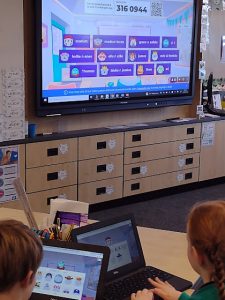
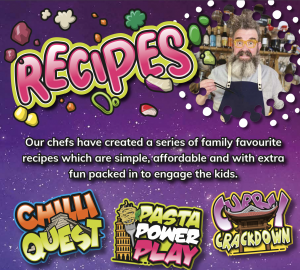
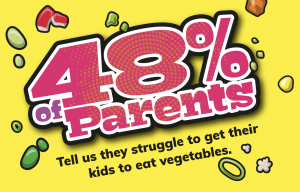
On Tuesday 21st February we will be launching our Eat Them to Defeat Them Campaign at CPPS!
Updates and information will be shared on twitter and within out blogs, please tweet us with pictures of you Little Warriors defeating the Veg at Home!






Post inside this category will show up on the front page
On Tuesday 21st February we will be launching our Eat Them to Defeat Them Campaign at CPPS!
Updates and information will be shared on twitter and within out blogs, please tweet us with pictures of you Little Warriors defeating the Veg at Home!
Year 3 this term have been considering the concept of ‘Leadership’ and the qualities an individual needs to possess to be considered a ‘good leader.’ Upon lots of discussion, the children agreed that a leader (Religious or Non-Religious) should be kind, fair, honest, trustworthy, respectful and compassionate to name a few. From this, the children then compared some key religious figures who have been described as ‘Founders of their Faith.’
Firstly, Jesus (Founder of Christianity) and Saint Paul (a man who converted to Christianity) were compared.
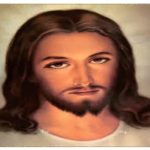
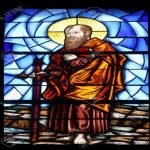
The children found that whilst Jesus was a kindhearted, well respected, caring and forgiving man throughout his whole life that in contrast Paul was quite indeed the opposite until he converted to Christianity upon hearing Jesus’ voice call to him. This allowed the children to identify that people can change their ways and turn their lives around for the good of themselves and others.
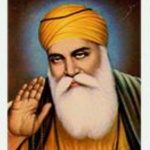
Further comparisons were made between the founders of Buddhism and Sikhism including the life of the Prophet Muhammed (Pbuh) who was a follower of Islam.
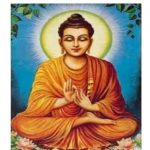
The children learnt the Prince Siddhartha, who lived a privileged life, naively believed everyone lived like him and had wealth in abundance, the richness of good health and the ability to live forever. However, upon leaving his palace walls he saw that this was not the case and that people were suffering from illness, old age, homelessness and that life did not go on forever. His findings resulted in him leaving his rich lifestyle as a Prince to live a simplistic lifestyle as a monk meditating until he became enlightened. Siddhartha changed his name to Buddha, Founder of the Buddhist Faith and finding his reward in helping and teaching others to understand that we should be happy with what we have, help others where we can and not want for more.
In comparison, the children found that Nanak, as a young boy, was very inquisitive and wanted to know what the world would be like without all the fighting and suffering that was going on and why people argued and had differing opinions of God and religion. He wanted to find a better way to live so that everyone could get along better together irrelevant of their race, gender, religion and beliefs. He became enlightened as a young man upon his own meeting with God which saw him give up all his wealth and sharing it with those who were less fortunate. Nanak soon became known as Guru Nanak, the Founder of Sikhism (Guru meaning Teacher) travelling and sharing God’s message which is that God sees everyone as equal and that wealth, gender and age does not matter and that people should live peacefully in our world together.
We then explored the life of the Prophet Muhammed (Pbuh), who as a follower of Islam, is believed to have been chosen by Allah as his Prophet because he was a respected, wise and fair man who cared deeply for his people. During the Islamic Festival of Ramadan, Prophet Muhammad (Pbuh) would take himself off to the mountains to think about his people, wondering why they argued amongst themselves and why some of his people were rich whilst others were poor.
After listening to each of the stories of these three key religious figures, the children in Year 3 concluded that despite Prince Siddhartha’s earlier naivety, they were all kind, selfless, caring religious leaders who put others before themselves and wanted the world to be a better place for everyone.
As we near the end of our photography unit, we really enjoyed further extending our skills by using Pixlr x to add effects and change the appearance of the image.
We were able to talk about which effects we found the most affective and enjoyed playing around with the images to get the desired effect to match our creative ideas.
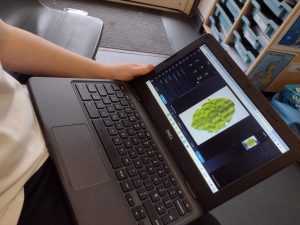
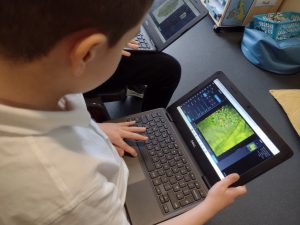
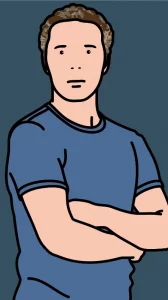
As Artists this week, we were trying to recreate Julian Opie’s simplicity and line drawing techniques within a sculpture.
We looked at his self portrait and discussed the lines and shapes that we needed to represent this image in clay. We manipulated the clay with our fingers and used the tools to craft and add details.
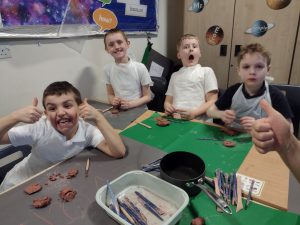
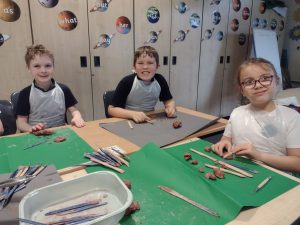
We loved wearing the aprons and getting stuck in with this messy material. What do you think to our masterpieces?
(add images here)
Every year , Children’s Mental Health Week takes place during February. This year the theme is,
‘ Let’s connect’.
Connecting with others helps us to share experiences with people we trust and care about. Positive relationships give us opportunities to share our feelings and get someone else’s views on what we are experiencing. Positive relationships give us a sense of feeling and belonging.
The BIG QUESTIONS:
What is mental health?
How can we look after our own mental health?
How can we look after the mental health
of others ?
What can we do to keep our minds healthy?
After lengthy discussions the children were asked to come up with a Mental Health Action Plan…
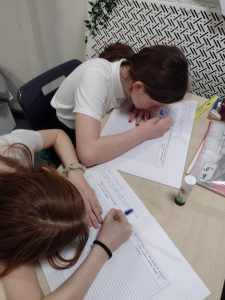
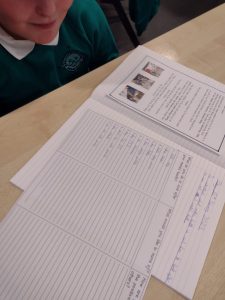
And when all the hard work is done – chill time – with a purpose!
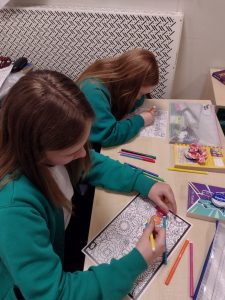
Colouring is a healthy way to relieve stress. It calms the brain and helps your body relax. This can improve sleep and fatigue while decreasing body aches, heart rate, respiration, and feelings of depression and anxiety.
A perfect way to end the day.
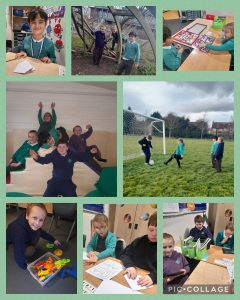
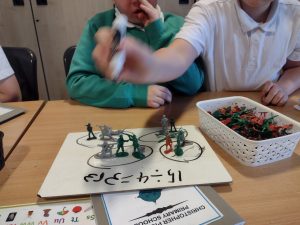
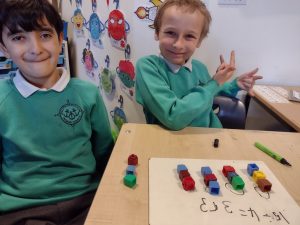
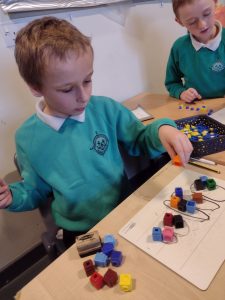
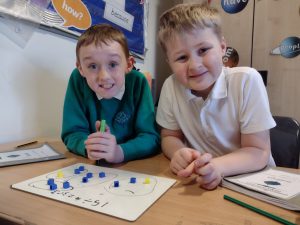
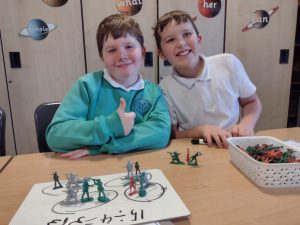
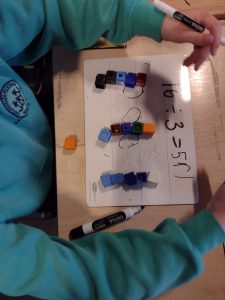
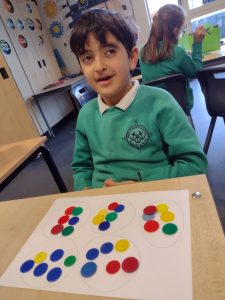
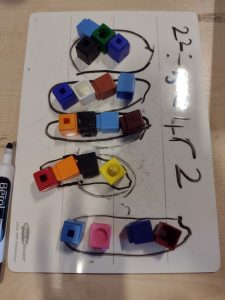
We made great use of our tools this week to develop our understanding of division. As were were working so well, we were able to move on to learn how to calculate division with remainders. We worked practically for a few days before applying our skills to questions in our books, our teacher was really proud of the resilience that we demonstrated to ‘crack’ this mathematical skill. Here are some images of our fabulous calculation skills….
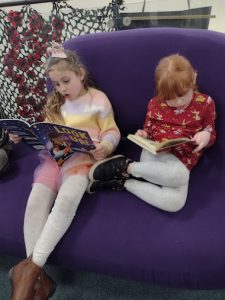
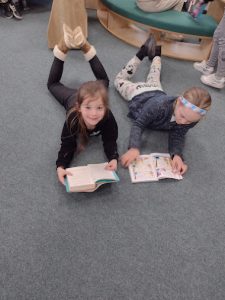
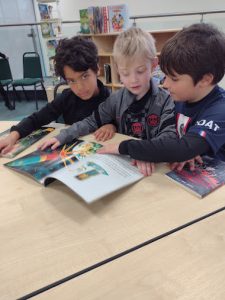
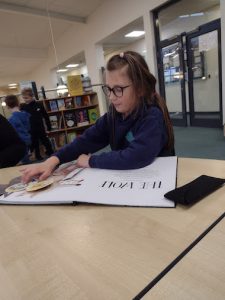
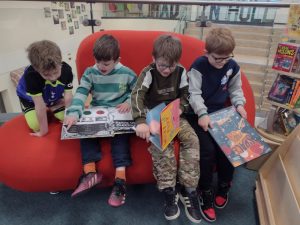
Miss Stathers’ class were very excited to end the half term with a trip to the school library.
We had the opportunity to spend time looking at the amazing books and we even had chance to read some.
Some of us read books to ourselves, some of us read books to each other and some of us shared books and read them together.
There is so many books to choose from we had to choose carefully.
We looked at the illustrations on the front of the book and read the blurb on the back to help us decide which ones we wanted to read.
At the end of the afternoon Mrs Smith read us a story. She read ‘Stick Man’ because it was one of her girls favourite books when they were little. We were all really happy when Stick man finally got home.
There were so many books to choose from we can’t wait to go back!
This week in music Year 2 have discovered lots of different instruments through our new song.
Our new song this week is called ‘Orchestra Song’
We began by appraising our new song. Orchestra Song made us feel very relaxed, the rhythm was much slower than our last songs and this made us feel calm.
Listening to the song we heard lots of different instruments names so we had a look at these and talked about the sounds they made. We really liked the oboes and bassoons. These were new instruments to us.
We got to perform our new song to each other at the end of the lesson. We found this a little harder this week as there were so many new names of instruments that we were trying to sing. We really enjoyed finding out about them all though and can’t wait to play some of them when we are older.
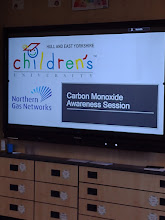
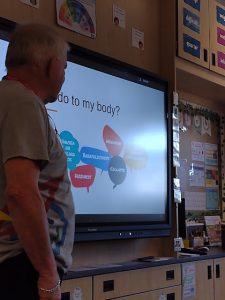
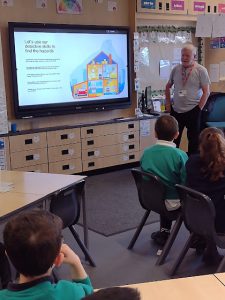
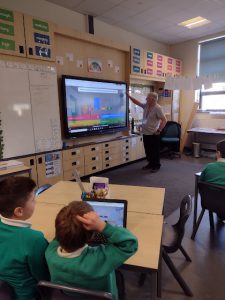
Year 3 were very luck to take part in a carbon monoxide workshop thanks to The Children’s University.
We found out lots of information about how dangerous carbon monoxide can be and what we should do if we suspect carbon monoxide is effecting anybody.
Carbon monoxide can make people feel dizzy, sleepy, give them headache, make them feel sick or make them confused. We found out about all of the different things in our homes that can cause carbon dioxide. We discovered that things like the cooker or boiler that we use every day can leak carbon monoxide into our home. We saw how a carbon monoxide detector can save people from the danger and we discovered where the best place in the house is to place this. Carbon monoxide detectors should be on every floor of a house and should be near appliances that could leak carbon monoxide to ensure we are as safe as possible.
We finished our session off with a quiz, we were really good at recalling all the information we had just learnt.