Stop river pollution!

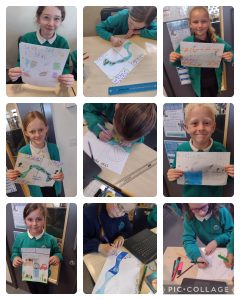
In our Rivers and Mountains topic, we have been learning all about where our water comes from and how to keep it healthy and clean. Today, the children created their own posters about river pollution! Here are some of the children’s amazing and creative posters!

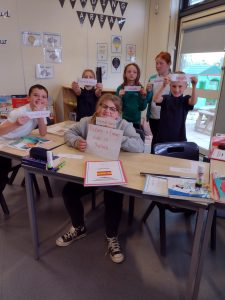
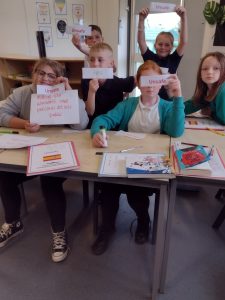
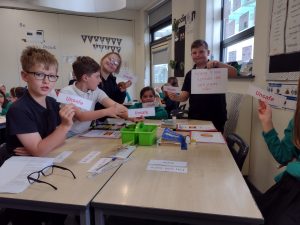
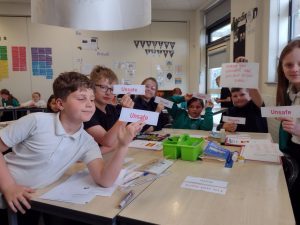
In today’s PSHCE lesson, year 5 had a discussion about how to stay safe online and the positives and negatives of an online community. We played the  ‘online safety’ game: Each child had three cards, one labelled ‘safe’, one ‘unsafe’ and one ‘I’m not sure’.

The teacher read out different statements and the children made decisions, using their cards to show the class their answer.

Some of the statements were both safe and unsafe depending on the context, so we used this opportunity to explain that being online can have good/bad/positive/negative consequences.

Easier statements:

  • Sending a picture of yourself to your Mum/Dad/Gran
  • Texting a happy emoji to your friend
  • Sending someone an unkind message
  • Snap chatting with someone you don’t know
  • Watching a children’s TV programme online that a trusted adult has found for you
  • Playing a puzzle game online and answering a message from somebody else playing who you don’t know
  • Posting your phone number online so anybody can see it
  • Joining in with something online that someone says is a secret

Harder statements:

  • Playing a computer game with a 16-age limit
  • Joining a social network about a favourite sport or hobby
  • Sending a picture of yourself in your underwear
  • Joking about someone’s appearance in a text
  • Making your gaming username and personal details public
  • Keeping an online ‘streak’ with a friend going for 200 days or more
  • Posting a funny video of a cat playing the piano on Youtube
  • Chatting live to an online gamer who has just joined in with your game
  • Agreeing to have a private chat with someone online


Year 5 were able to share their thoughts and feelings on each statement; the lesson was extremely useful for the pupils to learn and adapt their knowledge of online safety.

The water cycle

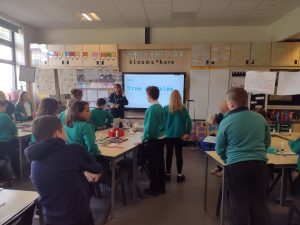
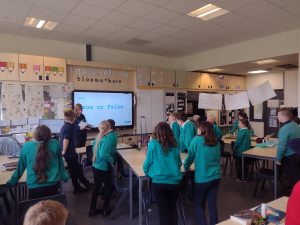
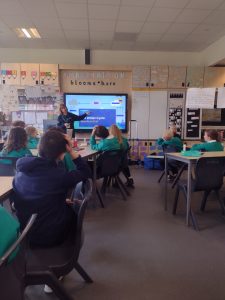
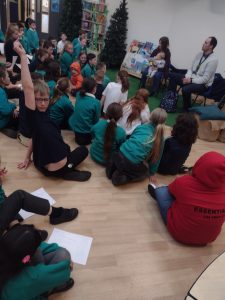
Year 5 have some exciting visitors this morning for our rivers and mountains topic. We are learning all about the water cycle and where we get our clean water from. Thank you to the Yorkshire Water Company!

Special visitors for child development

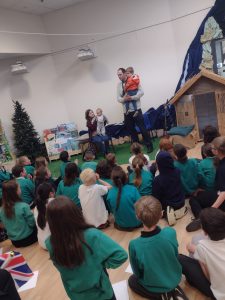
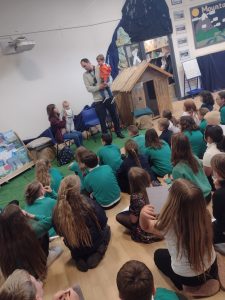
 Miss Mead and Mr Sutton’s class have been learning about the human life cycle in our science lessons. Today, we had three very special visitors, Mrs Sutton, Luke and Elliot (Mr Sutton’s wife and children). Our children had the opportunity to ask education questions about Luke and Elliot’s development; they learnt lots of new knowledge about the changes that occur between 0 years and 1 years.

La Ropa (clothes)

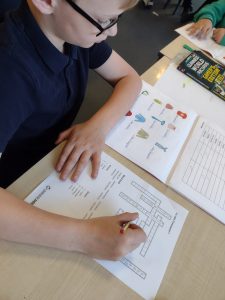
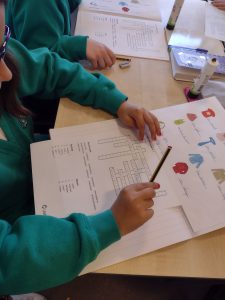
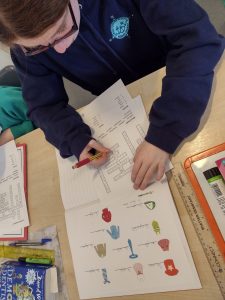
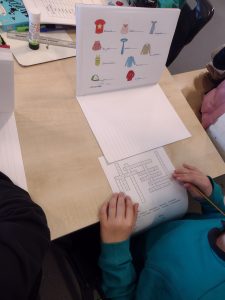
In our Spanish lesson this week, year 5 learned how to say what they wear in Spanish. We learned the first eleven words for items of clothing. The children created a dictionary of their new words in Spanish; they then used this dictionary to complete a word search.

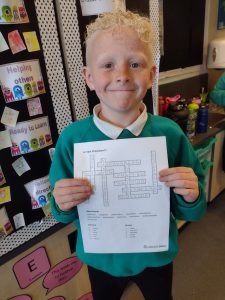
The children had amazing resilience!!

Max was the winner as he completed his cross word the fastest. Well done Max!

story mapping!

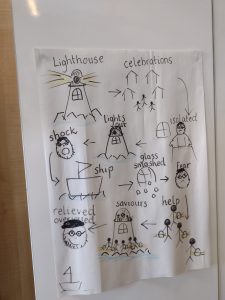
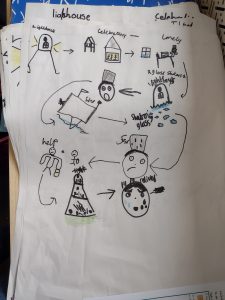
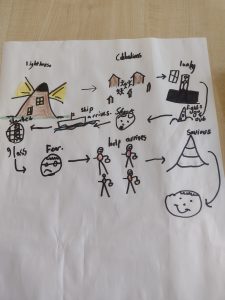
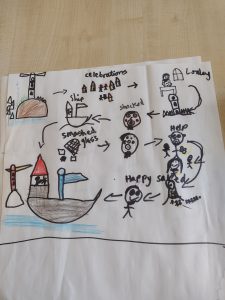
In today’s English lesson, Year 5 started a new unit called The Lighthouse. To familiarise ourselves with the unit, we created a story map which consolidated our understanding. We spoke about the opening, build up, dilemma, resolution and ending.

Here are some of our story maps!

making bread!

This term, Year 5’s D&T project is to investigate, design, make and evaluate our very own bread.

For our investigation task, the children tasted a range of different types of bread including: pitta, naan, wholemeal seeded, white loaf, cheese breadcakes, gluten free and baguette. The children then evaluated the appearance, smell, taste and texture of each bread.

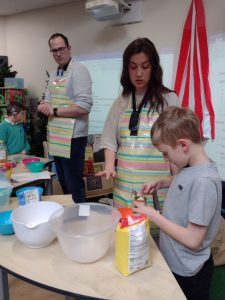
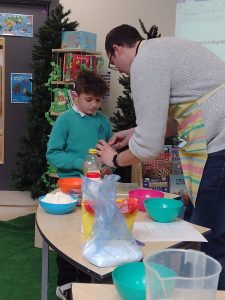
For our focused practical task, Mr Sutton and Miss Mead demonstrated how to follow a recipe of ‘bread in a bag’. The children assisted the teachers by weighing out ingredients and adding them to the mix. Whilst we were taking part in this activity, the children all learned about how yeast is a key ingredient when making bread as the enzymes in the yeast changes sugar into alcohol and carbon dioxide gas, causing bread dough to expand or “rise.”
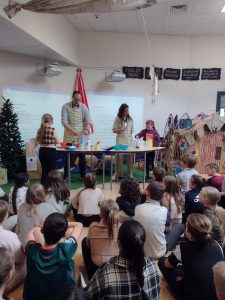
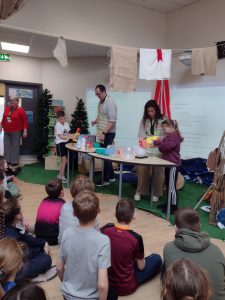
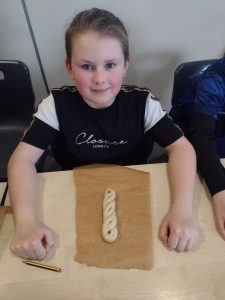
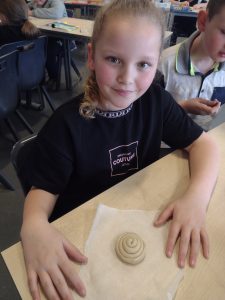
After the demonstration, the children were provided with their own bread mixture to practice different shapes. Here are some images of the children’s amazing creations!
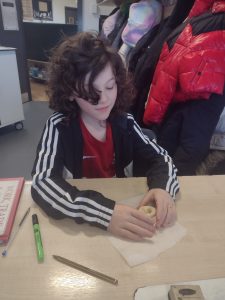
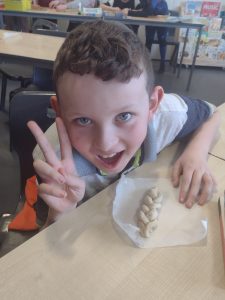
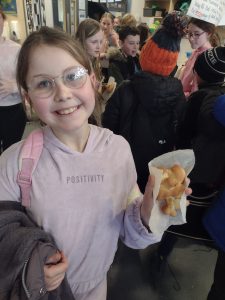
The dough mixture was then baked in the oven for the children to take home. Below is a picture of Mia (Y5MEA) and her brilliant flower shaped bread!
Next week, the children will be creating three different designs, along with toppings of their choice, for their final bake!!!
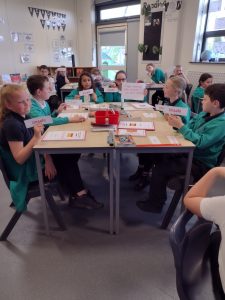
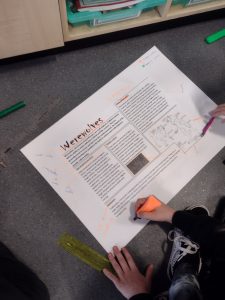
Year 5 have started a new unit in English – non-chronological reports. Today, the children learnt about structural and language features of non-chronological reports. Some structural features include:

  • Title
  • Sub-headings
  • Image and caption
  • Introduction
  • Paragraphs

Language features within a non-chronological report are:

  • Fronted adverbials
  • Relative clauses
  • Parenthesis to add extra information
  • Formal language
  • Factual language
  • Third person

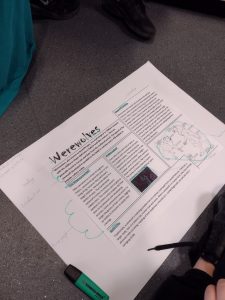
The children then analysed a non-chronological report, highlighting these areas. We are now experts!

Science week!

Year 5 have been learning about changing states and materials in our science lessons. In today’s lesson (as it is science week!), we were learning about reversible and irreversible changes.

We understood that reversible changes are something that you can change back to its original form through: sieving, filtering, evaporating and through magnets.

Irreversible changes are things that cannot be undone or changed back to its original form for example, scrambling eggs, melting a candle, or baking a cake.

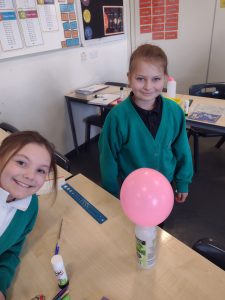
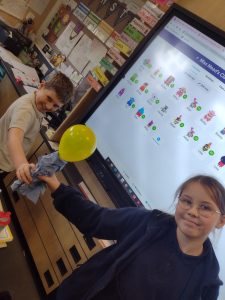
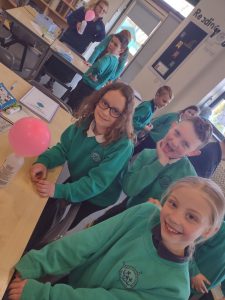
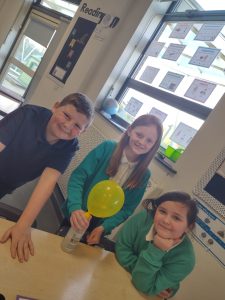
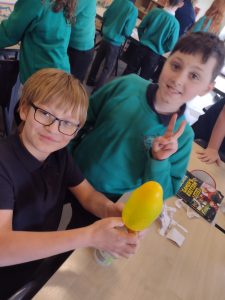
For our experiment today, the children had three ingredients: bicarbonate soda and and vinegar. The children predicted what would happen when the bicarbonate soda is mixed with the vinegar – they came up with the idea that it would fizz. We tested our predictions through the experiment where we put a tablespoon of bicarbonate soda inside a balloon and placed the balloon on top of a bottle that was filled with vinegar.

Our results showed that a chemical reaction occurred with the bicarbonate soda and the vinegar, producing a gas and changing its state. As a result, the balloon blew up! This is an irreversible change.

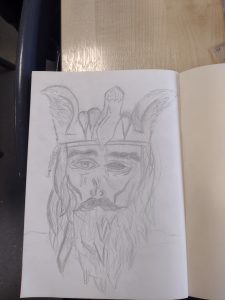
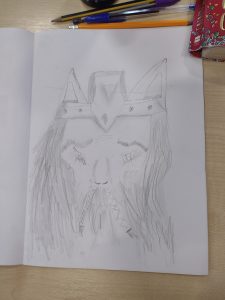
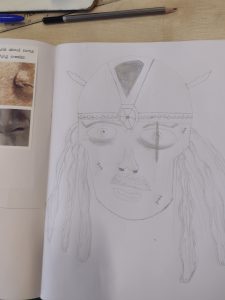
Viking drawing

Year 5 have been putting their sketching, cross-hatching and shading skills to create a portrait of a Viking warrior. The children carefully analysed similarities of some Viking images: long, un-kept hair, moustache and beard, Viking helmet, bushy eyebrows. They then put their knowledge into practice!

Here are some of our wonderful creations!