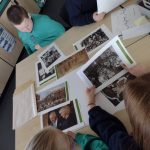
Today, the children in Year 4 explored, discussed and debated a range of photographic sources of evidence with the aim of identifying the significance of historic coronation events for British citizens of the past.
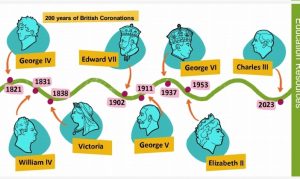
We first explored the Timeline of British Coronations over the last 200 years and utilised our mathmatical skills to determine the length of each British monarch’s reign.
In teams, we then explored, discussed and grouped our sources of evidence in a range of ways:
Photographic evidence
Paintings and portraits
Black and white photographic evidence
Colour photographic evidence
Celebratory images
Comparisons were made in relation to the validity of photographic evidence with that held within paintings of a monarch’s coronation. From this, the children deduced that paintings of historic coronations may not be a true representation of the event as some of the detail could have been enhanced or omitted by the artist; whereas the more modern photographic evidence provides a truer representation of each event due to it being recorded instantly.
Further observations of the ways in which British citizens celebrated historic coronations as a nation over time allowed the children to identify that each celebration was similar in that people dressed smartly, a special feast was shared and that communities were decorated with flags and bunting to honour the monarch of their time.
To complete our lesson the children then created a group mindmap to identify ways in which they will celebrate the coronation of our monarch – King Charles III on Saturday 6th May 2023.
-

-
Wear red, white and blue
-

-
Street parties and Barbeques
-

-
Bunting and Flags
From this, we were able to infer why the upcoming coronation of King Charles III continues to be an important event within British society today and deduced that it is an event which many British citizens continue to take pride in celebrating as a nation just like the historic celebrations of past monarchs were for our ancestors.