Y3 YOGA WITH LIESEL

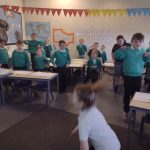
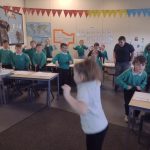
We in Year 4 are loving, and look forward to our weekly Yoga lessons with Liesel in P.E. From practising easier poses such as the ‘Table, Cat and the Downward Dog’ to the more complex moves of the ‘Warrior 3, Dancer and Camel’, we are now working towards making our movements more fluid so that each pose flows into another.

We have been having a little fun exploring Yoga with Music this week…something which we really enjoyed!


To end the session, Liesel taps the ‘Chau Gong’ so that we can concentrate on the soundwaves and ground ourselves at the end of a session.


Namaste Liesel!

YEAR 4 JIGSAW – HEALTHY ME!

Year 4 have been exploring the concept of ‘Friendship’ and recognising how their own friendships have formed, and also changed, over time due to the passage of life.

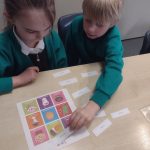
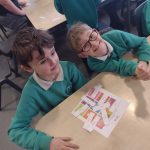
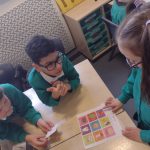
Through discussion, we recognised that not all our friendships are the same in that we may value some friendships more dearly than others but agreed that this is acceptable.  From this, we mapped our own ‘Friendships’ on a ‘Concentric Circles’ mapping tool where we identified and named our ‘Best-Friends’ in the inner circle before moving outwards to map those who we consider to be ‘Close Friends’,Occasional Friends’ then ‘Acquaintances’ in the outer circle.  We then explored the statement ‘Friendship is Fragile’ from which we all agreed that for friendships to last the test of time, we need to value and respect all of those we consider to be our friends now as well as  those we will go on to meet in the future.

Group Dynamics…

The children have also explored the concept of ‘Group Dynamics’ and identified that people often take on different roles in different situations such as leaders, followers and bystanders. We assimilated this concept to when we work as a group in our learning environment and highlighted the importance of including everyone to ensure that everyone’s opinions are valued.

Using our Jigsaw approach, we explored some posed scenarios to identify the roles individual’s were taking on and found that sometimes people feel pressured to act a certain way when finding themselves in a controversial situation. This enabled us to consider the term ‘Peer Pressure’ and concluded that when influenced or encouraged by our friends to do something we know is right in a positive way that this is healthy; however, when we are encouraged to do something that we may know is wrong but go ahead and do it just to ‘fit-in’ or ‘be accepted’ that this is not a healthy choice.

Great discussions Year 4!

YEAR 3 JIGSAW HEALTHY ME!

In this Jigsaw Piece, the children in Years 3 are exploring the concept of making healthier choices

In Year 3 we began by discussing the importance of exercise and the benificial effects it has on our bodies, our hearts and lungs.  Before participating in star jumps, burpees, boxing moves, dancing and a little jogging on the spot we felt and measured our resting heart rate then compared it with our elevated heart rate after we had exerted ourselves! We found that whilst exercising our heart beats faster to pump the blood around our bodies and that our lungs work harder to take in more oxygen.  In addition we identified that exercising, whilst tiring, actually makes us feel good!

We then explored the suggested statement ‘Children need to be active for at least 1 hour a day’ and recorded/calculated the typical average timings of the regular activities we all participate in throughout the school day every day:

Walk to school –  10 minutes
Walk up and down the stairs at school  throughout the day – 5 minutes in total
Playtime – 15 minutes
Lunchtime – 1 hour
Walking home from school – 10 minutes

Our findings found that we certainly excel the suggested 1 hour of activity from the activities we undertake in a typical school day but as this is only a suggestion we can go on to do more if we so wish.

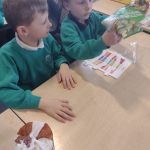
We then went on to explore the concept of calories, fats and sugars within the food that we eat and how these can affect our health. Firstly, we identified how we can make healthier choices by swapping out certain foods with something considered to be healthier:

Chocolate – Fruit
Icecream – Plain Yogurt
Crisps – Rice Cake
Muffin – Plain Popcorn

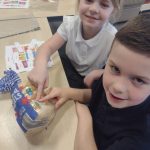
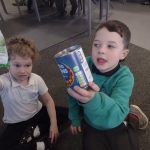
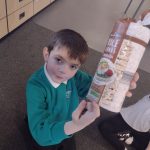
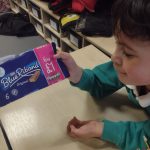
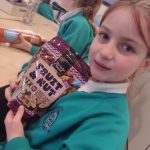
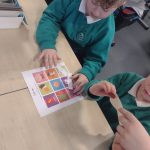
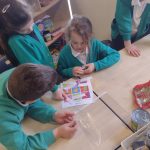
We explored a range of food packaging to identify the calorific values (energy) fats and sugars of some food types and noticed that the traffic light coding on packages makes these easier to identify…

We then played the ‘How Much Sugar Game?’ and tried to match a specified amount of sugar with one of the food items presented…it was not easy!


Once the amounts were revealed we were amazed to find that there are…

35g of sugar in an energy drink
22g of sugar in a bowl of chocolate icecream
17g of sugar in a flavoured yoghurt
8g of sugar in a plain biscuit

We all agreed that whilst we find lots of food items rather yummy, that we can try to make healthier choices and keep some of those foods which have lots of sugar, fats and calories in as a sometimes treat. Great work Year 3!


Year 4 PEOPLE WHO INSPIRE US – WHAT MAKES A SAINT?

Year 4 this term have been rather busy exploring and investigating the questions ‘What is a Saint?’ and  ‘How does a person become a Saint?’  In order to gain the answers to these significant questions we watched videoclips and listened to podcasts of children from other schools giving their own responses and from this deduced that a Saint is someone who is considered to be holy, kind, courageous and a special person who cared for and helped others in their lifetime. However, the children became rather confused to find that a person can only become a Saint after they have passed away therefore never knowing that they had been honored with such a title which our children thought rather unfair.

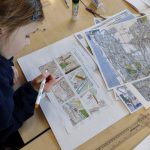
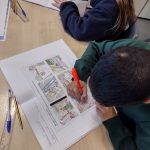
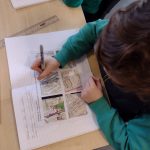
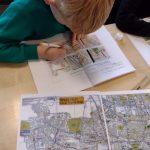
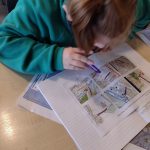
We then utilised our geographical skills and explored maps of our local and surrounding areas to identify locations which where named after significant Saints.

We identified streets (St Nicholas Avenue; St George’s Road; St Hilda Street), medical centres (St Andrew’s Group Practice), shopping centres and retail areas (St Stephen’s Shopping Centre and St Andrew’s Quay), churches (St Nicholas Church, All Saints Church and St Mark’s Church) and primary and secondary schools/Colleges (St Andrew’s Primary, St Vincent’s Primary, St Thomas More and St Mary’s College). From this we deduced that the councils who govern Hull and the surrounding areas must have recognised the importance of these individuals in order to name significant buildings and roads in our city after them.

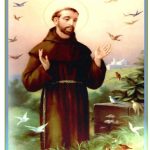
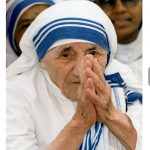
The children then explored the lives of significant Saints  – Saint Andrew, Saint Francis and Saint Teresa (Mother Teresa) and considered whether their ‘altruistic cause’ made them worthy of becoming a Saint.

We found that while Saint Andrew is the Patron Saint of Scotland, that he is also the Patron Saint of Fisherman, Fishmongers and Rope Makers. This further enabled the children to make links with Hull’s fishing heritage and understand why Saint Andrew is an important figure for our city. In addition, it was identified that Saint Andrew was a Christian and a disciple of Jesus whose altruistic cause was to continue teaching people about Christianity after Jesus’ death even though doing so led to his own crucifixion.

Saint Francis was a man who in his earlier life was quite selfish and cared only for himself until he heard the voice of God, which led to him giving his wealth away to the poor to become a holy man who lived a simplistic lifestyle. His altruistic cause was to do God’s work and care for others rather than himself. He is known as the Patron Saint of Animals and the Environment due to his ability to talk with nature.

The story of Saint Teresa leaving her family and homeland behind to commit her life to do God’s work in order help those who were less fortunate in Calcutta, India posed the question of whether we felt able to ever leave our own families never to see them again. We felt that Saint Teresa’s altruistic cause to do this was something that we would find hard to do and unanimously agreed that Saint Teresa was a very special person indeed.

In conclusion, we felt that each of these three magnificent individuals were truly worthy of becoming a Saint and deservedly so for their altruism and dedication to serve others in their lifetimes.

We then went on to explore some ‘inspirational people’ who either hailed from Hull or came to Hull and made it their home, while considering whether what they did during their lives for the city of Hull made them either a ‘Hero or a Saint‘:

Bilocca (Fishing Safety Campaigner)
Jean Bishop – The Bee Lady (Charitable Fundraiser)
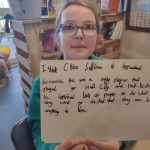
Clive Sullivan (Sporting Legend)
Sir Leo Schultz (WWII Air Raid Shelter Campaigner)
Phillip Larkin (Poet Laureate)
Amy Johnson (Solo Aviator)
William Wilberforce (Slavery Abolishment Campaigner)

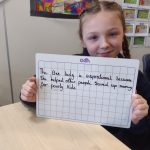
After hearing the significant stories about these ‘inspirational people’ the children agreed that what they did in their lifetime had a considerable positive impact on our city and for this they were all Heroes: however, now that they have sadly passed away that they are all worthy of being recognised as Saints for their own altruistic causes to put the needs of others before themselves.

Well done Year 4 for your super attitude to learning this term!
Year 3 Library Time

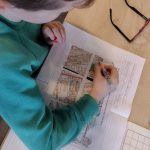
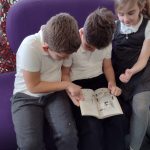
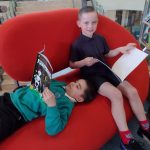
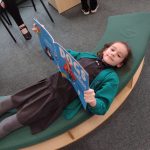
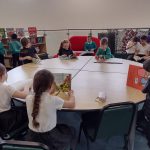
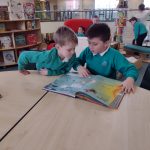
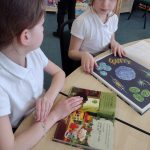
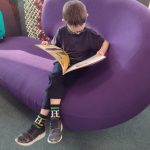
Year 3 have had a wonderful time in our school’s fantastic Library today exploring the amazing genres of books it has to offer.  We ensured that we read the Blurb of our chosen book first to see if it captured our interest, rather than judging the book by its cover, before finding a comfortable spot to settle down and lose ourselves for a little while. We knew to treat our books with respect and place them back on the appropriate shelf once we had finished before choosing yet another book. Our quiet, hushed tone also allowed for everyone to enjoy their quality reading time too…we hope to visit again soon!
YEAR 3 FOUNDERS OF FAITH – WHO, WHAT, WHERE?

Year 3 this term have been considering the concept of ‘Leadership’ and the qualities an individual needs to possess to be considered a ‘good leader.’  Upon lots of discussion, the children agreed that a leader (Religious or Non-Religious) should be kind, fair, honest, trustworthy, respectful and compassionate to name a few. From this, the children then compared some key religious figures who have been described as ‘Founders of their Faith.’

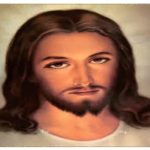
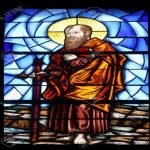
Firstly, Jesus (Founder of Christianity) and Saint Paul (a man who converted to Christianity) were compared.

The children found that whilst Jesus was a kindhearted, well respected, caring and forgiving man throughout his whole life that in contrast Paul was quite indeed the opposite until he converted to Christianity upon hearing Jesus’ voice call to him.  This allowed the children to identify that people can change their ways and turn their lives around for the good of themselves and others.

Further comparisons were made between the founders of Buddhism and Sikhism including the life of the Prophet Muhammed (Pbuh) who was a follower of Islam.

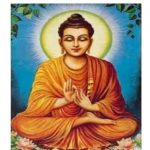
The children learnt the Prince Siddhartha, who lived a privileged life, naively believed everyone lived like him and had wealth in abundance, the richness of good health and the ability to live forever. However, upon leaving his palace walls he saw that this was not the case and that people were suffering from illness, old age, homelessness and that life did not go on forever. His findings resulted in him leaving his rich lifestyle as a Prince to live a simplistic lifestyle as a monk meditating until he became enlightened. Siddhartha changed his name to Buddha, Founder of the Buddhist Faith and  finding his reward in helping and teaching others to understand that we should be happy with what we have, help others where we can and not want for more.

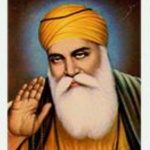
In comparison, the children found that Nanak, as a young boy, was very inquisitive and wanted to know what the world would be like  without all the fighting and suffering that was going on and why people argued and had differing opinions of God and religion. He wanted to find a better way to live so that everyone could get along better together irrelevant of their race, gender, religion and beliefs. He became enlightened as a young man upon his own meeting with God which saw him give up all his wealth and sharing it with those who were less fortunate. Nanak soon became known as Guru Nanak, the Founder of Sikhism (Guru meaning Teacher) travelling and sharing God’s message which is that God sees everyone as equal and that wealth, gender and age does not matter and that people should live peacefully in our world together.

We then explored the life of the Prophet Muhammed (Pbuh), who as a follower of Islam, is believed to have been chosen by Allah as his Prophet because he was a respected, wise and fair man who cared deeply for his people. During the Islamic Festival of Ramadan, Prophet Muhammad (Pbuh) would take himself off to the mountains to think about his people, wondering why they argued amongst themselves and why some of his people were rich whilst others were poor.

After listening to each of the stories of these three key religious figures, the children in Year 3 concluded that despite Prince Siddhartha’s earlier naivety, they were all kind, selfless, caring religious leaders who put others before themselves and wanted the world to be a better place for everyone.


YEAR 3 AND 4 JIGSAW – DREAMS AND GOALS

In our Jigsaw Piece of ‘Dreams and Goals’ this term Years 3 and 4 have read some inspirational stories which have enabled the children to identify that we can achieve the Goals we set ourselves and achieve our Dreams…

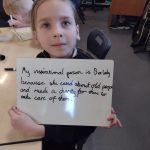
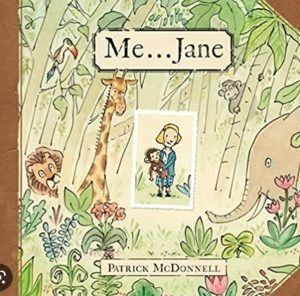
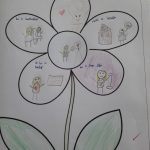
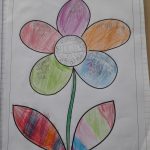
The children in Year 3 have explored the story ‘Me Jane…’ by Patrick McDonnell, which is the lovely story about the lifelong dreams and goals of Jane Goodhall to care for and work with animals in Africa.  From an early age, Jane had a wonderous love of nature and  animals and a curiosity that was endless. She read lots of books about creatures of the world and studied hard until one day her lifelong dream and goal came true! This enabled the children to agree that if you believe in yourself and work hard at the goals you set yourself that your dreams can come true. Below are a few of our Year 3 children’s ‘Dreams and Goals‘.

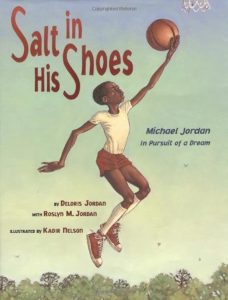
In Year 4, the children have explored the term ‘resilience’ through reading about the lifelong Dream of Michael Jordan the great American Basketball player who the story ‘Salt in His Shoes’ by  Delores Jordan is based upon.

We found that despite Michael’s journey to being a basketball player being faced with some challenges, we found that he never gave up as the people around him, his family, friends and teachers, all believed in him, supported and encouraged him to be resilient. From this we identified that being resilient was not giving up at the first hurdle and that if we want to achieve the goals and dreams that we have identified for oursleves (To get married; Own a House; Have children; Learn to Drive; Be a Teacher; Be rich; Go to University…) that we too, like Michael Jordan, need to be resilient, believe in ourselves, persevere and keep on trying. 


YEAR 4 MUSIC – HOW DOES MUSIC CONNECT US WITH OUR PAST

Year 4 this term have been learning the song ‘Looking in the Mirror’ with lyrics that help us to reflect upon not only our own lives but of those of our ancestors and the historic changes that have been made to enable our lives to be a little better today. To accompany this wonderful piece of music, we have been creating a little improvisation with our recorders and playing notes we have learnt in previous Music units of work in our own unique compositions.


Bravo Year 4…Encore!!!

Year 4 have explored the concept of making assumptions of others based on looks alone in this controversial Jigsaw theme this term. In one of our tasks we tried to make assumptions on 4 individuals without knowing their backstory before Miss Stewart revealed the relevant details for each person. Through discussion, we agreed that it is really hard not to make an informed decision on a person and realised that judging someone is a  human trait that is inside all of us.  We also identified that we sometimes make an assumption of an individual based on their appearance alone and all agreed that we should rather get to know a person before we make an assumption or judge them.