Year 3 are learning about chronology

This week in our history lesson we have been finding out about chronology and timelines.

We studied a timeline which shows British and world history and found out what BC/BCE and AD/CE mean! We could not believe that the Stone Age was so long ago and we were all shocked to find out that while in Britain the stone age was taking place, in Egypt, the Ancient Egyptians were building pyramids.

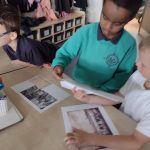
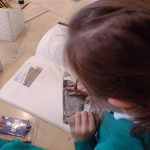
We used a variety of pictures of different sources of evidence to look at clues about the history of Hull and had the opportunity to discuss what we thought they were and showed and were able to ask questions about them.

We were fascinated that Hull wasn’t always called Hull or Kingston upon Hull where in 1299 King Edward made a charter and changed its name – before that it was called Wyke. We were shocked to find out how badly Hull was bombed and when this happened!

We added significant events onto our timeline in chronological order and are all looking forward to find out more about Hull!
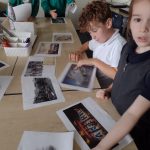
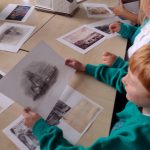
We are drawing using a variety of media and techniques!

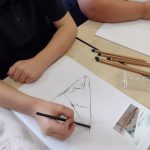
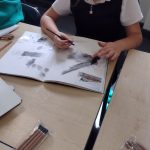
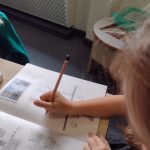
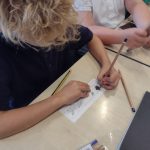
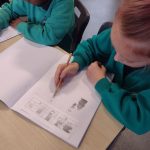
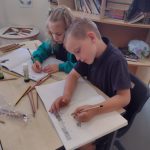
Today in art we have been using sketch pencils and charcoal to carry out observational drawings of Hull’s well known landmarks such as The Deep and The Humber Bridge.

We used the skills we learned last lesson and applied them to our drawings. With the Humber Bridge, we used different pressures to shade in darker areas and used hatching and cross hatching for shadows.

When we used the charcoal, even though some of us got very messy, we  used smudging to create different effects on the buildings.

In our art and design lesson, we have been learning about different media to draw with.

We have been looking at sketch pencils and what H and B stand for and what differences they make when we use them on our work – we found that ‘H’ stands for hard and ‘B’ stands for black and that a 6B pencil produces darker lines that a B pencil.

We investigated how add texture and tone by shading, through the skills of applying varying pencil pressure and how this changes the appearance of the marks on the paper. We also learned how to carry out hatching and cross hatching and how these different methods create different textures.

Sublime Science

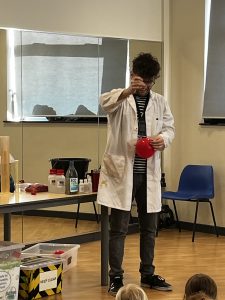
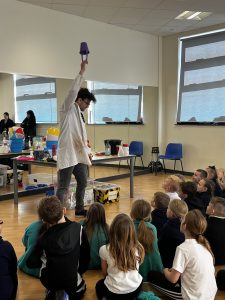
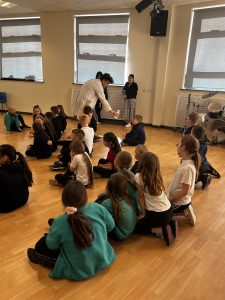
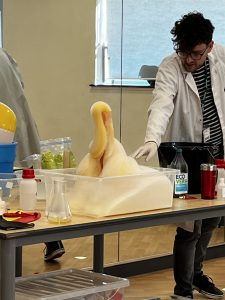
To kick start science week, the whole school had a visit from Sublime Science.

All children throughout the school had the opportunity to participate in fun and interactive workshops hosted by a great scientist called Harry. He was amazing and carried out some brilliant experiments like putting a skewer through a balloon which didn’t pop!!!  He showed us how to defy gravity and swung a bucket of water around his head and it didn’t spill!

We all had such a great time and it made us want to continue learning about science! Some of us said that we would definitely be carrying out a science activity at home for our #ScienceSelfie competition!


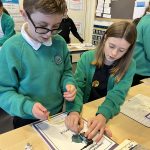
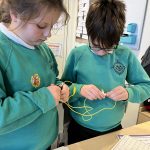
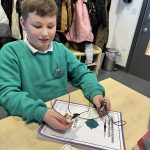
In Y6 this afternoon we revisited Electricity that we learned about in Y4.

We took part in a quiz and got to grips with all the specific vocabulary – we remembered that an insulator blocks the flow of electricity and a conductor can transmit electricity.

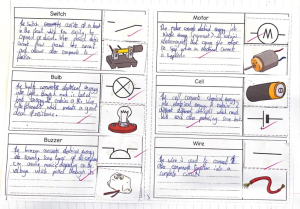
We looked at a variety of electrical components and had a go at building circuits – we quickly remembered that the circuit needed to be continuous and could not have any breaks in it. We were able to make circuits that included bulbs, switches and buzzers!

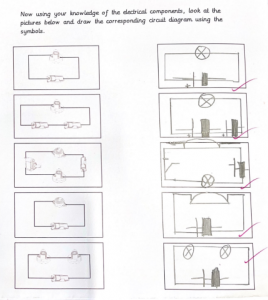
We then matched the component to the corresponding symbol and described what its function was. We then applied our new knowledge to draw circuit diagrams using the correct symbol.

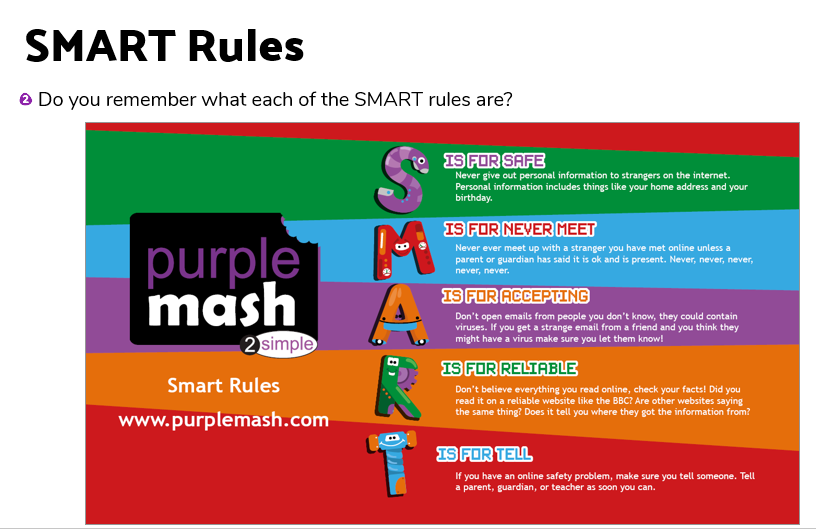
The meaning of S and M for S M A R T

Written by Danny and Kaden 

On our second digital leader meeting, we learnt all about what s am=nd m means for the acronym smart. ( s for safety M for meet) we think that it is highly important to follow these rules when on social media or playing games.

S is for safety. Safety is a very important factor when your on the internet. Depending on who your talking to and what information they are asking it it always important to think if it is safe to do so. Although some information (like your password and home address ) is something no matter the cause, don’t mention them to friend online!

M is for Meet. Meeting is a category which is considered in this list because if you and a well known friend that you’ve seen only in social media want to meet up it is important to think if it’s a good idea to see a stranger you know online.

Why is it important to be safe online?

by Parker and Oliver 

It is important to be safe online because there are chances of leaking your personal information all over the internet if you are not careful. This is why people have to be very careful when choosing passwords or what to say if you were on something like voice chat. People have to remember that not all people are who they say they are online and to keep safe you have to keep your identity concealed and always think before you do something.

Tell a trusted adult or guardian if something happened online as they will most likely know what to do in a tricky situation. As digital leaders, we believe that you should never reveal anything about yourself.


Beware Malware in Y4


We start our computing lessons by revisiting the SMART rules.

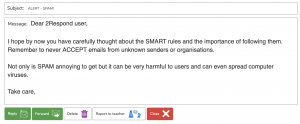
Today in computing, we have been learning about malware, which is designed to gain unauthorised access to our hardware through software, and phishing, when you receive emails from people pretending to be a company.

We had a class discussion about how often we install apps on our phones and tablets without really knowing where they are from and who has made them.

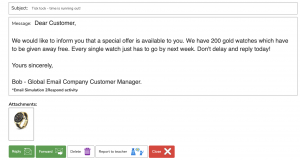
We completed an activity where we all received a fake spam email and had to respond appropriately. Some emails had attachments, some email promised money and some were just strange! We discussed that if something sounds to good to be true or is making huge promises, it is usually a scam and we should report to our teacher!


Y3 Blogging

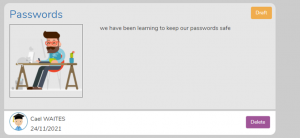
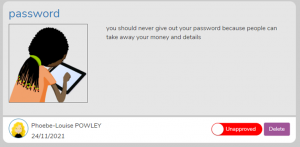
In Year 3, during our computing sessions on Purple Mash we have been recapping the importance of having a secure password. We were shocked to hear that some adults still have the password ‘password’. 

We discussed blogs and what they are and what they are used for. We had a look at the school blog and thought it was great to see all of the things the children have been doing across the school. We noticed that all of the content was positive and all of the teachers and children had written complimentary things about each other.

We had a class discussion about appropriate and inappropriate things that we could write on a blog post and what they could be used for.

‘You should only say kind things about other people on a blog post’ Year 3 child OL

‘You need to be careful not to give out too much information on a blog post as anyone can read it’ Year 3 child E

We then set about making our own class blog where we gave advice to our readers about how to stay safe online. Here are a couple of our blog posts.