Y1 wow day: pirate adventures!

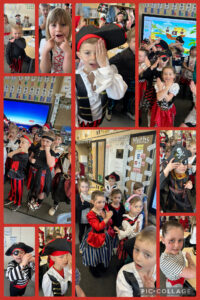
Ahoy there! Year 1 had an exciting start to our new topic Land Ahoy with a fantastic Pirate Wow Day! Everyone came dressed as pirates – hats, hooks, eye patches and all!

We learned how to talk like pirates and practised our best pirate voices. We even drew portraits of ourselves as fearsome sea captains! To kick off our topic, we learned a fun poem called ‘I Wish I Was a Pirate’, which got us all in the pirate spirit.

The highlight of the day was a treasure hunt around the school – What a swashbuckling start to our new adventure!

Y1 Easter Egg Decorating fun!

Year 1 had a cracking time taking part in our egg decorating competition! Everyone brought in a hard-boiled egg and used paint, glitter, paper, and lots of imagination to turn them into amazing characters and creations.

We saw everything from minions and animals to sparkly princesses and silly monsters! The classroom was full of colour, laughter, and creativity.

Well done to everyone who took part—your eggs were egg-cellent!

Y1 Spring Walk to Pickering Park

As part of our science topic, we took a wonderful walk to the local park to observe the signs of spring and discover how nature has changed from winter to spring.

The moment we stepped outside, we noticed the fresh, crisp air and the warmth of the sun on our faces. The trees, which had been bare in winter, were now covered in tiny green buds, and some even had beautiful pink and white blossoms. We listened carefully and heard birds chirping happily in the trees—a sure sign that spring had arrived!

As we walked through the park, we spotted different types of flowers, such as bright yellow daffodils and delicate bluebells. We also looked at the grass, which was growing taller and greener than before. Some children even found small insects, like ladybirds and bees, buzzing around the flowers. We talked about how these insects help plants grow.

After our walk, we sat down to draw pictures of what we had seen. We had a little chat about what we enjoyed seeing and some children loved the flowers, while others were fascinated by the insects and birds.


Celebrating Comic Relief!

Comic Relief is always an exciting time, and for our Year 1 children, it’s a day filled with fun, laughter, and learning about the importance of kindness. This year, we celebrated with non-uniform, red noses and an unforgettable spoon race!

One of the highlights of the day was our special Red Nose and Spoon Race! Instead of the traditional egg-and-spoon game, we used red noses.

Laughter echoed across the playground as children carefully tiptoed, trying their hardest not to let their noses wobble off their spoons. Some dashed forward with determination, while others focused on slow and steady movements.

In the end, everyone was a winner because the race wasn’t about speed—it was about having fun, cheering on our friends, and embracing the Comic Relief spirit.


White Ribbon Day

On Monday, Year One were introduced to the meaning behind White Ribbon Day.

We had a special assembly to remind the children of the importance of having kind hands, kind feet and to speak to a trusted person if they are ever worried.

The children then signed a White Ribbon Promise which we have displayed proudly on our classroom doors.

After learning about the importance of kindness and maintaining healthy
relationships, the children shared examples of kind actions they have experienced or done.

Matilda said “sharing toys”

Alayah said ” saying kind things to your friends”

Theodore said “kind hands”

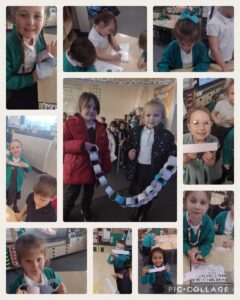
We asked the children to write or draw one of these kind actions on a strip of paper and then connect them together, creating a kindness chain. The children loved it!


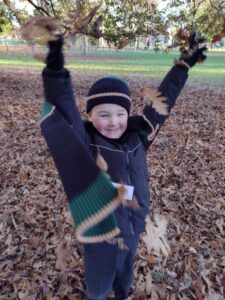
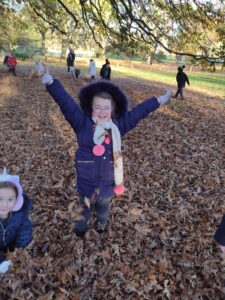
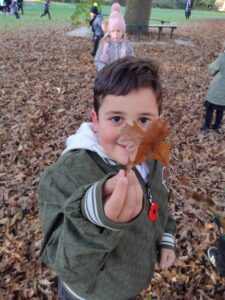
An autumn walk around Pickering Park!

Over this half term, in both science and geography, the children have been exploring the changes in the weather and the seasons. As the months have creeped from September to November, the children have noticed the weather begin to change and the trees around them begin to adapt, preparing for the colder months!

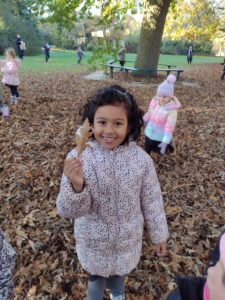
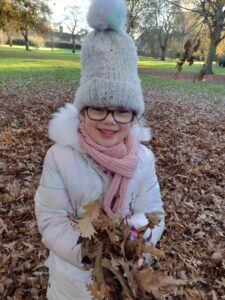
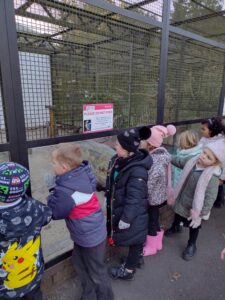
Year 1 had a fantastic afternoon at Pickering Park looking for signs of Autumn and exploring the great outdoors! We had a look around the park at all of the different animals and tree/leaf species we could see and identify! We talked about different types of trees and the size of different leaves. We then took our learning back to school by filling our outdoor area  with all of the goodies we had collected on the way!


Today Year 1 were identifying and describing the life, works and impact on the world that Sir David Attenborough has had.

We found out that he is a broadcaster and natural historian. Lots of the children had recognised his name before. We learnt that he worked for the BBC presenting lots of programmes about animals and nature.

I asked if any of the children had heard of blue planet which is one of Attenborough’s many nature programmes.

 “my grandad always puts that on at his house!” – Myles

We read a story all about Sir David Attenborough’s life and found out that he has many animals and species named after him! We thought this was very interesting. Additionally, we watched some clips of his work and loved learning about how he cares for and protects all different kinds of animals.

We came across the word ‘conservation‘ and discovered that it means to protect the environment we live in, which is what Attenborough has spent his life doing.

“We should always put rubbish in the bin so it does not hurt animals” – Isla-Grey

“We need to be kind to animals and the world” – River

After learning all about Sir David Attenborough, we had a go at drawing some of the key aspects of his life. Like when he started narrating programmes for the BBC, when he received a knighthood from Queen Elizabeth for his work and also some of the animals he has protected over the years.

Finally we had a go at writing a sentence about his life and contributions to finding out about animals and habitats.

Are animal bodies the same as ours?

This week, Year 1 were exploring Enquiry 4: Are animals bodies the same as ours?
First of all, we started by recapping Enquiry 1 which was looking at the human body to remind ourselves of our own body parts. The children could remember lots from this lesson. I then asked the question “do animals have any of the same body parts as us?
Isla- Grey said “Animals have a head just like we do!”
Lottie said “They have eyes, noses and ears so they can sense things”
After we explored all of the similarities we focused on the differences.
The children were given the same pictures from last week of common animals to sort. The children grouped them by what body parts they had. Some of the children realised that once we had grouped the animals by their body parts that they were often in the same animal
groups.
Birds have feathers and a beak – Warran
All fish have fins instead of arms to help them swim underwater- Isabella
We also looked at animals that have tusks, horns, antlers, wings and different types of feet and skin.
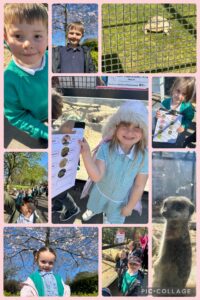
Flash the tortoise from the hub cam to visit us too! We felt his hard shell. Forrest said “he has a shell to protect him”
To finish the lesson, we had a go a drawing a variety of animals and labelling their body parts. The children loved this!
WHY ARE ANIMALS GROUPED IN DIFFERENT WAYS?

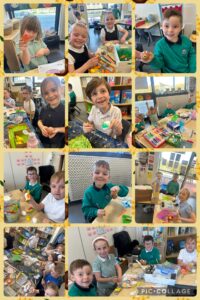
In Science this week, Year 1 have continued to look at animals (including humans). This week our enquiry was ‘Why are animals grouped in different ways?’

First of all we looked at the ways we could group different animals as a class.

The children were each given an animal to compare and contrast. The children looked closely at the features of the animals and then grouped them together based on their characteristics.

Here is what some of the children discovered:

“Those animals all have wings and feathers so they must all be birds.”

“They all have hair or fur so they must be mammals.”


The children then had a go at sorting the different animals independently.


Why do I have senses?

To explore our 5 senses we explored each one carefully. We first started with touch.

The children first discussed that we use our hands to tell if something is soft, rough, smooth etc. To explore this we passed round different objects.

I then asked the question “Can we only feel with our hands?”. A lot of the children first agreed and said yes. Then we discovered that you can still tell if something is soft/rough if it touches your skin on your arm/leg.

Smell

We then explored our sense of smell. The children could identify that we use our nose to smell.

We smelled vinegar which some children said was disgusting but most children loved the smell of the room air freshener.


Taste

Next it was time to explore taste. We tasted salt and sugar first with our eyes open. We talked about how clever our tongue is and how everybody likes different things because of our taste buds. We then did a comparative test to see if we closed our eyes, do our taste buds grow stronger? Some children agreed it did, but some said it tasted the same.

Sight

The fourth sense we investigated was sight. We discussed how some people may need help with their vision and that is why people might wear glasses. The children in the class were very excited to show off their glasses to the class.

Hearing

The final sense we explored was hearing. The children knew we used our ears to hear and that just like sight, some people may need extra help so that they can hear. We discussed all the different things we use in school that we listen and respond to everyday!