Year 4 had to investigate a range of materials in a circuit to indentify whether they would, or would not, conduct electricity. After many predictions, the children tested and recorded their findings.
The children in Year 4 recently had the opportunity to demonstrate and utilise their philosophical thinking skills. We had to work collaboratively to identify and sort philosophical questions (those which make us think as they do not have a definite answer) from those which were not philosophical (those which do have a definite answer). Some examples of philosophical questions are:
What is love?
Is it ever right to lie?
What is happiness?
Do arguments need winners?
Children in Year 4 had fun using the dice to generate, then order, both 3 and 4 digit numbers. Children worked collaboratively, using their knowledge of place value in order to arrange the numbers they had generated from smallest to largest and vice versa.
Children in Years 3 and 4 enjoyed a fantastic morning learning a variation of languages with our Sirius Language Leaders. The Year 10 students showcased their talents in French, German and Spanish all of which was enjoyed by the children and staff alike!
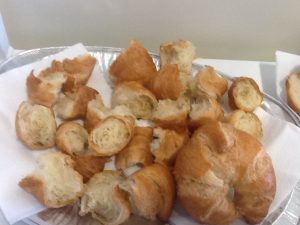
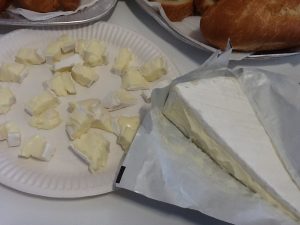
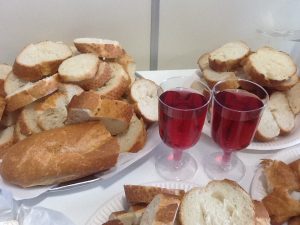
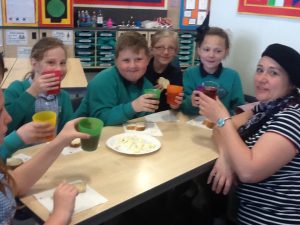
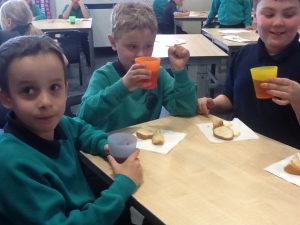
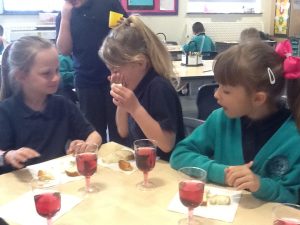
The children in year 4 enjoyed having a taste of France recently. French bread, croissants, brie and ‘red wine’ (blackcurrant juice). They had to use their language skills to ask for each item. For example, je voudrais du pain et du fromage s’il vous plait. I would like some bread and some cheese please. As you will see from the photograph, Mariah wasn’t too keen on the strong tasting Brie!
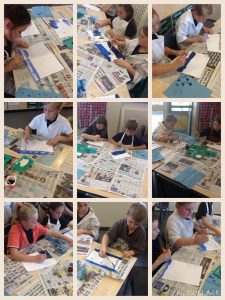
As part of our ‘Victorians’ topic, we have been studying the work of Henry Redmore. Henry Redmore was a Hull born artist who painted most of his work in the second half of the 19th Century. His subjects were mostly within the Humber Estuary, the river Hull and open waters of the North Sea. The children enjoyed using their colour mixing skills to try to recreate the ‘moody’ tones of Redmore’s work. I’m sure you’ll agree that they did a fantastic job.
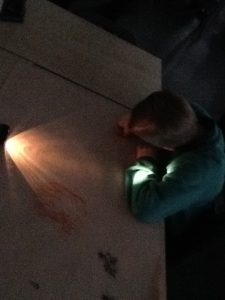
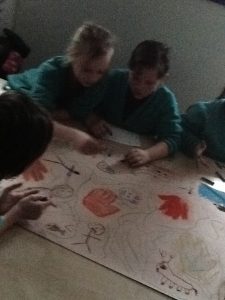
Whilst learning about the Stone Age, the children in year 3/4 found out that Stone Age people drew pictures on the walls of caves to tell stories and depict everyday life. They used media such as clay, blood and grasses to add colour to their work. The children used oil pastels to create their own Stone Age style cave art. We turned off the lights and drew by torch light to fully immerse ourselves in the experience.
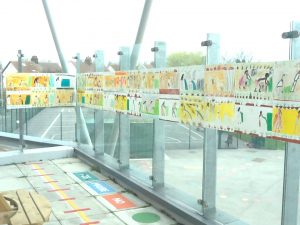
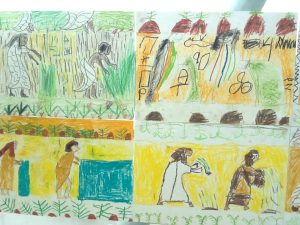
Look at this fantastic Egyptian style tomb art! The children focused on depicting events from every day Egyptian life into their work, as was the Egyptian way.

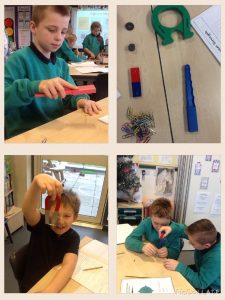
After studying the properties of magnets, the children in year 3/4 were challenged to make the longest paperclip chain that could be suspended by a single magnet. Most groups found that the Horseshoe magnet could suspend the longest paperclip chain. They had lots of fun experimenting with the different types of magnet.
We have recently been learning about life in the Stone Age. The children were particularly interested in the Stone Age method of heating liquids with hot stones. We therefore decided to try to replicate this method by attempting to raise the temperature of cold water by adding hot stones. This was much more difficult than we thought it would be! It led us to ask the questions: Why not hold the vessel directly over the water? and How long would it take to raise the temperature of the liquid to boiling point?