Year 3 Trawling Experience

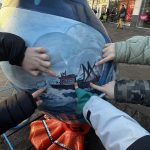
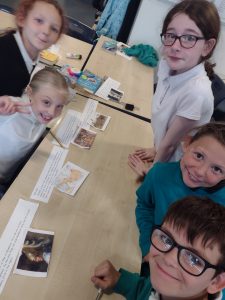
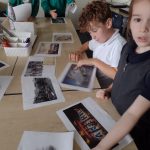
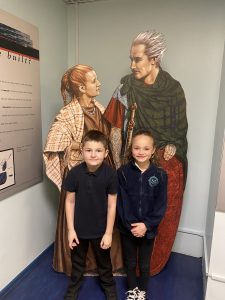
Today, children in Mrs Yardley and Smiths class had the opportunity to go to the KC Learning Zone to learn about Trawling in Hull. We looked at what trawling is and what life was like for the trawler men while they were out at sea and how da and how dangerous it was for them. Also, we found out about the Triple Trawler Tragedy and how significant Lilian Bilocca was in shaping safety standards on trawlers for fishermen from then on, plus we concluded that Hull really is a great place to live and we all feel really proud to come from here!
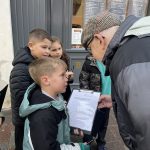
We familiarised ourselves with facts about trawling in Hull then conducted some fieldwork where we surveyed members of the public to find out if they knew about trawling in Hull. At first we were all really nervous but once we started we all thought it was brilliant. We found out that the fishing industry in Hull is still at the heart of many peoples lives – we spoke to an old sea captain and even  Lily Billocca’s niece!
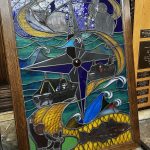
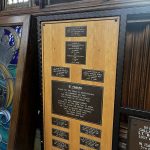
After that, we found out about life at sea and how dangerous it was for the trawler men. Deckie learners on board the trawlers were only young boys and they would often have the worst equipment yet the most dangerous and horrible jobs. We researched the Triple Trawler Tragedy and how this disaster shook Hull and then we visited the memorial in Zebedee’s yard and remembered those who had lost their lives. We also visited Hull Minster and saw the memorial and stained glass tribute. We found out about all of the work Lilian Bilocca and the Headscarf revolutionaries did and how significant it was to raising safety standards on board fishing vessels on a national level.


Thank you to Hull Children’s University who ran the trip for us – we all had a lovely time! Mrs O’Loughlin’s turn next week!
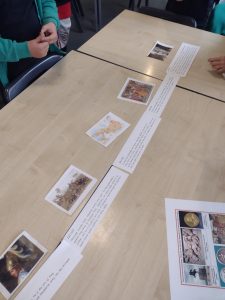
This afternoon, Miss Mead’s class discovered who Alexander the Great is and why he had such importance in the Ancient Greek time period.

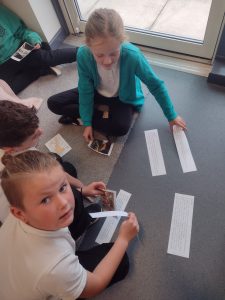
Firstly, we began with a discussion about who Alexander the Great/what he did by using our historian skills to examine sources. We then constructed a timeline of key events in Alexander the Great’s life – the children had to order the events and match them to the correct images.


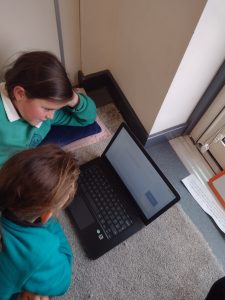
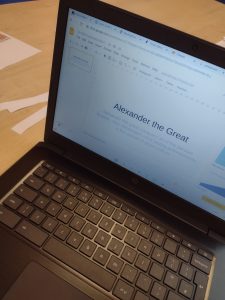
Next, the children worked in small groups to create their own PowerPoint based one one achievement of Alexander the Great. We began to answer these questions:

1. When did this achievement happen?

2. Why and how did Alexander the Great complete his achievement?

3. What were the consequences of this happening?

4. What impact did this have on other countries? Positive or negative?

5. How did it impact on civilisation?

6. Did it have an impact upon Ancient Greece?

Children will continue their PowerPoints during the next history lesson.

Researching archaeological sources of evidence

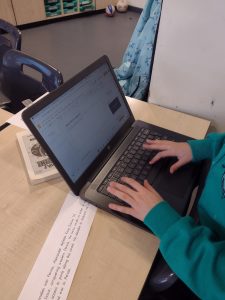
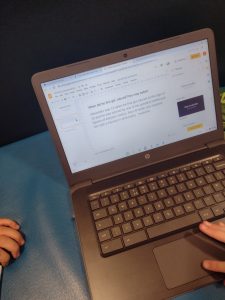
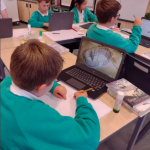
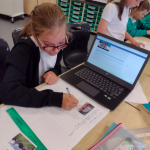
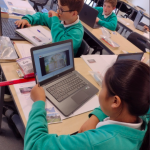
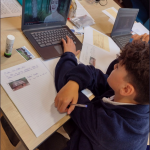
Year 6 have enjoyed getting stuck into our ‘Ancient Maya’ history focus so far this year. Today, we focused on archaeological findings to deepen our knowledge and understanding about their way of life. Children were set their assignments on Google Classroom and were able to conduct independent research, watching videos and browsing reliable websites, to study what the archaeological findings can teach us about these fascinating people.

Year 3 are learning about chronology

This week in our history lesson we have been finding out about chronology and timelines.

We studied a timeline which shows British and world history and found out what BC/BCE and AD/CE mean! We could not believe that the Stone Age was so long ago and we were all shocked to find out that while in Britain the stone age was taking place, in Egypt, the Ancient Egyptians were building pyramids.
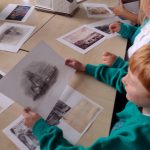
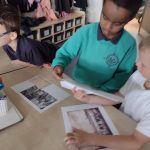
We used a variety of pictures of different sources of evidence to look at clues about the history of Hull and had the opportunity to discuss what we thought they were and showed and were able to ask questions about them.

We were fascinated that Hull wasn’t always called Hull or Kingston upon Hull where in 1299 King Edward made a charter and changed its name – before that it was called Wyke. We were shocked to find out how badly Hull was bombed and when this happened!

We added significant events onto our timeline in chronological order and are all looking forward to find out more about Hull!

Year 3 D & T – Make

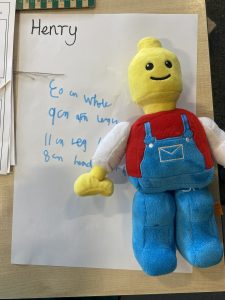
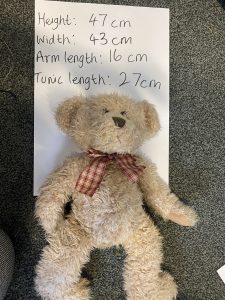
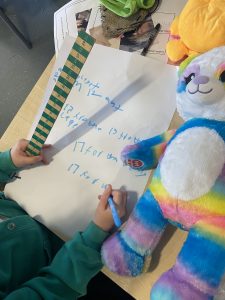
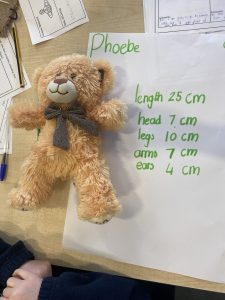
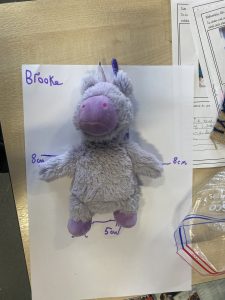
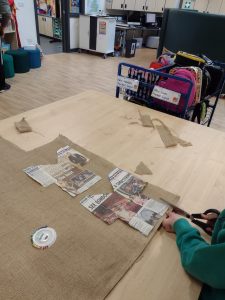
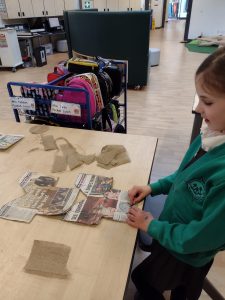
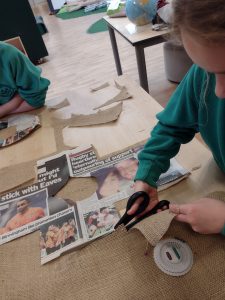
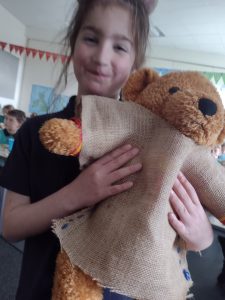
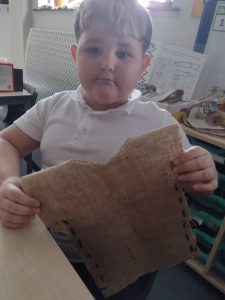
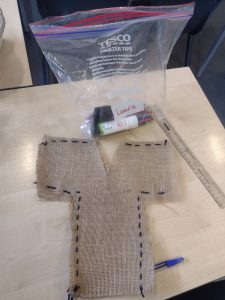
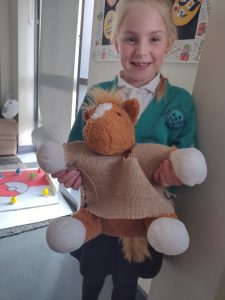
The children were very excited to bring in their own soft toy to make a tunic for. After taking careful measurements, they drew out their patterns and cut them out in preparation for sewing together.


They chose whether to use a running stitch or an overstitch to join the pieces of material together.


Year 3 D & T – Investigate

In D & T this term, the year 3 children will be making Iron Age clothing for their for their teddy bears. They have begun to look at what the clothing would’ve been like and how it would have been made.

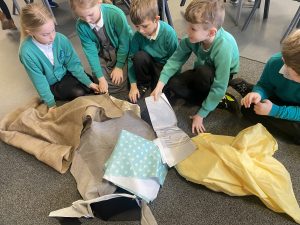
They discovered that the staple piece of clothing would have been a tunic. This would have been made from cloth woven on a loom and coloured using natural dyes found in the local environment ( e.g. from grasses and berries). It might also have been adorned with decorative stitching, beads and brooches.


They looked at different types of fabric, discussing the various properties of each.

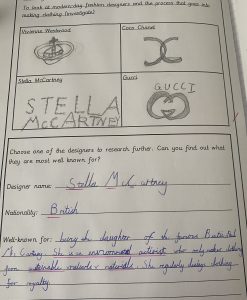
They continued their investigation phase by looking at modern-day fashion designers and the process that goes into making clothing.

Y4 RE: Saints and Heroes – What Makes A Hero?

As Theologist this term, we have been exploring the lives of faith members who have performed heroic deeds as well as those who have dedicated their lives to a cause to help others.

Firstly, we considered the individuals in our own lives who we considered to be heroes for the selfless acts they perform in putting the needs of others before their own…

Parents and Grandparents
Siblings and extended family members
Friends
Teachers and Teaching Assistants
The NHS
The Emergency Services
The Armed Forces

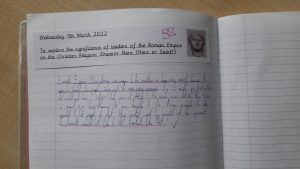
We then explored the life of Emperor Nero, which linked with our study of the Romans in History, and considered the effect he had upon those who followed the Christian faith.  The children were unanimous in their conclusion that Nero was definitely not a Saint or a Hero due to his selfish need to suppress the freedoms of those civilians who followed the Christian faith resulting in their persecution for his own entertainment.

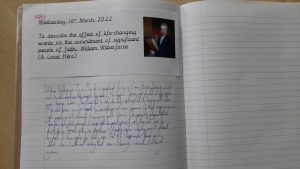
The life and commitment of William Wilberforce, who hailed form Hull, was then explored in relation to how his determination and dedication to his cause had a significant impact upon the slave trade during is lifetime. The children unanimously agreed that Wilberforce was a true Hero and selfless man who put the needs of others before his own.  He demonstrated empathy for those who had been taken as slaves and was both brave and resilient in continuing his campaign even though it took 18 years for the changes to begin to be accepted by those in Parliament.

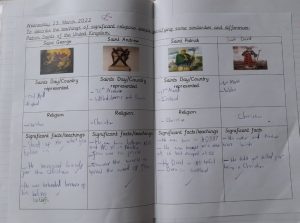
We then reflected upon the teachings of the four Patron Saints of the United Kingdom and considered the way in which their dedication to their faith helped others. The children agreed that Saint George(England), Saint Andrew (Scotland), Saint David (Wales) and Saint Patrick (Ireland) remained true to their Christian beliefs in their passion to help others and spread the word of Jesus. Did you know that an individual can only be given the title of Saint after they have passed away and as long as they have lived a holy life and done a miraculous deed? A fact worth knowing!

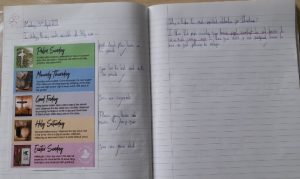
The children have also reflected upon the key events of Holy Week and considered why Easter is the most important celebration for Christians.  Upon watching the events of Holy week online, a class discussion allowed children to voice their opinions as to how key individual’s acted and felt at relevant points throughout the events of Holy Week:

Palm Sunday – People were overjoyed when Jesus travelled into Jerusalem
The Annointing – Jesus was telling people to respect one another and love one another
The Last Supper and Arrest – Jesus was aware of what was to happen; Judas was overcome with temptation; His friends left because they feared the Romans
The Crucifixion –  Religious leaders were jealous of Jesus; The Religious leaders pressured the Romans to vote for Jesus to be crucified; Followers of Jesus were overcome with sadness; Jesus was brave to sacrifice himself; the Roman soldier realised that Jesus was a special man and felt guilty for what was happening; Judas was remorseful
The Resurrection – Jesus rose again because he was the son of God; His followers were happy because he returned to them before going to Heaven.

I am sure you will agree that our children in Y4 have once again worked hard in R.E this term and have gained both knowledge and insight into what makes and individual a Saint or a Hero.