Please click on the link to see what we have been up to in F1 this week. This week we have been exploring different landscapes and habitats from the story ‘We’re going on a bear hunt.’
Post geography content here
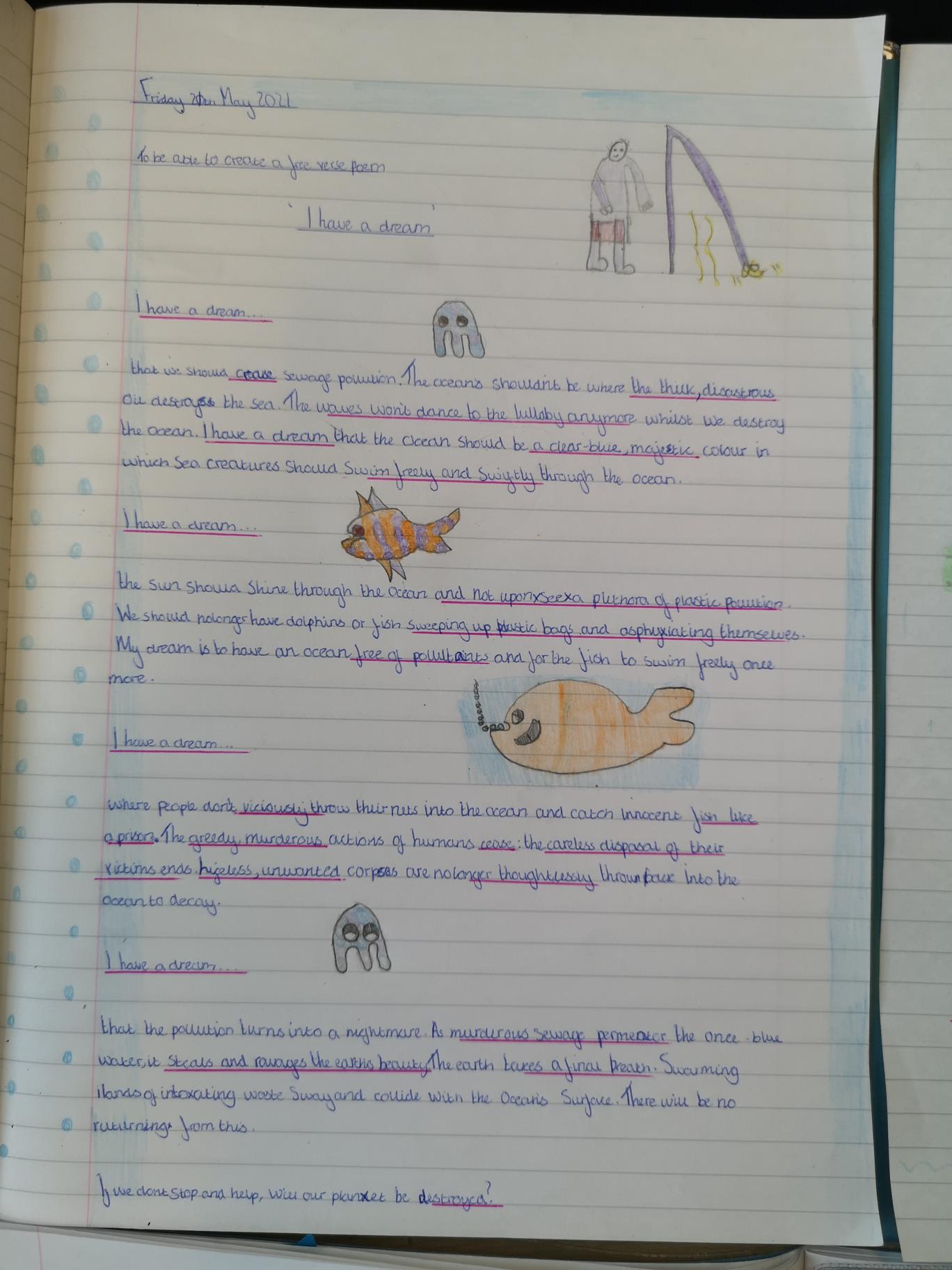
Please click on the link to see what we have been up to in F1 this week. This week we have been exploring different landscapes and habitats from the story ‘We’re going on a bear hunt.’
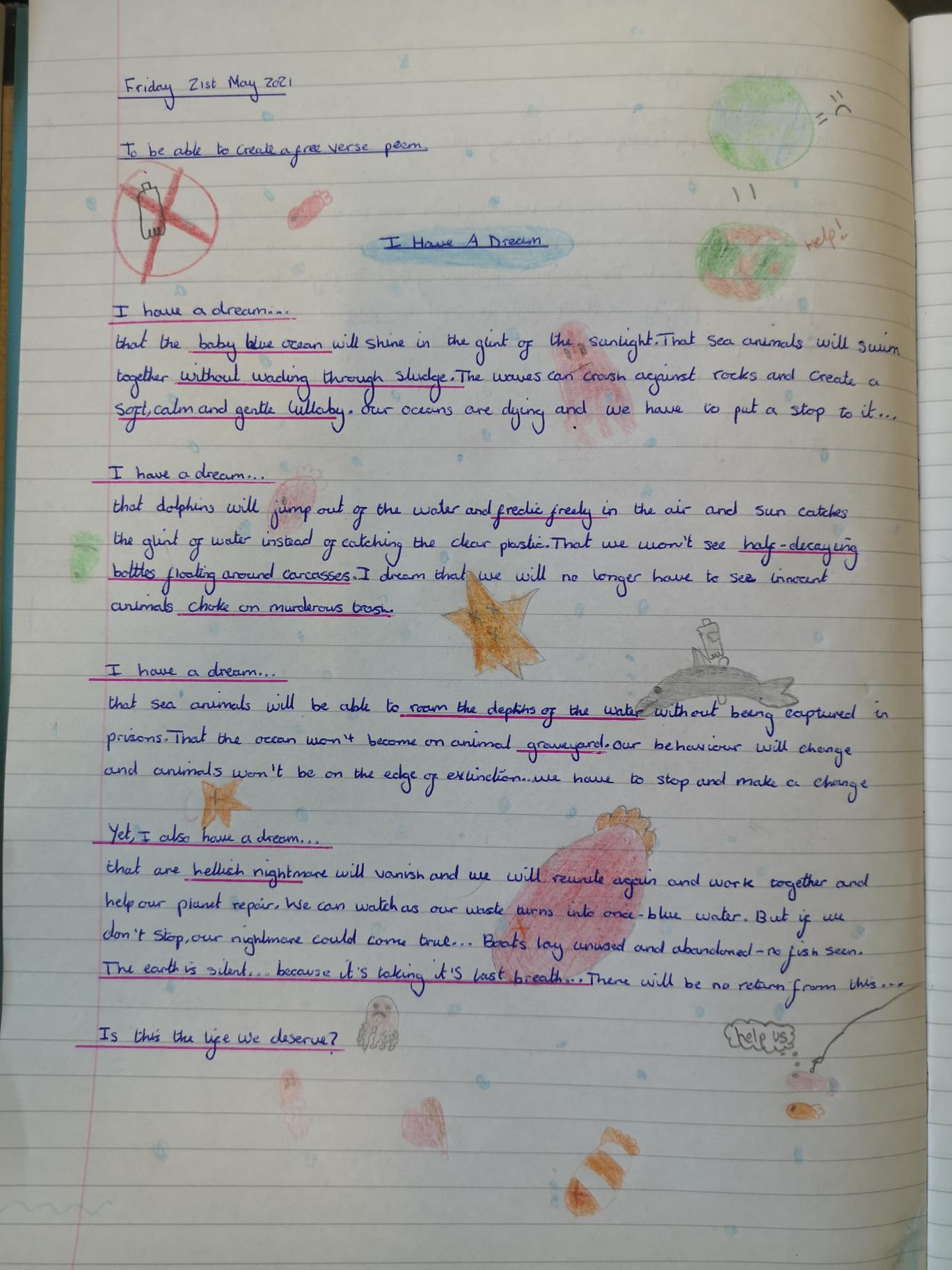
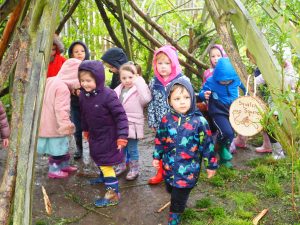
The children had a wonderful time today, helping to develop our forest area.
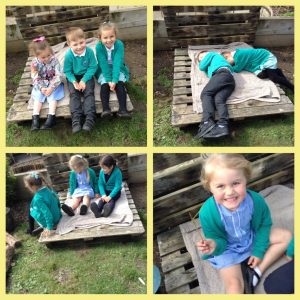
First we used two pallets to make a bed…a stage…a sofa…maybe even a magic carpet…

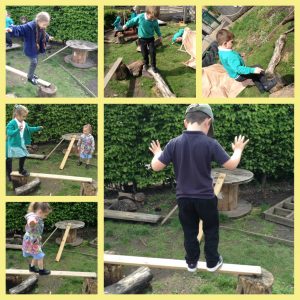
…then we use logs, stumps and planks to make an assault course.
We tested and checked to make sure it was steady and safe… then we carefully balanced around, slow and steady…

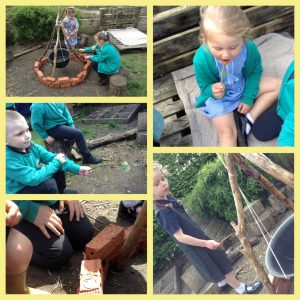
…after that, we explored our campfire area and using our fabulous imagination we toasted marshmallows and sang songs.
We were careful not to go too close, staying on the edge of our safety circle. It was good to investigate the patterns on the bricks we used to surround our fire pit…

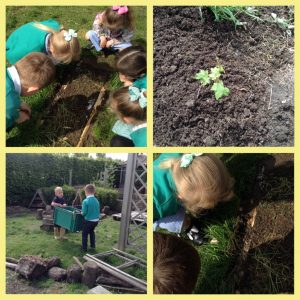
…and finally, we looked for bugs, planted a tree and worked together at tidy away time.

We love our forest area!
Y5 Geographers
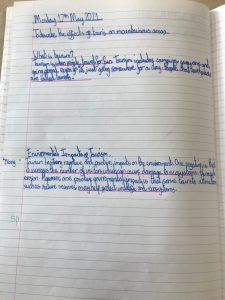
We had fabulous discussions today in Geography as we considered the effects of tourism. We started by considering the changes to our classroom environment if we were to have an extra 150 people in our room each year, which is the scaled equivalent of the population of the Alps to their volume of tourists.
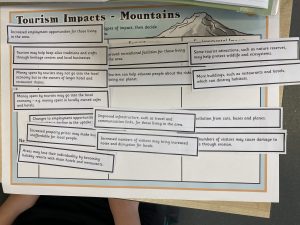
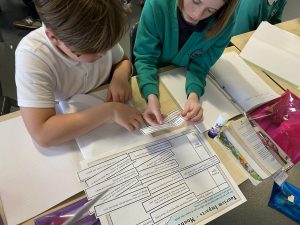
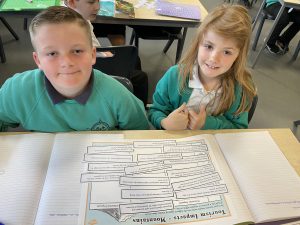
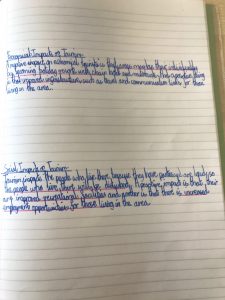
We worked with our partners to sort out facts cards about tourism and we had to categorise the facts into whether they were positive effects of tourism or negative. We then had to consider whether the fact has an economical, social or environmental impact upon the area. This led to even more wonderful discussions and it really opened our eyes to the effects of tourism.


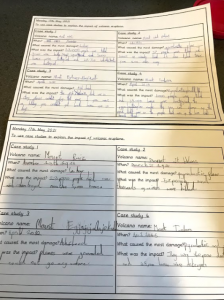
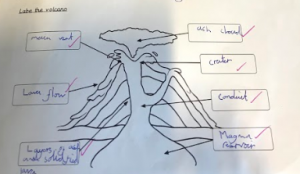
Year 3 really enjoyed today’s Geography lesson, looking at the ways in which volcanoes are dangerous. We were shocked to see tourists visiting a volcano which had recently erupted! We read case studies on four famous volcanoes and the different ways in which they had left devastating effects on the locations where they had occurred. We learnt about; volcanic ash, pyroclastic flow, lahars and lava flow.
13.05.21
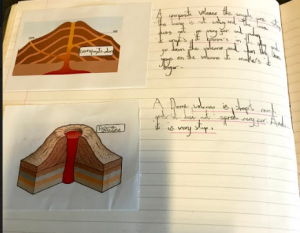
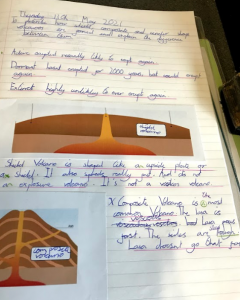
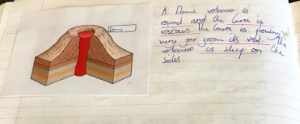
After our study on how volcanoes are formed, we began to identify the different types of volcanoes: Composite, Shield and Dome. We explained the appearance of each and how the volcano was formed.

07.05.21
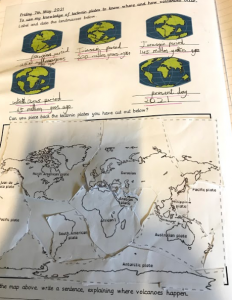
In our next Geography lesson, we began to discuss how the Earth has changed over time and how the tectonic plates have led to the change in the appearance of the Earth’s surface. We used the analogy, that the tectonic plates were like a jigsaw puzzle and attempted to put back the pieces back together.
26.04.21
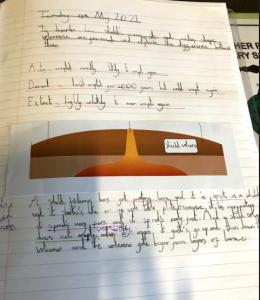
Leading on from our English lessons, and reading the story, escape from Pompeii, we began our enquiry into how are volcanoes formed. We looked at a range of volcanoes and discussed the terminology, active, dormant and extinct. We then went on to label the different layers of a volcano.
22.04.21/ 26.04.21
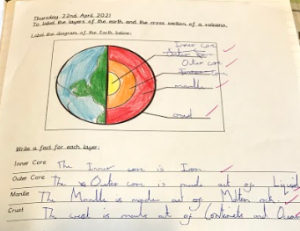
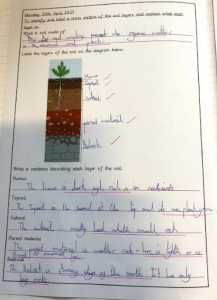
As an introduction to our topic, why is the earth sometime angry? We looked at a cross section of the earth’s layers. We focussed on the organic material, top soil, subsoil, parent rock and bedrock. This led us to the question, what’s below the Earth? After lengthy discussions, we were able to draw and label a cross section of the Earth and explain what it is like at each level.

Y5 Geographers
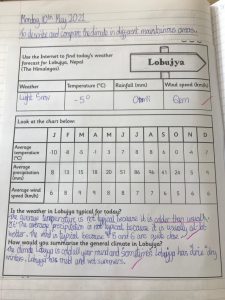
Today, we researched the day’s weather in various mountainous regions around the world. We then compared the day’s weather to the average temperature, precipitation and wind speed for May in that area. We were surprised that over 30 years of data is often taken into account to calculate an average!
Where in the world are the Rainforests?
14.4.21
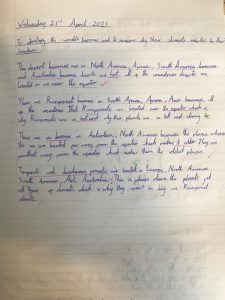
Year four made great use of their mapping skills to locate and identify the world’s rainforests in our first Geography lesson this term. The children were able to describe how the rainforest localities were based around the equator and between the tropics of Capricorn and Cancer and are using increasingly more geographical vocabulary with confidence. We explored the other rainforest localities and discussed how it’s a common misconception that the Amazon is the world’s only rainforest. The children were also able to draw many cross curriculum links to our English text, The Great Kapok Tree by Lynne Cherry which is a tale, based in the Amazon, warning against deforestation.
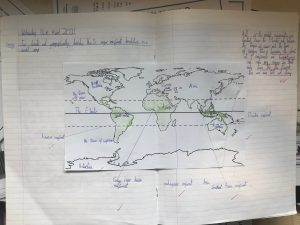
Connor made links between the cartoon Madagascar that he had seen and it being a Rainforest setting.
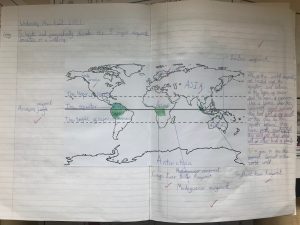
Harley quickly located the continent using his existing knowledge.
What on earth is a Biome?
21.4.21
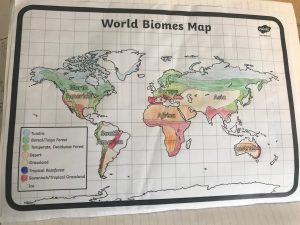
In our second lesson, the children were introduced to the term ‘Biome’. We looked at the patterns of biome distributions across the earth and discussed how the world’s climate zones affect what grows and lives there, creating these distinct biomes. Year four were able to make super generalisations about the conditions within the biome based in their locality.
We also explored the difference in the three main types of forest biome; the Rainforest, the Temperate/Deciduous Forest and the Boreal Forests and examined where they were situated in the world and how the trees had adapted to life in that climate.
Through discussion, the pupils were able to link their understanding of Biomes to their previous knowledge, when they learned about the deserts of Egypt in the Autumn term and in Y2 when they learned about the cold deserts of the polar regions.
What is it like in a Rainforest?
28.4.21
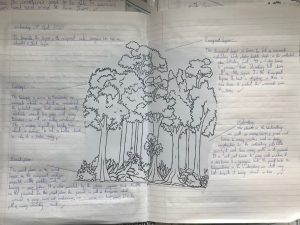
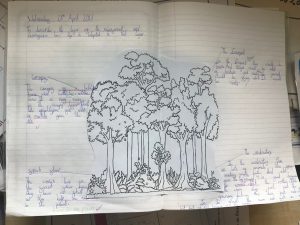
During the third lesson, the teachers were really impressed with the enquiry skills that the children demonstrated when they worked as a team to; learn more about the layers of the Rainforest, discover what the conditions are like and name what grows and lives within each layer. The children researched the layers using videos, photos and text to inform their planning. Notes were made, discussions were held and the children were being specific, naming the animals and vegetation to ensure that their work was accurate. Year Four then went on to produce beautifully annotated diagrams which they were able to explain with confidence and enthusiasm. Especially Evie, when it comes to talking about tarantulas!!!
Y5 Geographers
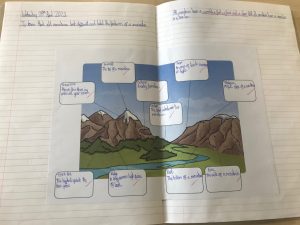
After exploring a range of photographs and aerial photographs in today’s lesson, we deduced that not all mountain ranges look the same or have the same features. We took part in a fun and interactive game that helped us to learn the features of a mountain before we recorded them in our books.
Year 2 have been learning about the continents and oceans this week in relation to the Equator. We can locate all of the continents and oceans and name them from largest to smallest.
Y5 Geographers
Whilst we were exploring the world’s mountain ranges, we were able to find their heights at their summit. We noticed other lines on the maps and today we learned that these are called contour lines which indicate the steepness of which a hill or mountain rises.
We had great fun trying to record contour lines of our mini potato mountains! By carefully cutting layers off the potato mountain we could record the shape and the gradient and create a representation of the mountains slope.