In the story of The Little Red Hen the hen bakes some bread.
Click on the link below to see how we got on when the children made their own bread…
Post D&T content here
In the story of The Little Red Hen the hen bakes some bread.
Click on the link below to see how we got on when the children made their own bread…
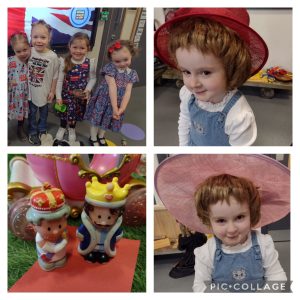
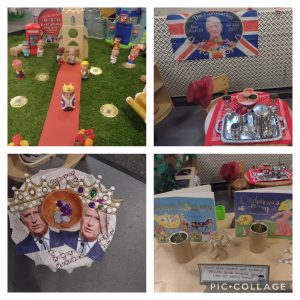
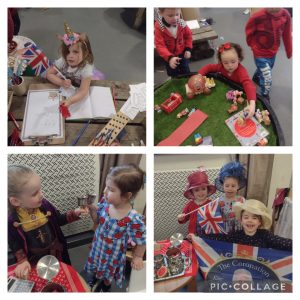
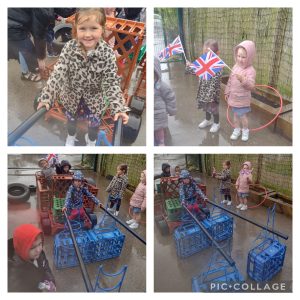
We have had such a wonderful day celebrating the King’s Coronation. We’ve learnt about the King, listened to the National Anthem, joined in the celebrations with red, white and blue cake and joined in with Coronation activities.


Some of us braved the rain and built a coach, with 4 horses, to carry King Charles to his palace. We hope it doesn’t rain as much tomorrow!

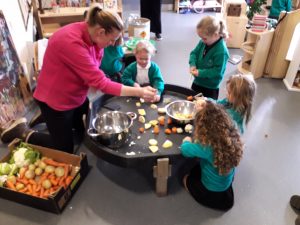
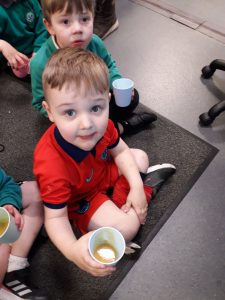
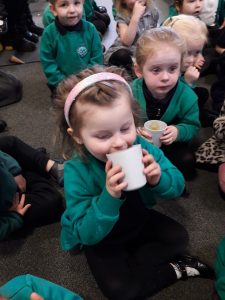
We’ve had an exciting time making and tasting soup today. It’s created a lot of chat and ideas.
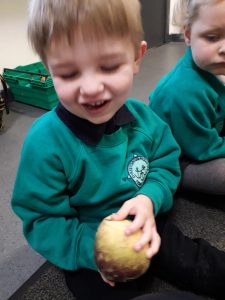
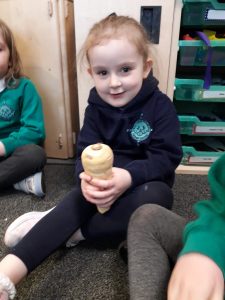
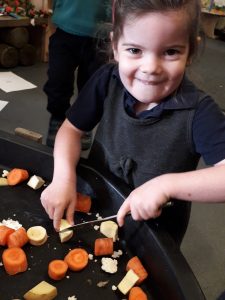
First of all we explored the vegetables. There were some that the children hadn’t seen before.
Isla-Grey thought the swede might be an avocado. However, she knew that the second vegetable was a parsnip. Well done Isla-Grey!

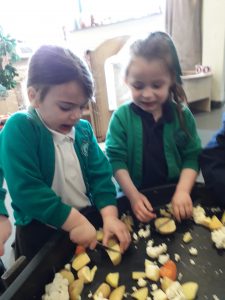
We then worked hard to chop the vegetables up. Some of them were very hard. We had to make sure that they were quite small. The children had to find the big chunks that needed cutting smaller.


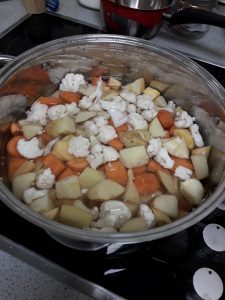
When the vegetables were ready we added some water and a stock cube. Ivy N knew that we had to cook the vegetables to make them soft.

When they were cooked we blended them until the soup was smooth.
Well done to (nearly) all the children for tasting our homemade soup too! Some of them thought it was delicious!


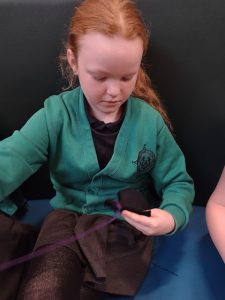
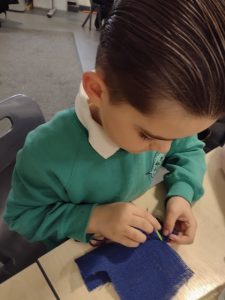
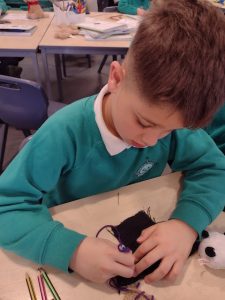
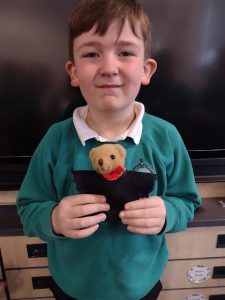
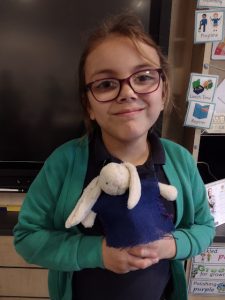
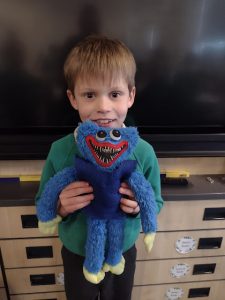
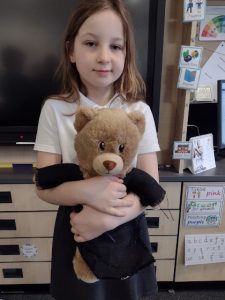
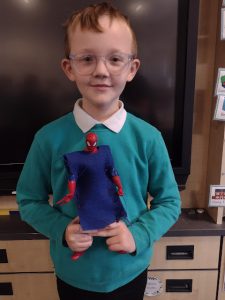
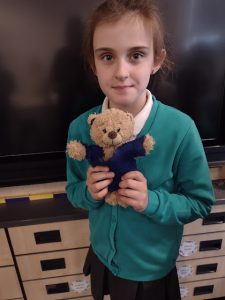
Year 3 have completed our Design and Technology unit this week. We have had great fun creating an iron age tunic for our teddy bears.
Investigation
We begun our D&T by investigating about patterns and how these are made. We looked at different clothes designers and discussed how all of their designs differ from each other.
Focused Practical
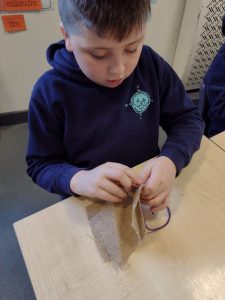
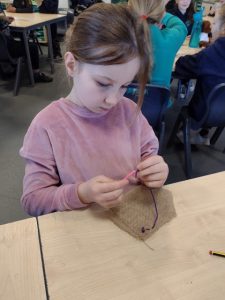
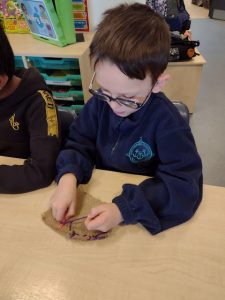
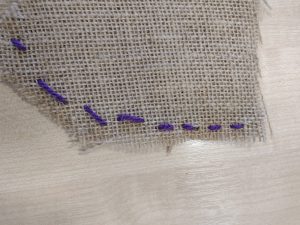
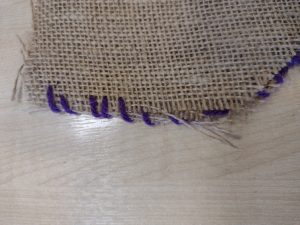
We used two pieces of material to create a pocket. We had to sue different stitches, one of these was easier than the other. We practised using a running stitch, we found this one was the easier of the two. We then practised using an overstitch, lots of u found this one hard.
Design
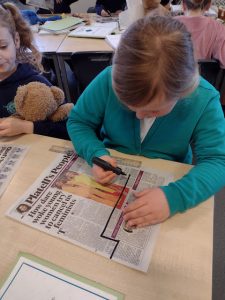
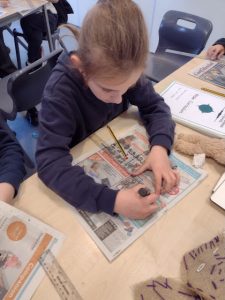
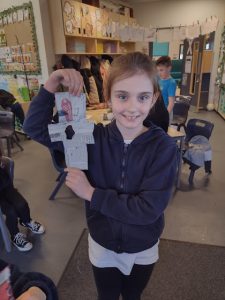
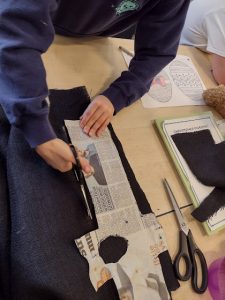
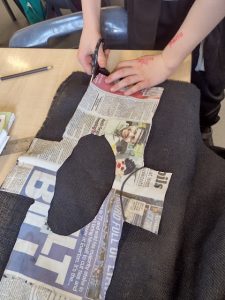
Once we had practised our sewing skills we thought about the patterns we needed to create to help us. We had to take measurements of our teddy bear to ensure our pattern was the correct size before we could create our pattern with paper.
Make
In order to make our tunics we pinned our pattern to some hessian before carefully cutting around it. We then decided which stitches to use to join our tunic together. Most of us chose a running stitch as we found this one easier to do.
It took lots of patience and we had to be careful when we sewed our tunic together.
Evaluate
When our tunics were finished we put the on our teddy bears. Some were a little tight and some of us had to cut the front to get them on so we created jackets.
We completed an evaluation of our finished tunic and thought about the things we did well and things we would change if we made a tunic again.
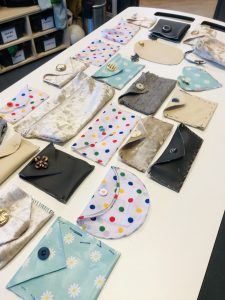
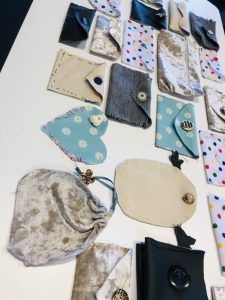
Today was Y4’s make day for this term’s DT project. Children started the day by making paper patterns from their designs. These were transferred onto their fabric which was then carefully cut out and pinned in place. Children then sewed their pieces together using a range of stitches including running stitch, backstitch, overstitch and the challenging blanket stitch! Finally, children added embellishments and fastenings to their purses.
We are super proud of the products they have created! There is such a variety of styles, shapes, fabrics and fastenings. Well done Y4!
This term, Year 5’s D&T project is to investigate, design, make and evaluate our very own bread.
For our investigation task, the children tasted a range of different types of bread including: pitta, naan, wholemeal seeded, white loaf, cheese breadcakes, gluten free and baguette. The children then evaluated the appearance, smell, taste and texture of each bread.
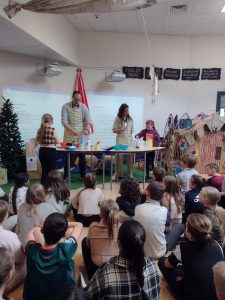
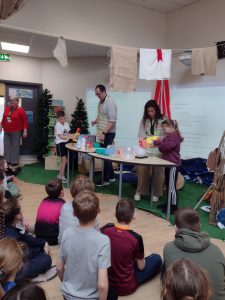
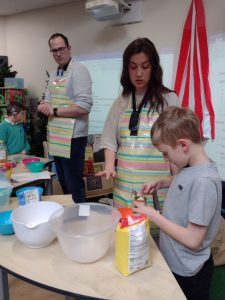
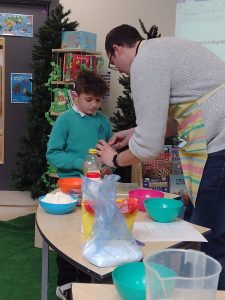
For our focused practical task, Mr Sutton and Miss Mead demonstrated how to follow a recipe of ‘bread in a bag’. The children assisted the teachers by weighing out ingredients and adding them to the mix. Whilst we were taking part in this activity, the children all learned about how yeast is a key ingredient when making bread as the enzymes in the yeast changes sugar into alcohol and carbon dioxide gas, causing bread dough to expand or “rise.”


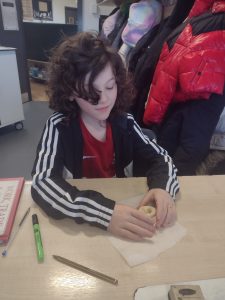
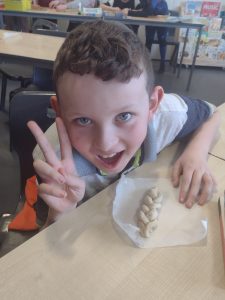
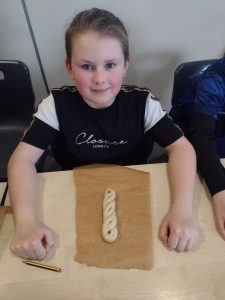
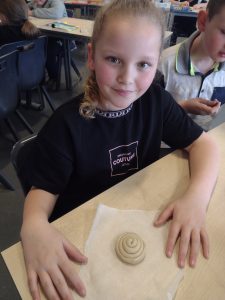
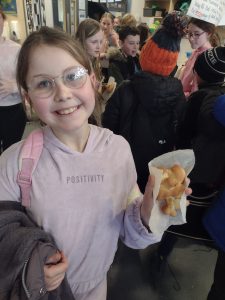
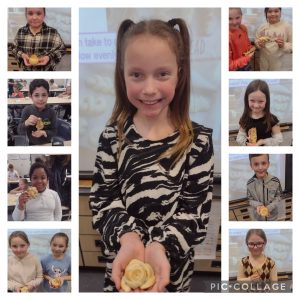
After the demonstration, the children were provided with their own bread mixture to practice different shapes. Here are some images of the children’s amazing creations!


The dough mixture was then baked in the oven for the children to take home. Below is a picture of Mia (Y5MEA) and her brilliant flower shaped bread!
Next week, the children will be creating three different designs, along with toppings of their choice, for their final bake!!!
Previous learning has taught the children a circuit always starts with a battery (a cell) . A flow of electricity moves from the positive pole to the negative pole of the battery. The flow is pushed by the battery, through the wires to the other components in the circuit. This makes a complete electrical circuit.
The first challenge was to create a simple circuit…
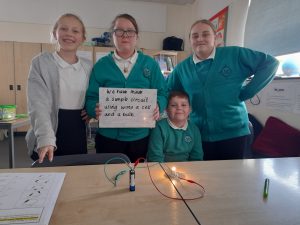
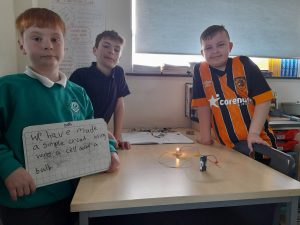
We made a simple circuit using wires, a battery and a bulb…
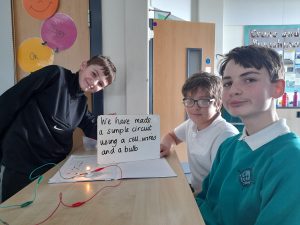
Then the all important question..
How can we increase the brightness of the bulb ?
Time to put your scientific heads on!!! Lots of discussion; lots of hypothising, ideas and theories began to develop.Obviously, as every scientist knows, these ideas and theories need to be tested .
Then the light bulb moment !!!
By increasing the voltage we also increased the brightness of the bulb….
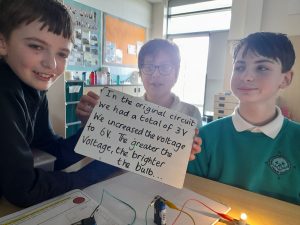
In the original circuit we had a total of 3V…we increased the voltage to 6V. We discovered the greater the voltage the brighter the bulb.
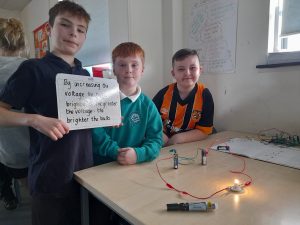
The greater the voltage the brighter the bulb
Then an extra challenge.
How can we make a switch out of foil and cardboard, which will open and close so we are able to switch the bulb on and off?
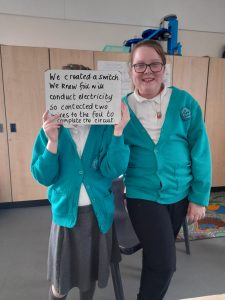
We created a switch , which would open and close. We knew foil would conduct electricity. We connected the wires to each end of the foil to create a complete circuit.
Well done girls!!!
The children were extremely focused in the lesson whilst practising different styles and designs that they could shape their bread in. All the children enjoyed watching and partaking in the initial creation of the bread and were awed by the amount that the bread rose through to the yeast! Most children wanted to bake the bread in the oven however they saw how in some cultures bread could be fried and even boiled! All the children enjoyed taking home their delicious tasty bread trials. These skills are building in preparation for their actual making next week.
Year 5 have really enjoyed today’s lesson where they have been investigating different styles of bread. They have detailed how it smells, what it’s appearance is like along with the taste. Lots of children really enjoyed the baguette but hated the gluten free bread. These discoveries will really help them in their design process.