Year 5 have been really engaged in learning their new song ‘Hey Mr Miller’. They have been learning it and splitting into 4 parts to sing the song in canon! We were really impressed with their efforts!Some excellent air trombones and saxophones came out in their singing also.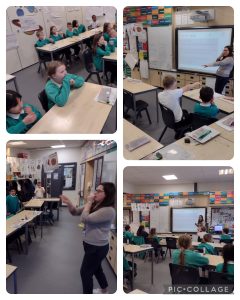
Category : Year 5/6
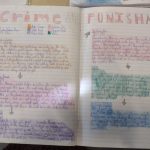
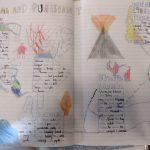
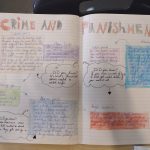
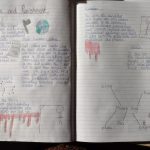
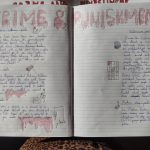
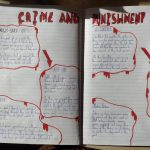
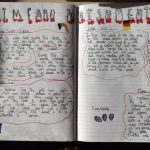
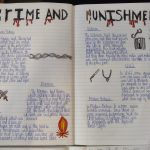
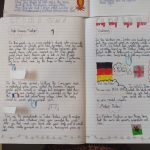
Year 6 have worked incredibly hard studying British crime and punishment through the ages within our history lessons this term. We have covered so many time periods, including Anglo-saxon and Vikings, Normans, Tudors, Victorians, WW2 Britain and modern day Britain.
We have really developed our enquiry skills by studying a range of primary and secondary sources of evidence and carrying out independent research.
As we have now finished our history unit of work, we competed in a Kahoot! quiz to check how much we had remembered from this term and then completed a ‘double page spread’ to showcase our knowledge.
The top scorers on Kahoot! along with the 3 of the most impressive double page spreads won themselves an Easter egg for their great efforts! Well done Y6.
This term, Year 5’s D&T project is to investigate, design, make and evaluate our very own bread.
For our investigation task, the children tasted a range of different types of bread including: pitta, naan, wholemeal seeded, white loaf, cheese breadcakes, gluten free and baguette. The children then evaluated the appearance, smell, taste and texture of each bread.
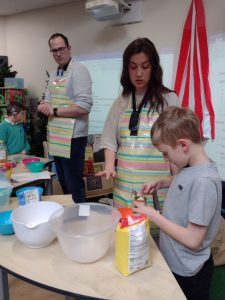
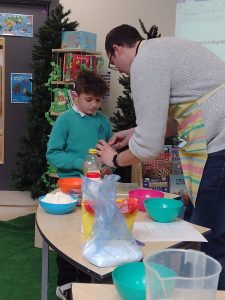
For our focused practical task, Mr Sutton and Miss Mead demonstrated how to follow a recipe of ‘bread in a bag’. The children assisted the teachers by weighing out ingredients and adding them to the mix. Whilst we were taking part in this activity, the children all learned about how yeast is a key ingredient when making bread as the enzymes in the yeast changes sugar into alcohol and carbon dioxide gas, causing bread dough to expand or “rise.”
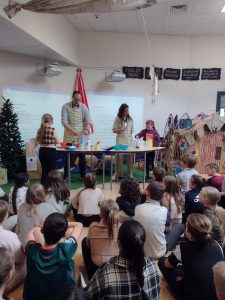
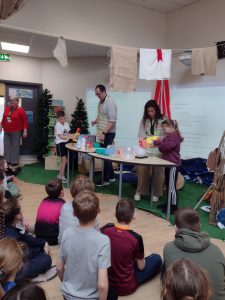
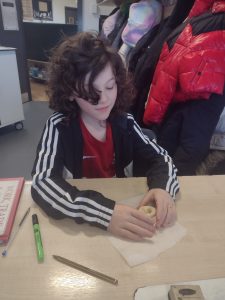
After the demonstration, the children were provided with their own bread mixture to practice different shapes. Here are some images of the children’s amazing creations!
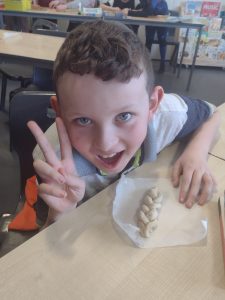
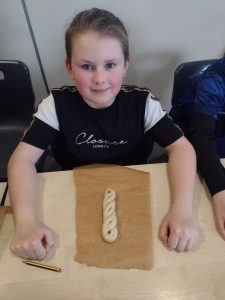
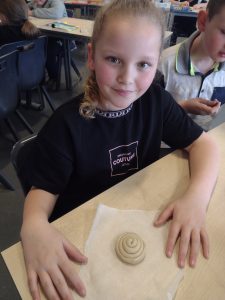
The dough mixture was then baked in the oven for the children to take home. Below is a picture of Mia (Y5MEA) and her brilliant flower shaped bread!
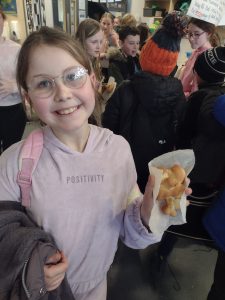
Next week, the children will be creating three different designs, along with toppings of their choice, for their final bake!!!
Previous learning has taught the children a circuit always starts with a battery (a cell) . A flow of electricity moves from the positive pole to the negative pole of the battery. The flow is pushed by the battery, through the wires to the other components in the circuit. This makes a complete electrical circuit.
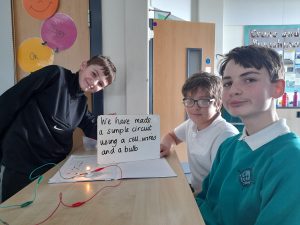
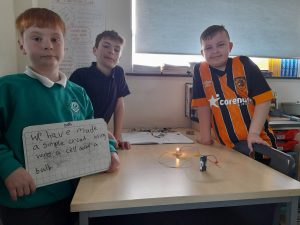
The first challenge was to create a simple circuit…
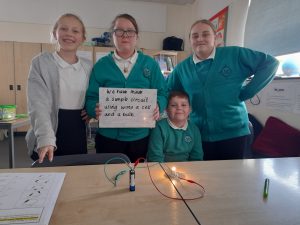
We made a simple circuit using wires, a battery and a bulb…
Then the all important question..
How can we increase the brightness of the bulb ?
Time to put your scientific heads on!!! Lots of discussion; lots of hypothising, ideas and theories began to develop.Obviously, as every scientist knows, these ideas and theories need to be tested .
Then the light bulb moment !!!
By increasing the voltage we also increased the brightness of the bulb….
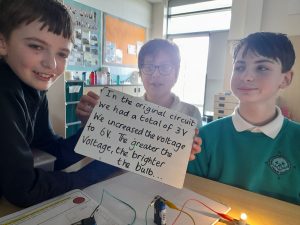
In the original circuit we had a total of 3V…we increased the voltage to 6V. We discovered the greater the voltage the brighter the bulb.
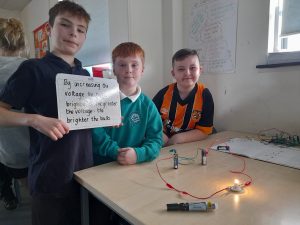
The greater the voltage the brighter the bulb
Then an extra challenge.
How can we make a switch out of foil and cardboard, which will open and close so we are able to switch the bulb on and off?
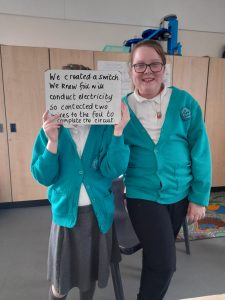
We created a switch , which would open and close. We knew foil would conduct electricity. We connected the wires to each end of the foil to create a complete circuit.
Well done girls!!!
The children were extremely focused in the lesson whilst practising different styles and designs that they could shape their bread in. All the children enjoyed watching and partaking in the initial creation of the bread and were awed by the amount that the bread rose through to the yeast! Most children wanted to bake the bread in the oven however they saw how in some cultures bread could be fried and even boiled! All the children enjoyed taking home their delicious tasty bread trials. These skills are building in preparation for their actual making next week.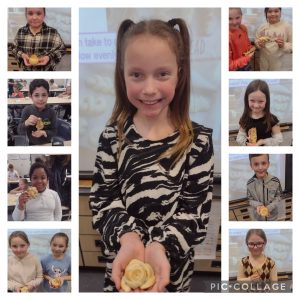
Year 5 have started a new unit in English – non-chronological reports. Today, the children learnt about structural and language features of non-chronological reports. Some structural features include:
- Title
- Sub-headings
- Image and caption
- Introduction
- Paragraphs
Language features within a non-chronological report are:
- Fronted adverbials
- Relative clauses
- Parenthesis to add extra information
- Formal language
- Factual language
- Third person
The children then analysed a non-chronological report, highlighting these areas. We are now experts!
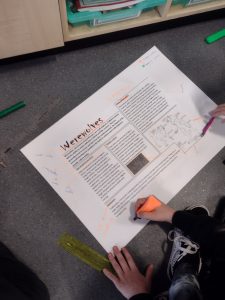
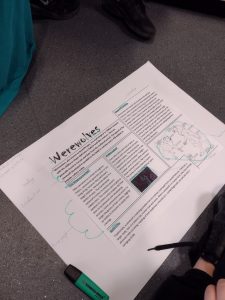
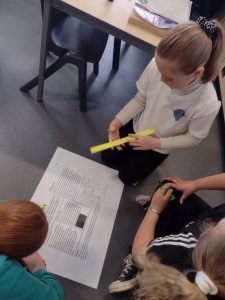
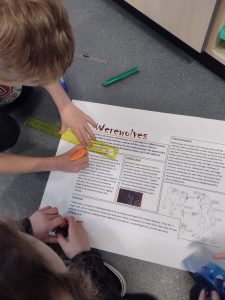
Year 5 have really enjoyed today’s lesson where they have been investigating different styles of bread. They have detailed how it smells, what it’s appearance is like along with the taste. Lots of children really enjoyed the baguette but hated the gluten free bread. These discoveries will really help them in their design process.
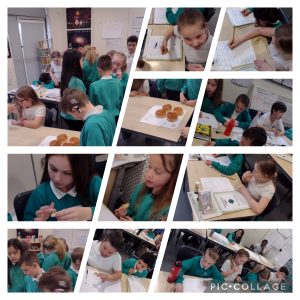
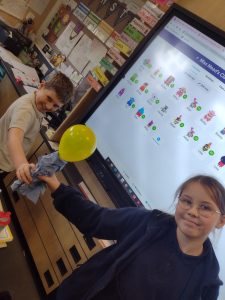
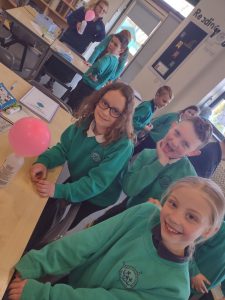
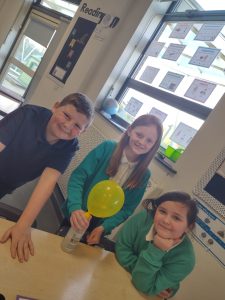
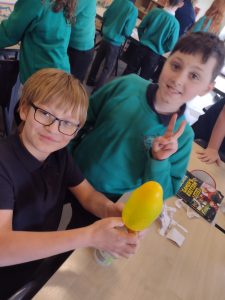
Year 5 have been learning about changing states and materials in our science lessons. In today’s lesson (as it is science week!), we were learning about reversible and irreversible changes.
We understood that reversible changes are something that you can change back to its original form through: sieving, filtering, evaporating and through magnets.
Irreversible changes are things that cannot be undone or changed back to its original form for example, scrambling eggs, melting a candle, or baking a cake.
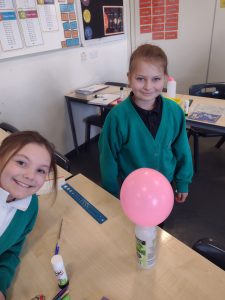
For our experiment today, the children had three ingredients: bicarbonate soda and and vinegar. The children predicted what would happen when the bicarbonate soda is mixed with the vinegar – they came up with the idea that it would fizz. We tested our predictions through the experiment where we put a tablespoon of bicarbonate soda inside a balloon and placed the balloon on top of a bottle that was filled with vinegar.
Our results showed that a chemical reaction occurred with the bicarbonate soda and the vinegar, producing a gas and changing its state. As a result, the balloon blew up! This is an irreversible change.
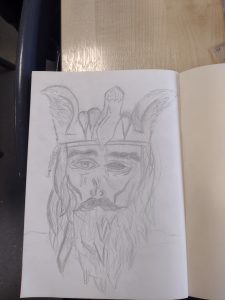
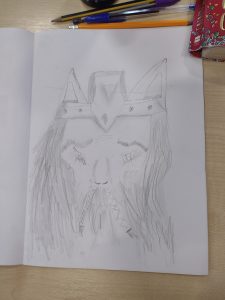
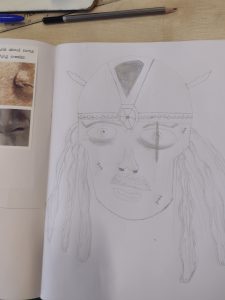
Year 5 have been putting their sketching, cross-hatching and shading skills to create a portrait of a Viking warrior. The children carefully analysed similarities of some Viking images: long, un-kept hair, moustache and beard, Viking helmet, bushy eyebrows. They then put their knowledge into practice!
Here are some of our wonderful creations!
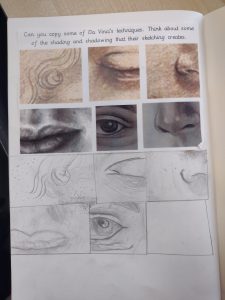
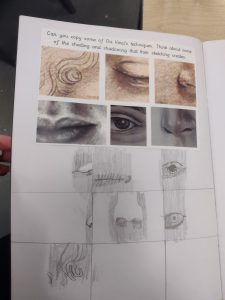
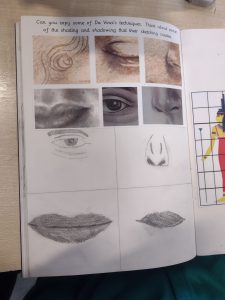
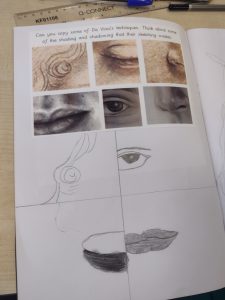
In our art lesson, year 5 have been learning all about Da Vinci, who was active as a painter, draughtsman, engineer, scientist, theorist, sculptor, and architect. We used our research skills to find out about Da Vinci’s achievements: learning some names of his famous drawings and sculptures. In this lesson, the children explored Da Vinci’s techniques using out shading and sketching skills.
Here are some of our final designs: