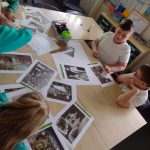
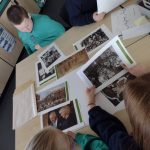
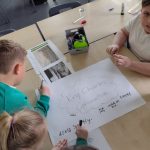
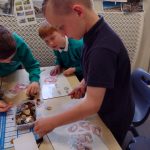
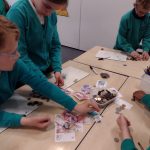
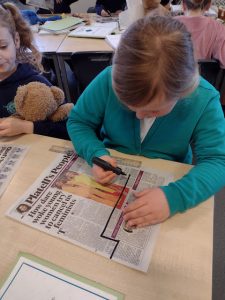
Today, the children in Year 4 explored, discussed and debated a range of photographic sources of evidence with the aim of identifying the significance of historic coronation events for British citizens of the past.

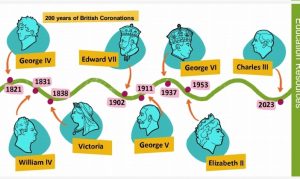
We first explored the Timeline of British Coronations over the last 200 years and utilised our mathmatical skills to determine the length of each British monarch’s reign.
 

In teams, we then explored, discussed  and grouped our sources of evidence in a range of ways:

Photographic evidence
Paintings and portraits
Black and white photographic evidence
Colour photographic evidence
Celebratory images
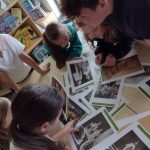
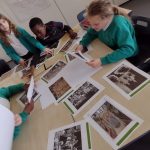
Comparisons were made in relation to  the validity of photographic evidence with that held within paintings of a  monarch’s coronation. From this,  the children deduced that paintings of historic coronations  may not be a  true representation of the event as some of the detail could have been enhanced or omitted by the artist; whereas the more modern photographic evidence provides a truer representation of each event due to it being recorded instantly.

Further observations of the ways in which British citizens celebrated historic coronations as a nation over time allowed the children to identify that each celebration was similar in that people dressed smartly, a special feast was shared and that communities were decorated with flags and bunting to honour the monarch of their time.

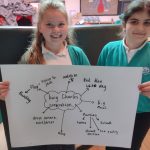
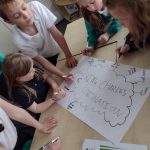
To complete our lesson the children then created a group mindmap to identify ways in which they will celebrate the coronation of our monarch – King Charles III on Saturday 6th May 2023.

From this, we were able to infer why the upcoming coronation of King Charles III continues to be an important event within British society today and deduced that it is an event which many British citizens continue to take pride in celebrating as a nation just like the historic celebrations of past monarchs were for our ancestors.
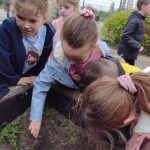
Why are bees so important?

To coincide with Earth Day and making our pledges, we learnt all about bees, why they are crucial to life on earth and that they are sadly dying out.. We couldn’t believe that in the UK alone, around 70 crops depend on bee pollination. While there are other methods of pollination, including by other animals and the wind, wild bees can pollinate on a much bigger and more efficient scale. Estimates suggest it would cost UK farmers an incredible £1.8 billion a year to manually pollinate their crops.

We found out that one of the main reasons for bees dying is because they are losing their habitats due to humans building on woodland and grassland areas and different farming techniques.

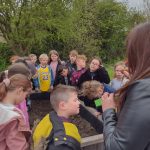
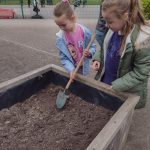
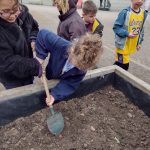
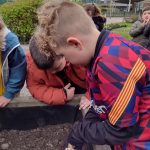
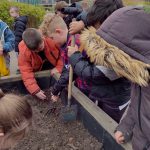
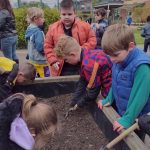
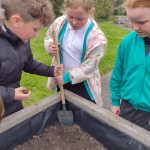
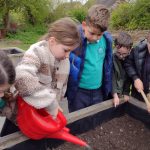
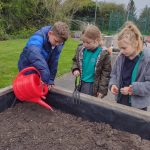
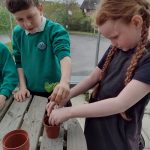
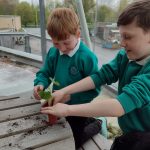
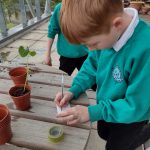
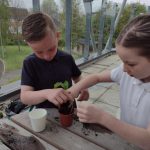
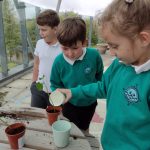
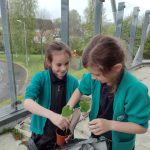
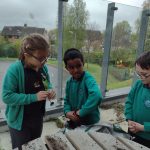
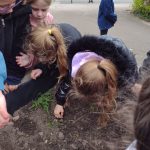
To do our bit for bees, we planted a wildflower bee garden and hope that it will attract bees once it is grown.

Y3 Tag Rugby

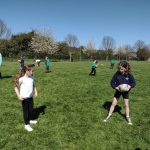
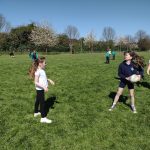
This half of the summer term, Y3 are working with Tigers Trust and are learning how to play tag rugby.

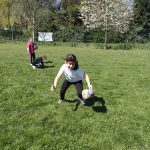
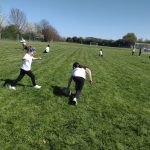
We discussed the rules and then practiced how to score a try ensuring both hands are on the ball and the ball is put on the floor not just dropped. We then looked at how to carry out a basic pass and practiced this!

Y3 are learning about Money

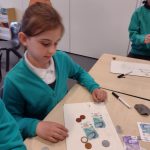
In Y3, we have just started our unit about money. In this small step, children consolidated their knowledge of notes and coins from previous years and all did very well. In Year 2, children found that different combinations of coins could equal the same amount and we explored this further by making different amounts using the £ and p notation. We  then worked on comparing different amounts using < > and =.

Year 3 Fair Test Investigation

In Year 3 in science, our unit of work at the moment is plants. We have been learning all about features of plants and have been identifying and describing the functions of different parts of flowering plants: roots, stem/trunk, leaves and flowers and conditions they need to grow.

This lesson we have been exploring the requirements of plants for life and growth (air, light, water, nutrients from soil, and room to grow) and what will happen if we take away one of those requirements. To do this, we carried out a comparative and fair test investigation – we worked in groups of 3, identified the requirements and which variable we would be taking away to check and how we would make it a fair test and decided we would have a control plat and one that would have a variable taken away.

We made predictions for what would happen to the plant that has all the requirements needed to grow and then to the plant that had one variable taken away. We explained our methods and drew diagrams.

After that, we planted our plants making sure that if they both had water then they had the same amounts, the ones without light were put in a dark place and if they didn’t have warmth were left outside.

We will keep measuring both plants to conclude the investigations.


Y3 are Performers!

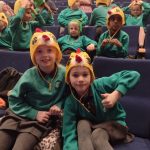
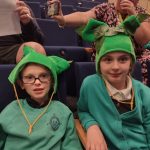
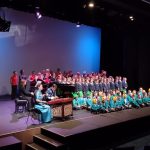
A huge well done to all of the Y3 children who took part in the Chinese Whispers concert at Middleton Hall on Wednesday 19th April. All children were fabulous and were very brave and confident standing on stage and performing to all of those people.

The Chinese Whispers™ Project embraces culture and creativity. Its intercultural agenda focusses on developing awareness, competence and citizenship in local members of the community and we have been lucky enough to work on this for two years now.

The children have loved participating in this project and have been very lucky to have had the opportunity to perform in front of an audience and be able to watch some of the very talented Chinese artists that also performed that night.

Over the course of the project, children have been able to play and perform in solo and ensemble contexts, using their voices  with increasing accuracy, fluency, control and expression, listen with attention to detail and recall sounds with increasing aural memory, appreciate and understand a wide range of high-quality live and recorded music drawn
from different traditions.

Our first ever chess fixture!

This afternoon, four children from Mr Morgan’s class represented Christopher Pickering in the school’s first every chess fixture.

After studying chess every Tuesday afternoon for the last term, we have now entered into the Hull District Junior Chess League. This afternoon was our first fixture against Hymers College. The games should be held remotely from schools, but as this was our first time playing online, Hymers were kind enough to invite us down to their school to help us get to grips with the online game system.

It was a steep learning curve for our children against some talented Y6 players from Hymers. Unfortunately, apart from one draw, our children lost their games. However, they were enthusiastic and showed real resilience and willingness to improve.
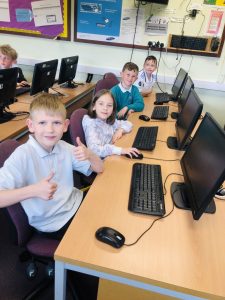
Thank you to the children of Hymers for being so supportive and kind to our Y4s – we hope to play you again soon!

Y4 Chess Team: Eden F, Rebecca G, Cael W & Eden T. 


Y4 Architecture Sketching Trip

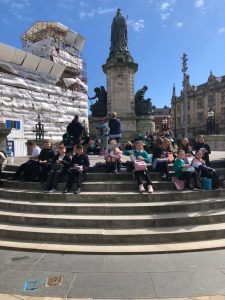
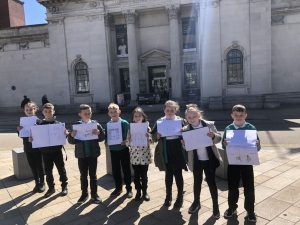
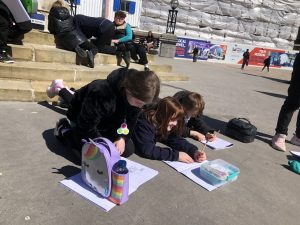
After being cancelled due to terrible weather last term, Y4 finally got to complete their outdoor sketching this afternoon! We visited Queen Victoria Square in the City centre to sketch examples of Roman inspired architecture.

The building surrounding this square all encompass some of the iconic designs developed by the Romans and still used to this day. Children completed a variety of sketches including overall drawings of the whole building or more detailed studies of specific parts of the building such as pillars, arches, vaults and domes.

Overall the children had a fantastic time and it was a great experience to spend an afternoon sat in the sun practising drawing. Well done children!

Children getting comfortable for a sketch of the town hall. 

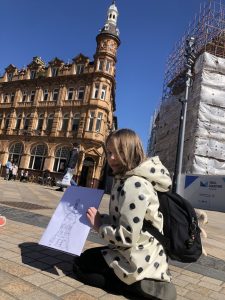
Rebecca focused on the domed finnial of this building 

Feren’s Art Gallery was a popular building to draw – children really focused on the typically Roman entrance facade. 

Enjoying the weather, happily sketching!


iron age tunic

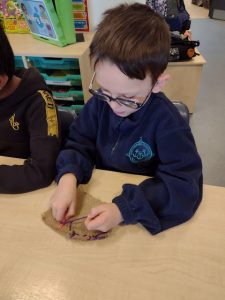
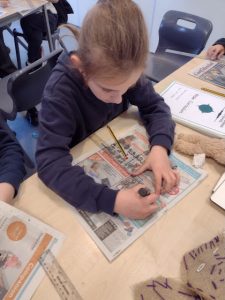
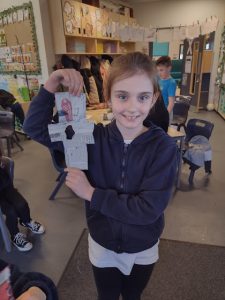
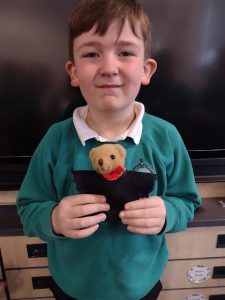
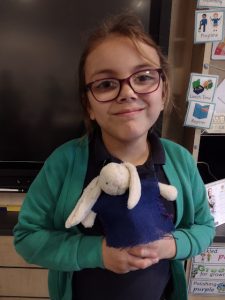
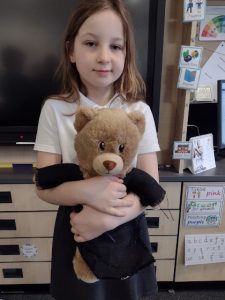
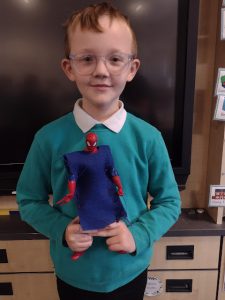
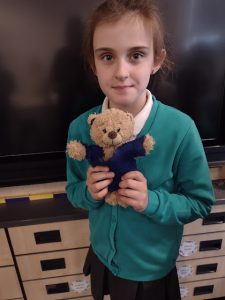
Year 3 have completed our Design and Technology unit this week. We have had great fun creating an iron age tunic for our teddy bears.

Investigation

We begun our D&T by investigating about patterns and how these are made. We looked at different clothes designers and discussed how all of their designs differ from each other.

Focused Practical

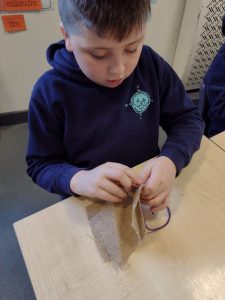
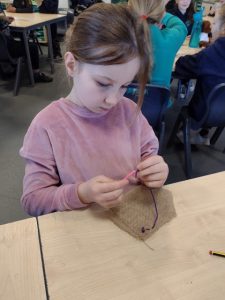
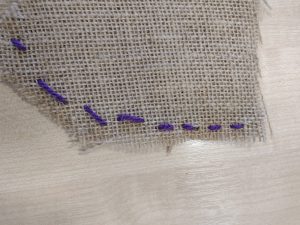
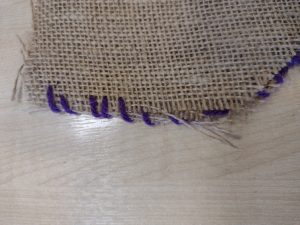
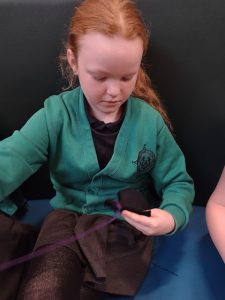
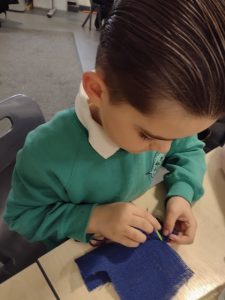
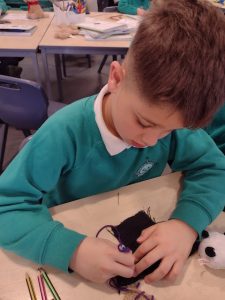
We used two pieces of material to create a pocket. We had to sue different stitches, one of these was easier than the other. We practised using a running stitch, we found this one was the easier of the two. We then practised using an overstitch, lots of u found this one hard.

Design

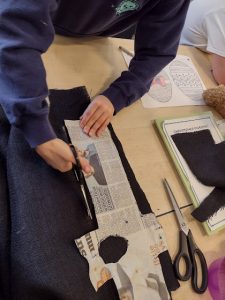
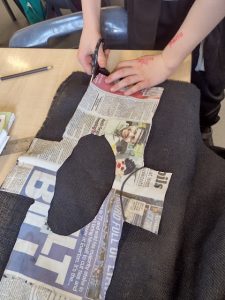
Once we had practised our sewing skills we thought about the patterns we needed to create to help us. We had to take measurements of our teddy bear to ensure our pattern was the correct size before we could create our pattern with paper.

Make

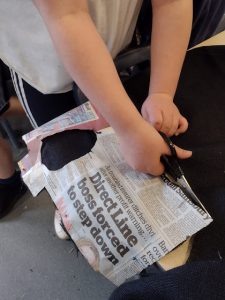
In order to make our tunics we pinned our pattern to some hessian before carefully cutting around it. We then decided which stitches to use to join our tunic together. Most of us chose a running stitch as we found this one easier to do.

It took lots of patience and we had to be careful when we sewed our tunic together.

Evaluate

When our tunics were finished we put the on our teddy bears. Some were a little tight and some of us had to cut the front to get them on so we created jackets.

We completed an evaluation of our finished tunic and thought about the things we did well and things we would change if we made a tunic again.

EASTER

This term Years 3 and 4 have been exploring the events of Holy Week from different aspects of events within the Christian celebration.

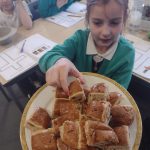
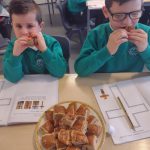
Year 3 explored why the cross is a significant symbol for Christians and what Jesus’ sacrifice taught the world.  Through many discussions, we identified the ranging emotions that the followers of Jesus felt throughout the events of Holy Week (Palm Sunday – Happiness and Joy; Maundy Thursday – Solemness and Guilt; Good Friday – Bravery and grief; Easter Sunday – Confusion, Great Joy and wonder) which further showed how important Jesus was, and continues to be for the followers of Christianity. We also learnt that Jesus sacrificed himself on the cross to show the world that we should not be afraid of death and from this created our own El Salvadore Crosses to depict our own ‘Crosses of Hope’. To conclude this unit of learning, we explored the symbolic meaning of the traditional Easter  ‘Hot Cross Bun’ before sampling…Yum!

Year 4 explored the symbolic meaning of the Bread and Wine shared by Jesus with his disciples at the Last Supper on Maundy Thursday as well as the meaning of the Paschal Candle which is lit in Christian churches around the world on Palm Sunday. Through discussion, we identified that Jesus knew he was going to die, which is why when sharing the bread Jesus described it as ‘his body which was soon to be broken’ and that the wine was ‘his blood that would be shared out for the followers of Christianity’. We then concluded that Christians continue to recognise that Jesus is the ‘Light of the World’ which is demonstrated by the lighting of the ‘Paschal Candle‘ throughout the Easter celebration of Holy Week.

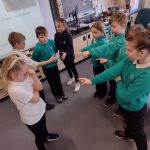
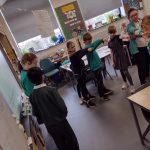
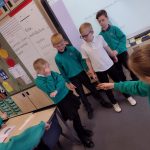
We also explored the concept of ‘Betrayal and Guilt’ in light of ‘Judas’ betrayal of Jesus’ on Maundy Thursday as well as the ‘Denial of Peter’ on the same day. This brought about some interesting  discussions and conflicting opinions with the conclusion that these two individuals only did what they thought what was right at the time.  After viewing ‘Peter’s Denial’ through various artforms, the children worked collaboratively to re-enact this scene through role play in which we aimed to convey the emotions of ‘guilt, shame, despair and confusion’.

Super work this Term Years 3 and 4 and a Happy Easter!