Following from Mr Morgan’s blog about our Art lesson this week, here are some of the lovely results from Mrs Hebden’s children.
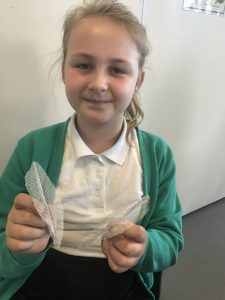
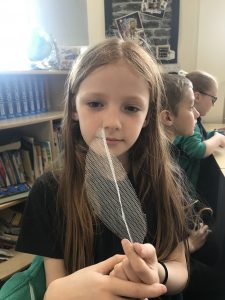
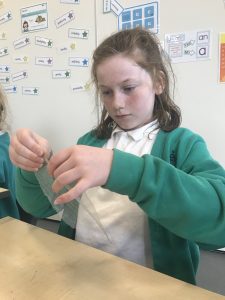
Following from Mr Morgan’s blog about our Art lesson this week, here are some of the lovely results from Mrs Hebden’s children.
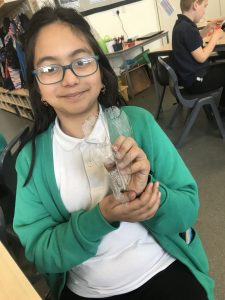
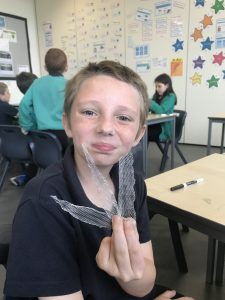
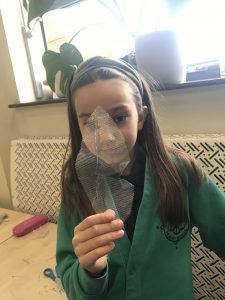
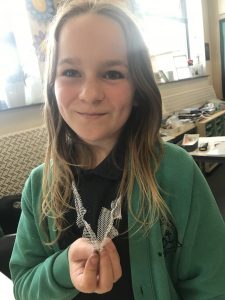
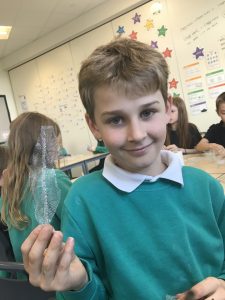
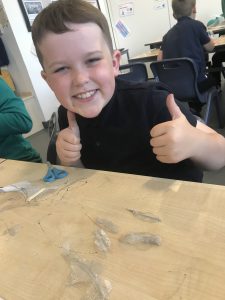
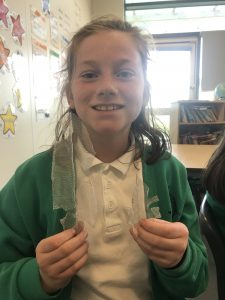
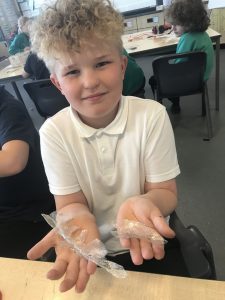
After a few weeks working in the 2D with drawing and painting, Y4 were very excited to be working in three dimensions this week. After looking closely at leaves previously, children were tasked with making different leaf sculptures from aluminium mesh.
This was a satisfying material to work with and was very easy to cut and shape into different forms. The finished pieces were mounted to mimic specimens in a museum or scientific collection and look fantastic in our pod!
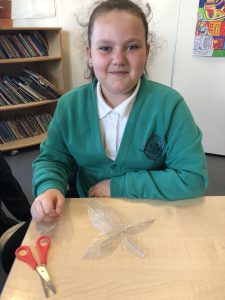
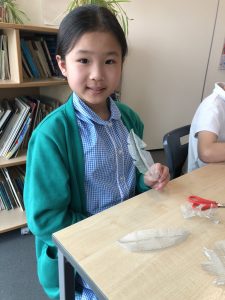
Maycie-Leigh and Eva working on their sculptures – we may have had a few pricked fingers!
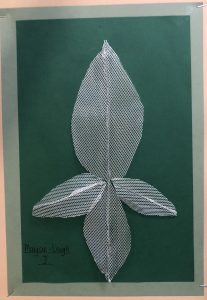
The finished piece looking fantastic in our ‘collection’
Y4’s art journey continues this week by combining a few skills we have been practicing. Children have been working on there observational skills and have tried different media like pencil and charcoal. They have also used watercolour paints to create different tints of green. They began by mixing shades, tones and tints of green to paint the leaves that they had drawn, applying this colour mixing knowledge, whilst carefully observing the colours within the subject.
Keep up the hard work children, you’re doing great!
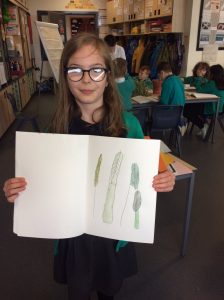
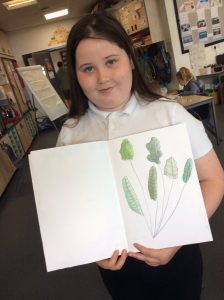
Paigton and Lily used their colour tinting skills to paint these leaves.
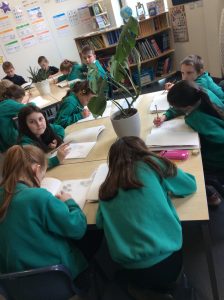
Mrs Hebden’s class working hard on their observational drawing skills prior to painting.
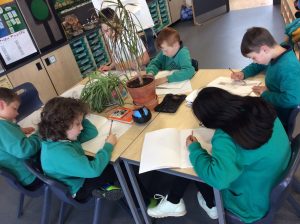
Where in the world are the Rainforests?
14.4.21
Year four made great use of their mapping skills to locate and identify the world’s rainforests in our first Geography lesson this term. The children were able to describe how the rainforest localities were based around the equator and between the tropics of Capricorn and Cancer and are using increasingly more geographical vocabulary with confidence. We explored the other rainforest localities and discussed how it’s a common misconception that the Amazon is the world’s only rainforest. The children were also able to draw many cross curriculum links to our English text, The Great Kapok Tree by Lynne Cherry which is a tale, based in the Amazon, warning against deforestation.
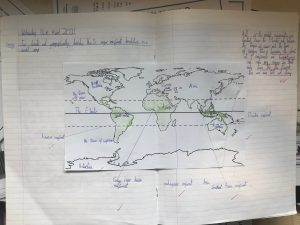
Connor made links between the cartoon Madagascar that he had seen and it being a Rainforest setting.
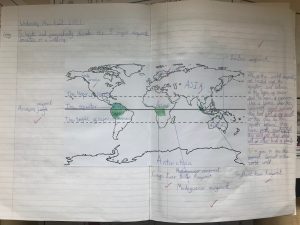
Harley quickly located the continent using his existing knowledge.
What on earth is a Biome?
21.4.21
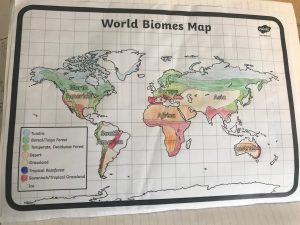
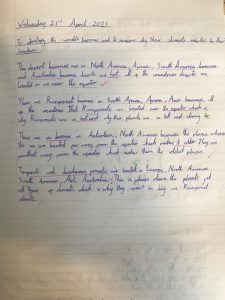
In our second lesson, the children were introduced to the term ‘Biome’. We looked at the patterns of biome distributions across the earth and discussed how the world’s climate zones affect what grows and lives there, creating these distinct biomes. Year four were able to make super generalisations about the conditions within the biome based in their locality.
We also explored the difference in the three main types of forest biome; the Rainforest, the Temperate/Deciduous Forest and the Boreal Forests and examined where they were situated in the world and how the trees had adapted to life in that climate.
Through discussion, the pupils were able to link their understanding of Biomes to their previous knowledge, when they learned about the deserts of Egypt in the Autumn term and in Y2 when they learned about the cold deserts of the polar regions.
What is it like in a Rainforest?
28.4.21
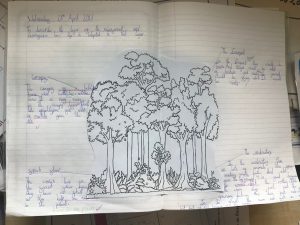
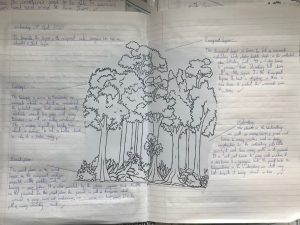
During the third lesson, the teachers were really impressed with the enquiry skills that the children demonstrated when they worked as a team to; learn more about the layers of the Rainforest, discover what the conditions are like and name what grows and lives within each layer. The children researched the layers using videos, photos and text to inform their planning. Notes were made, discussions were held and the children were being specific, naming the animals and vegetation to ensure that their work was accurate. Year Four then went on to produce beautifully annotated diagrams which they were able to explain with confidence and enthusiasm. Especially Evie, when it comes to talking about tarantulas!!!
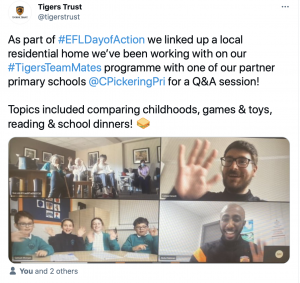
As part of the EFL’s Day of Action, some year 4 children took part in a virtual meeting with the residents of an elderly care-home. They have a great time chatting about each other’s childhoods!
To introduce our Year 3’s to their new Science topic on rocks, we explored an array of rocks and used a classification flow chart to try to determine what they were.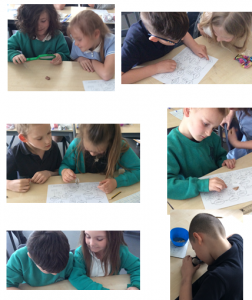
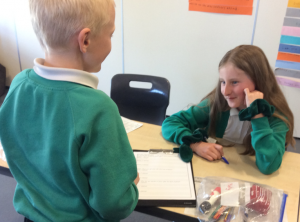
To help us with our Newspaper reports, Year 3 took on the roles of interviewer and witness to gather some quotes for our newspaper articles. The children used their knowledge of the eruption of Mount Vesuvius, in Pompeii, to get into character and answer questions about the events of that day.
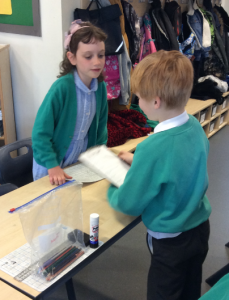
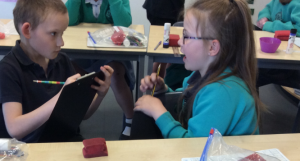
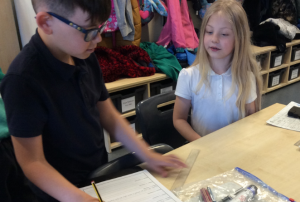
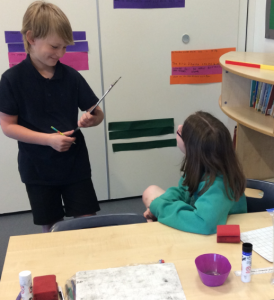
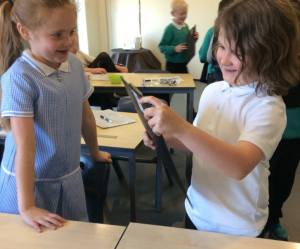
This week, Y4 have been designing and setting up a number of experiments to see how materials change over time. They have been looking at how different materials can melt, freeze, evaporate and condensate. They have made their predictions and have already gathered some results!
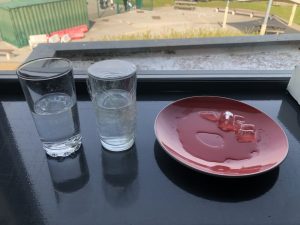
What will happen to the water in the uncovered glass? What will happen to ice cubes at room temperature? What will happen to ice in a fridge? Y4 are finding out!
Children also conducted a comparative test to see if the mass of an ice cube affects the time it takes to change state. Most correctly predicted the result!
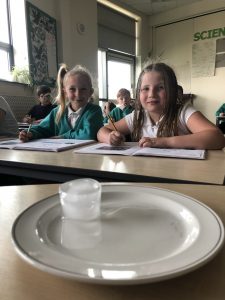
Grace and Alisha predicted the ice cube with the greatest mass would take longer to become a liquid!
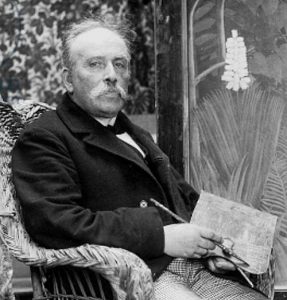
Henri Rousseau, 1844-1910
What do you think?
This term, Year Four have been exploring the works of the post-impressionist artist, Henri Rousseau. In particular, his works that were inspired by his time spent at the Botanical Gardens in Paris from which he imagined rainforest and jungle-themed pieces. Some critics didn’t like his work as they said that it was unrealistic and childish. Rousseau painted in a ‘modern naive’ style and his work was admired by other well respected artists such as Pablo Picasso. Year Four found out about Henri’s life and self taught style of painting and were encouraged to share their opinions of his works, this is what we thought….
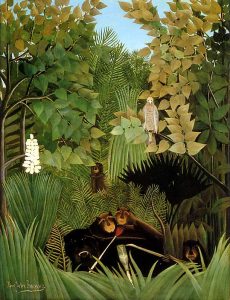
The Merry Jesters, 1906, On display at the Philadelphia Museum of Art, USA.
Evie W thought that “the animals that Rousseau painted look quite like a cartoon.” She commented that she liked the shades that he used to create the vegetation.
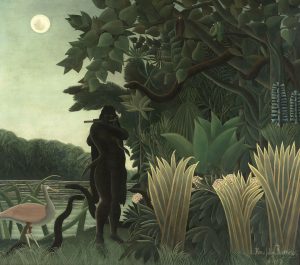
The Snake Charmer, 1907, on display at the Musée d’Orsay, Paris.
Ella C explained ” I like the colours used in the sky and the plants that are at the front of the painting. The shapes of the leaves are good as he has used lots of different types of leaves.”
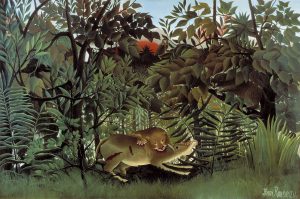
The Hungry Lion Throws Itself on the Antelope, 1905
“It looks okay but the I think the lion looks slightly green!” commented Jay.
Ethan S said “It is a cool painting and its got lots of shades of green. I like that it is very ‘rainforesty’.”
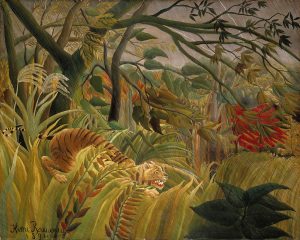
Tiger in a Tropical Storm (Surprised!) (1891) was the first of many jungle scenes for which Rousseau is best known.
Jessica B “I love the stripes on the tiger, it makes me think of my bedroom as I’ve got animal wall paper all around it! I love the leaves as they reminded me of my trip to Knowsley Safari Park”.
This week, Y4 were VERY excited to start their Djembe unit in music. We started by watching a video of a wedding in Mali where these traditional African drums were being played. We then got to grips with the instrument, discussing the different parts like the skin and exploring how we can produce different percussive sounds by hitting it in different places.
We then played different high and low notes in a four beat bar. To make it harder, children then had to listen and copy the different bars one after another (see the video!). We finished by attempting a Djembe call and reply. This was a tricky exercise where all players hold a steady pulse, one player beats a ‘call’ to which everyone else replies and then falls back into the steady rhythm. Our call was “We want you, we want you” with a reply of “We want you as a new recruit” Watch the video to see how it well children beat the syllables!